
 newspop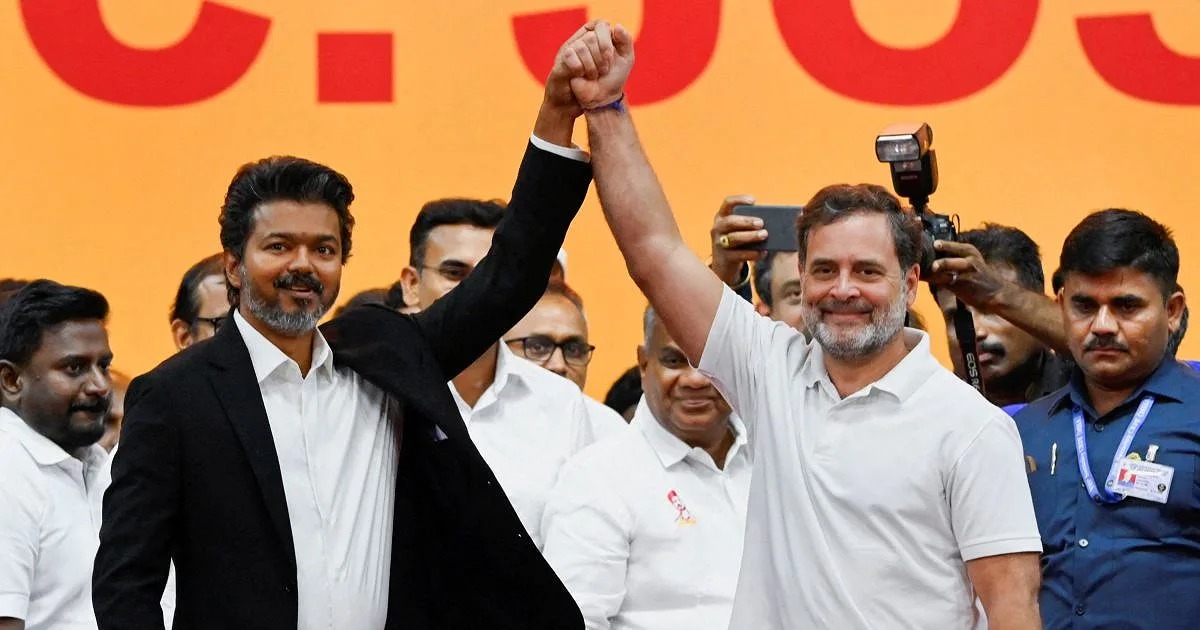
From Tamil Cinema to National Politics : Is Vijay Eyeing a Bigger Role in 2029 ?
New Delhi : Tamil actor-turned-politician Vijay is at the centre of a fresh political debate after leaders of his party, Tamilaga Vettri Kazhagam (TVK), made remarks projecting him as a potential national leader and even a possible Prime Ministerial face for the 2029 Lok Sabha elections. While the 2029 elections are still several years away, the statements have already sparked speculation about whether Vijay could eventually move beyond Tamil Nadu politics and play a larger role on the national stage.
TVK minister D. Sarathkumar reportedly described Vijay as “India’s next Prime Minister,” while party leader Aadhav Arjuna argued that the country’s next Prime Minister should come from South India. The remarks have given fresh momentum to discussions surrounding Vijay’s political ambitions and the future direction of the relatively new party.
Vijay, who enjoys a massive fan following across Tamil Nadu and beyond, entered active politics after years as one of Tamil cinema’s biggest stars. His transition from the film industry to politics has attracted considerable attention, with TVK attempting to establish itself as a major political force in Tamil Nadu. The latest comments, however, have taken the conversation a step further by placing Vijay’s name in the context of national politics and the 2029 elections.
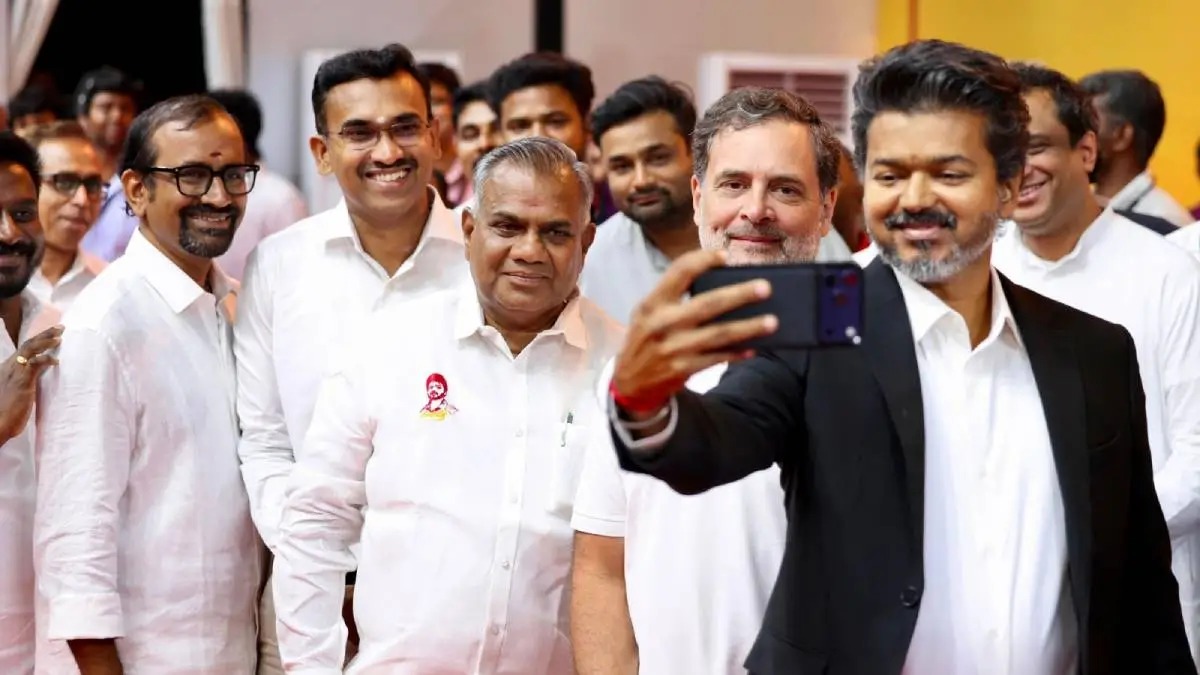
The possibility of Vijay becoming a national political face has also triggered questions within the broader Opposition landscape. Congress leaders Karti Chidambaram and Manickam Tagore have reportedly dismissed the idea of replacing Rahul Gandhi as the Opposition’s potential Prime Ministerial face, with Karti Chidambaram continuing to back Rahul Gandhi for the top post. This has added another layer to the political debate over who could eventually lead an Opposition alliance in the next general election.
The discussion is particularly significant because Vijay’s political journey is still in its early stages. Before making any national claim, TVK will have to establish its organisational strength, electoral influence and political presence within Tamil Nadu. The party’s performance in the state will likely play a crucial role in determining whether Vijay can transform his enormous popularity into sustained political support.
At the same time, political observers believe the statements from TVK leaders could be part of a broader strategy to project Vijay as a national-level political personality. By raising the possibility of a Prime Minister from South India, the party is also attempting to position itself within a larger national conversation over regional representation and leadership.
The developments have raised several questions: Could Vijay emerge as a major Opposition face by 2029? Would other parties support his candidature for Prime Minister? How would Rahul Gandhi’s role evolve if Vijay seeks a national leadership position? And most importantly, can Vijay convert his popularity among the public into electoral strength?
With the 2029 Lok Sabha elections still some distance away, it is too early to predict the final political equations. However, the latest statements have certainly ensured that Vijay’s name is now part of the growing conversation around India’s future political leadership. Whether this remains political rhetoric or develops into a serious national ambition will become clearer as TVK expands its organisation and charts its electoral strategy in the coming years.