

 newspop
Face for Rent ! People in China Are Licensing Their Looks to AI for Money
SPECIAL STORY: What if your face could earn money even while you are sitting at home? What if companies no longer needed you to act, speak or even appear physically in front of a camera but simply needed permission to use your face? That strange possibility is becoming part of a growing digital economy in China, where people are reportedly beginning to license their facial appearance and personal likeness for AI-generated entertainment and commercial content. With Artificial Intelligence rapidly transforming the film, advertising, gaming and digital-content industries, a new market is emerging in which an ordinary person’s face can potentially become a valuable digital asset.
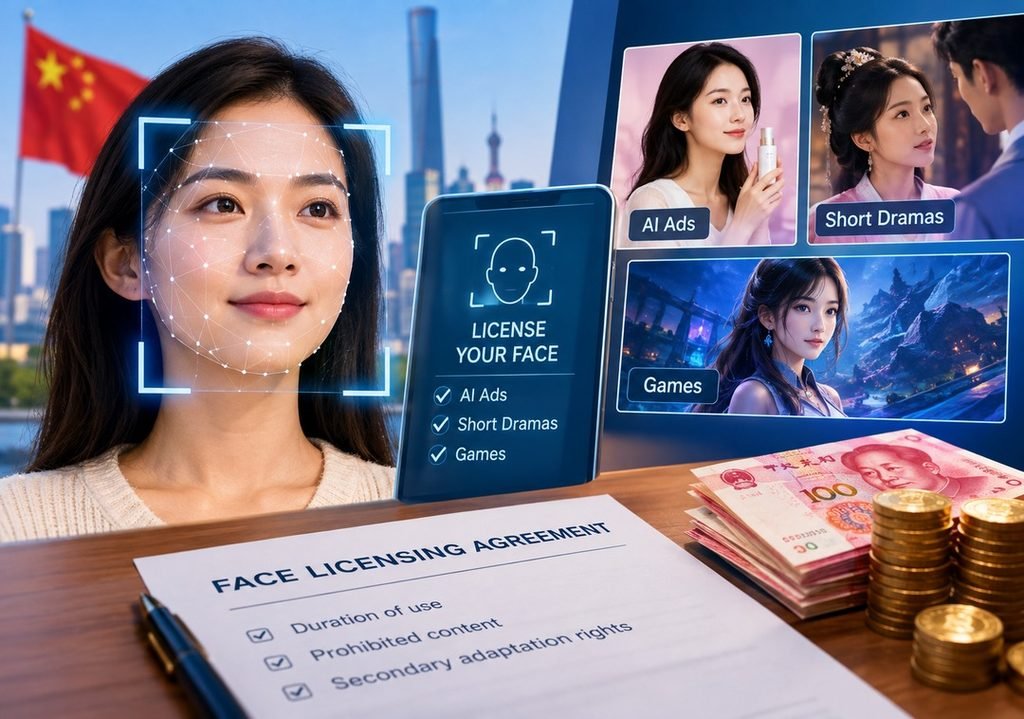
According to reports, individuals can give companies permission to use their facial likeness for specific projects or periods rather than permanently surrendering their identity. Depending on the nature of the project, duration of the licence and intended commercial use, reported earnings can range from around ₹700 to as much as ₹14 lakh, creating a completely new way for people to monetise their appearance. Platforms such as ActID and New Claw are reportedly helping connect people whose faces are available for licensing with companies and content creators looking for digital performers.
The opportunity is not reportedly limited to professional actors or models either; influencers, professional extras and ordinary people with no acting background can also participate. Instead of attending auditions or spending hours on a film set, people can potentially allow their facial likeness to be digitally incorporated into AI-generated dramas, advertisements, video games, short videos and other forms of digital entertainment. Some platforms reportedly allow users to browse available faces according to characteristics such as age, appearance and personal style, making the process resemble a digital marketplace where creators can search for a particular look and obtain permission to use it. The development is closely connected with China’s rapidly expanding micro-drama industry, where short-form scripted content is being produced at huge scale and AI technology is increasingly being used to speed up production and create digital characters.
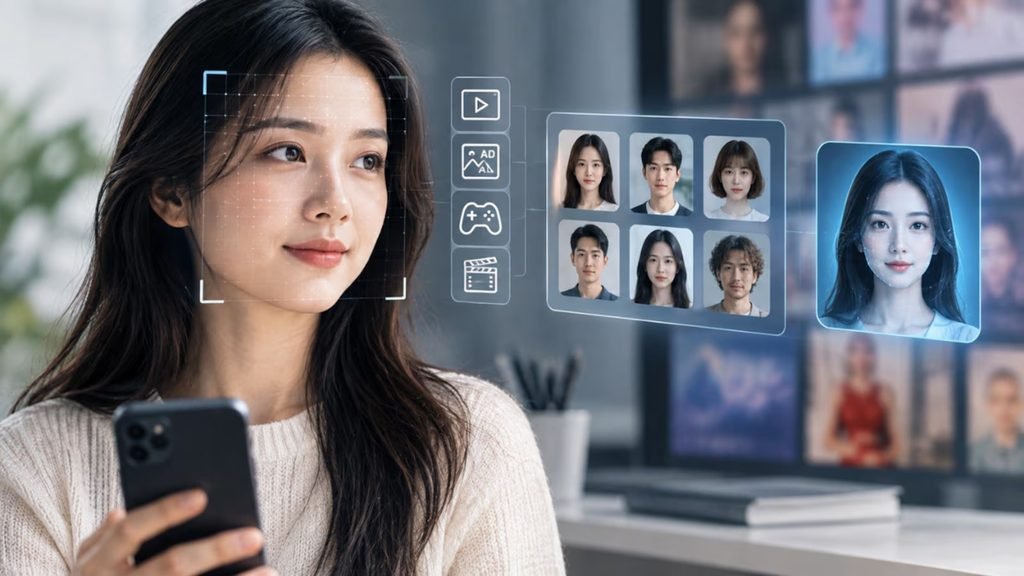
Reports indicate that hundreds of people have already created profiles on emerging digital-actor platforms, effectively offering their facial likeness as a form of licensable digital property. For some participants, this could represent an entirely new source of income turning something they have always possessed, their physical appearance, into a commercial asset. The technology also raises a fascinating question about the future of entertainment: will tomorrow’s actors need to physically appear on screen, or will their licensed faces be enough ? A single person could potentially have their likeness appear in multiple digital productions without personally travelling to a studio or standing in front of a camera each time.
At the same time, the rise of AI-generated faces and digital replicas is bringing serious questions about consent, privacy, ownership, copyright, identity protection and control over digital likenesses.
What happens if an AI-generated version of someone’s face is used in a completely different context ? How long should a company be allowed to retain and reuse a person’s digital likeness ? Can someone withdraw permission after their face has already been incorporated into thousands of pieces of content ?
These questions could become increasingly important as AI-generated media expands worldwide. What appears today to be a bizarre experiment in China could signal a much larger transformation in the digital economy, where physical characteristics such as a face, voice or appearance may increasingly become assets that can be licensed, reused and commercially valued. In the age of AI, your face may no longer be only a part of your identity it could become something companies search for, creators select and the digital economy puts a price on.