

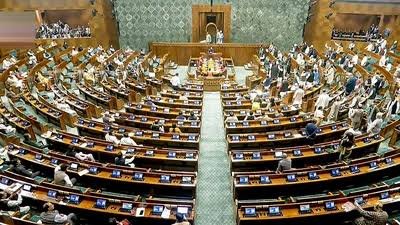
New Delhi : The Centre on Friday, November 27, 2026, released the Delimitation (Second) Bill, 2026, putting forward a proposal to increase Lok Sabha seats by 50% for every state. The move comes as part of the government’s renewed push to implement 33% reservation for women in Parliament and state and Union Territory legislatures through a fresh delimitation exercise.
The Union Cabinet, chaired by Prime Minister Narendra Modi, approved the legislative package ahead of a special four-day session of Parliament scheduled to begin on November 30 and continue until December 3, subject to parliamentary requirements.
The latest bill directly incorporates the uniform 50% increase in parliamentary representation for every state, addressing a major concern raised by the Opposition and several southern states during the government’s previous attempt in April 2026.
What Went Wrong in April?
The Centre’s earlier legislative push failed during a three-day special parliamentary sitting in April. The Constitution (131st Amendment) Bill, which proposed increasing the maximum strength of the Lok Sabha from 550 to 850 members, was defeated in the Lower House.
The proposal envisaged up to 815 seats for states and 35 for Union Territories, alongside the implementation of 33% women’s reservation ahead of the 2029 general elections.
The bill secured 298 votes in favour and 230 against, falling short of the required two-thirds majority of members present and voting, which stood at 352 votes.
The defeat marked the first time since the NDA came to power in 2014 that a Constitution Amendment Bill introduced by the government failed to clear the Lok Sabha. Subsequently, two related ordinary bills were withdrawn.
Why Did Southern States Object?
A major point of contention during the April debate was the proposed reliance on the 2011 Census for delimitation. Opposition parties and southern states argued that such an exercise could disproportionately increase the parliamentary strength of northern states while reducing the relative political influence of southern India.
The debate also highlighted the economic contribution of southern states, which account for approximately 30–31% of India’s GDP.
Although Union Home Minister Amit Shah had assured Parliament that every state would receive a uniform 50% increase in Lok Sabha seats, the Opposition maintained that the assurance needed to be incorporated into the actual legislative provisions.
The newly released bill seeks to address that demand by explicitly including the uniform expansion formula in its text.
November 30 Session: Numbers Game for the Government
The upcoming special session is expected to witness a crucial political battle over delimitation and women’s reservation.
While the BJP-led NDA has argued that the proposed legislation is essential for strengthening women’s representation, Opposition parties have maintained that they support the women’s quota but remain opposed to delimitation without adequate safeguards for regional representation.
With the ruling alliance lacking the numbers required to independently secure a two-thirds majority for a constitutional amendment, support from regional parties and other unaligned MPs could prove decisive.
The November 30 parliamentary sitting will therefore be a significant test of the government’s ability to build consensus on one of the most consequential proposed changes to India’s parliamentary representation.