

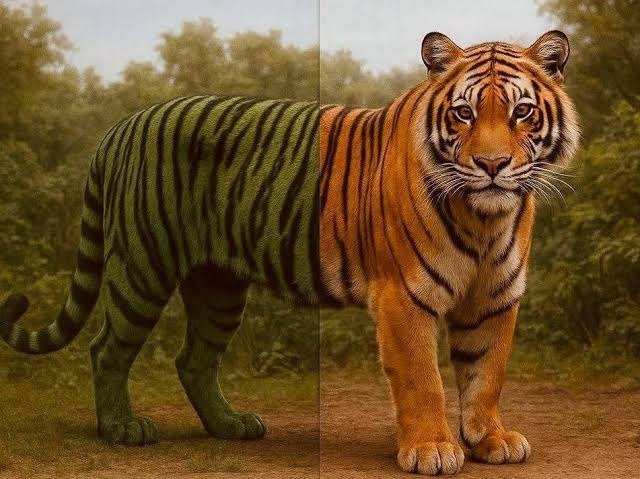
How can an animal with such a striking orange coat disappear into a lush green forest ?
The answer lies in one of nature’s most fascinating optical tricks the difference between human and deer eyesight. While humans can see a wide range of colours thanks to three types of colour-detecting cone cells (red, green and blue), deer have only two types of cone cells, a visual system known as dichromatic vision.
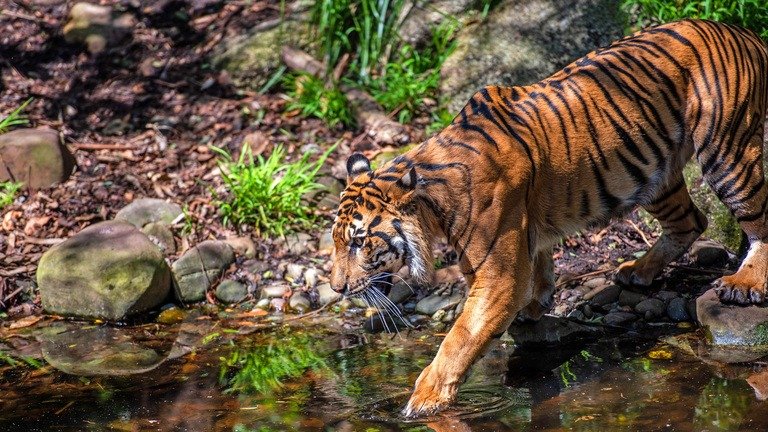
This means deer cannot distinguish orange and green shades as clearly as humans can. So, the bright orange coat that makes a tiger stand out in our eyes may appear much closer in tone to the surrounding green vegetation when viewed by a deer, making the predator less noticeable in its natural habitat.
But that’s not the only secret behind a tiger’s camouflage! Its distinctive black stripes play an equally important role by breaking up the outline of its body. Among tall grasses, dense vegetation, tree trunks and patches of sunlight and shadow, these stripes make it harder to recognise the tiger’s overall shape.
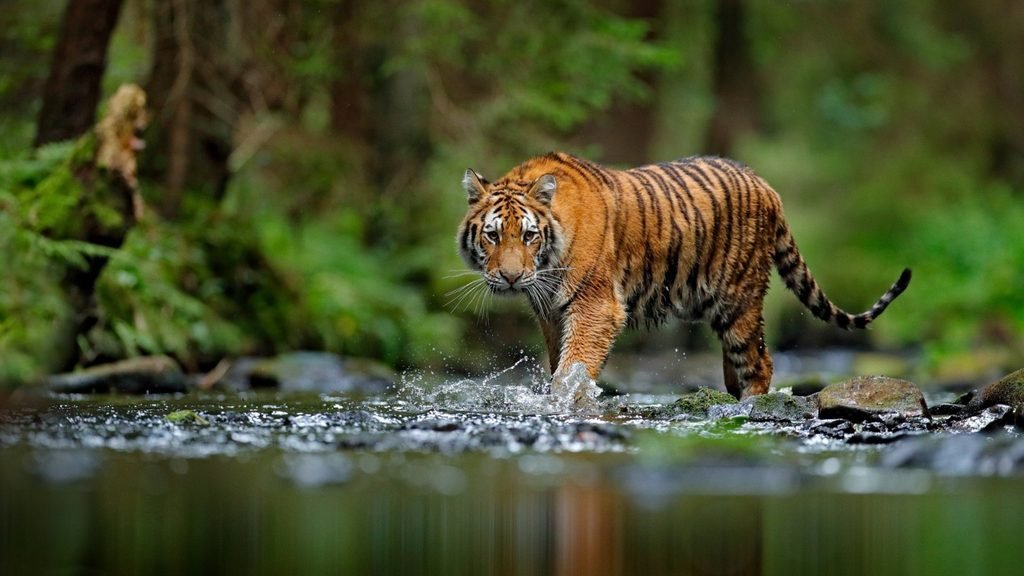
Interestingly, mammals do not naturally produce green fur because their pigmentation system is based largely on pigments such as melanin, which creates shades of black, brown, yellow and reddish-orange. Developing green fur is therefore not necessary for a tiger to blend into its surroundings.
A 2019 study published in the Journal of the Royal Society Interface examined how tiger colouration works as camouflage for animals with dichromatic vision.
The findings highlighted an extraordinary aspect of evolution: an animal does not need to look like its surroundings to us to remain hidden from another animal. What appears bright orange and highly visible to the human eye can be an effective natural camouflage against the visual system of its prey.
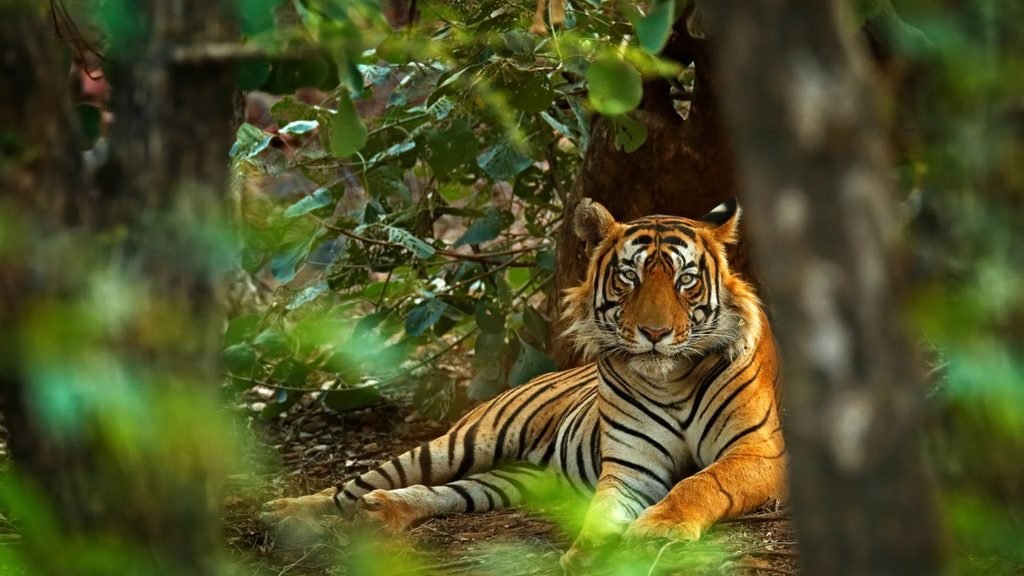
And here’s the most fascinating part the tiger’s orange coat, which looks so striking to humans, may actually be one of nature’s cleverest survival adaptations! Nature has designed its colours and patterns in a way that reminds us that every species experiences the world differently.
