 newspop
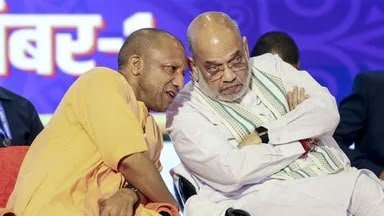
The party will not hesitate to deny tickets to MLAs whose public support base appears weak in internal surveys
Lucknow : Election-related activity has intensified in Uttar Pradesh. Currently, all eyes are on the Rajya Sabha elections. Meanwhile, both the ruling BJP and the opposition have begun strategizing for the upcoming assembly elections. According to media reports, the BJP intends to be extremely cautious regarding ticket distribution this time around. Consequently, the tickets of at least 100 MLAs are at risk. Internal party surveys have revealed several critical issues; if an MLA is found to have significant friction or strained relations with local office-bearers, or if the anti-incumbency factor is high, there is little chance of them securing a ticket this time.
Reports suggest that public confidence in around 100 BJP MLAs has waned. Furthermore, many MLAs have ongoing disagreements with local party functionaries. Feedback regarding the MLAs has also been sought from the RSS. The party high command will make a final decision after weighing all these factors.
Sources indicate that the party is conducting constituency-wise surveys. Winning potential is being prioritized above all else this time, with a politician’s seniority being considered only subsequently. The BJP has held power in Uttar Pradesh for two consecutive terms; consequently, there are MLAs who have occupied their seats for a decade, leading to visible anti-incumbency sentiment.
Friction within the organization is also frequently observed. Any discord with party office-bearers has a direct impact on vote counts. Consequently, the party has become vigilant regarding such MLAs. Furthermore, the party may place its trust in new faces this time around. In light of the prevailing national atmosphere and the growing discourse around ‘Gen-Z,’ the party aims to introduce certain changes; it intends to prioritize fresh, young faces over established incumbents.
The BJP witnessed a decline of 30 seats in the 2024 Lok Sabha elections, with its tally dropping from 62 to 33—a significant setback. The party had renominated 49 sitting MPs, 27 of whom lost. Similarly, if public dissatisfaction is observed against two-time winning MLAs, they risk being denied a ticket. Senior party leaders maintain that if a leader has retained their support base and shows a strong prospect of winning again, the number of terms they have served as an MLA will not be the deciding factor.
This time, the BJP faces the challenge of balancing social equations alongside the issue of anti-incumbency. Reports suggest that the ‘upper-caste’ vote in Uttar Pradesh has drifted away, causing losses for the BJP; consequently, the party is set to focus on the Dalit vote. Meanwhile, the Samajwadi Party is already campaigning with a strategy centered on Backward Classes, Dalits, and Adivasis. Given this landscape, the path ahead is quite challenging for the BJP, and leveraging new faces and popularity could prove to be a prudent move.
Report – Abhijit Tushar Bhatt (Political Editor)