
 newspop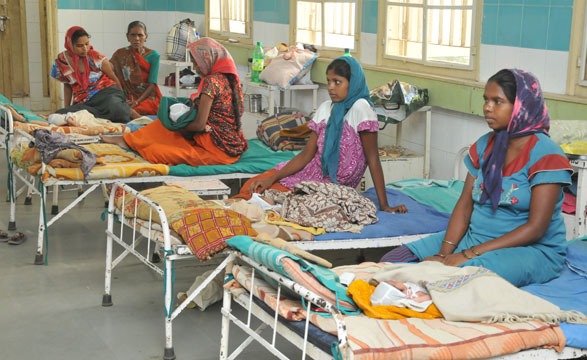
Chief Minister Bhupendra Patel’s compassionate initiative for tribal welfare
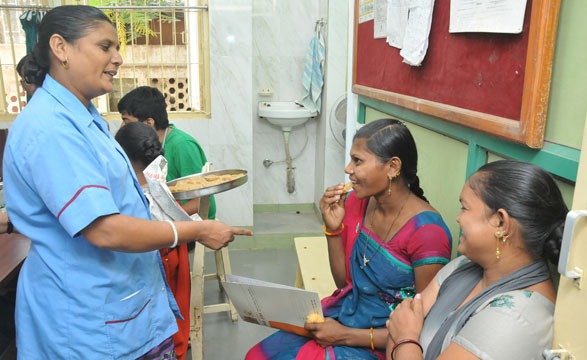
Gandhinagar, Gujarat : The Gujarat Government has announced a new welfare scheme for Tribal (Scheduled Tribe) patients suffering from serious illnesses. To ensure that financially weaker tribal families can access costly and advanced medical treatment, the State Government has allocated Rs. 2 crore for the scheme in the financial year 2026-27.
Under the leadership of Chief Minister Bhupendra Patel, the Gujarat Government has extended health security to thousands of tribal families through this new scheme. The Tribal Development Department, led by Tribal Development Minister Nareshbhai Patel and Minister of State P. C. Baranda, has granted administrative approval for its implementation.
What is the Scheme?
As per the resolution of the Tribal Development Department, the State Government has introduced this life-saving scheme for tribal families titled ‘Scheme to Provide Assistance for Organ Transplants of Kidney, Liver, Heart, Pancreas, etc., and for Operations Including Robotic Surgeries for Patients Belonging to the Scheduled Tribe Community of the State.’ The scheme will provide financial assistance for complex organ transplants as well as advanced robotic surgeries for serious illnesses. The Government has approved a budget of Rs. 2.00 crore for the first year of the scheme.
Ahmedabad’s Kidney Institute to Serve as the Nodal Agency
For the effective implementation of this State Government scheme, the Institute of Kidney Diseases and Research Centre (IKDRC), located within the Ahmedabad Civil Hospital campus, has been appointed as the nodal agency.
How the Scheme Benefits Patients
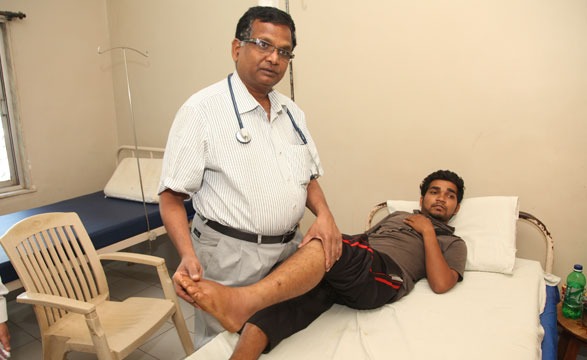
The main provision of this scheme is that, after deducting the assistance available to the patient under Ayushman Bharat (PMJAY) or the MA Card, the remaining additional expenditure will be covered under this scheme. The resolution provides two examples regarding the assistance, as mentioned below:
Example 1 : Treatment at a Government Hospital (IKDRC): If the total cost of an organ transplant at IKDRC is Rs. 6.00 lakh and Rs. 3.00 lakh is covered under PMJAY, then the remaining Rs. 3.00 lakh will be provided as assistance under this scheme.
Example 2: Treatment at a Private Hospital: If an organ transplant at a private hospital costs Rs. 10.00 lakh, but the approved rate for the same procedure at the Government hospital (IKDRC) is Rs. 6.00 lakh, then after deducting the PMJAY assistance of Rs. 3.00 lakh, the beneficiary will be eligible for assistance of up to Rs. 3.00 lakh, limited to the approved Government rate.
Eligibility, Conditions, and Procedure for Availing the Benefit
Caste Certificate : The beneficiary must belong to the Scheduled Tribe community of Gujarat and must submit a valid caste certificate.
Card Eligibility : The patient must hold a PMJAY or MA Card under the Government of India’s Ayushman scheme.
Mandatory Procedure: The patient must compulsorily approach IKDRC to avail the benefit under the scheme. Even if treatment is to be undertaken at a private hospital, assistance will not be granted without prior approval from IKDRC.
Medical Approval: Clinical approval from the IKDRC Transplant Committee will be mandatory.
Only for the Recipient: The organ donor may belong to any community; however, the financial assistance will be available only to the tribal organ recipient.
Exception for Children : School children are already entitled to completely free treatment under the School Health Programme; therefore, they are not separately covered under this scheme.
Special Emphasis on Administrative Transparency
To prevent corruption and financial irregularities, the entire process will be conducted online. Financial assistance under the scheme will be disbursed through the Direct Benefit Transfer (DBT) system or the CM Dashboard Portal at intervals prescribed by the Government. In addition, periodic Social Audits and Third Party Verification will be conducted to ensure proper monitoring of the scheme, and the reports will be submitted to the State Government.
Report By – Abhijit Tuhsar Bhatt