
 newspop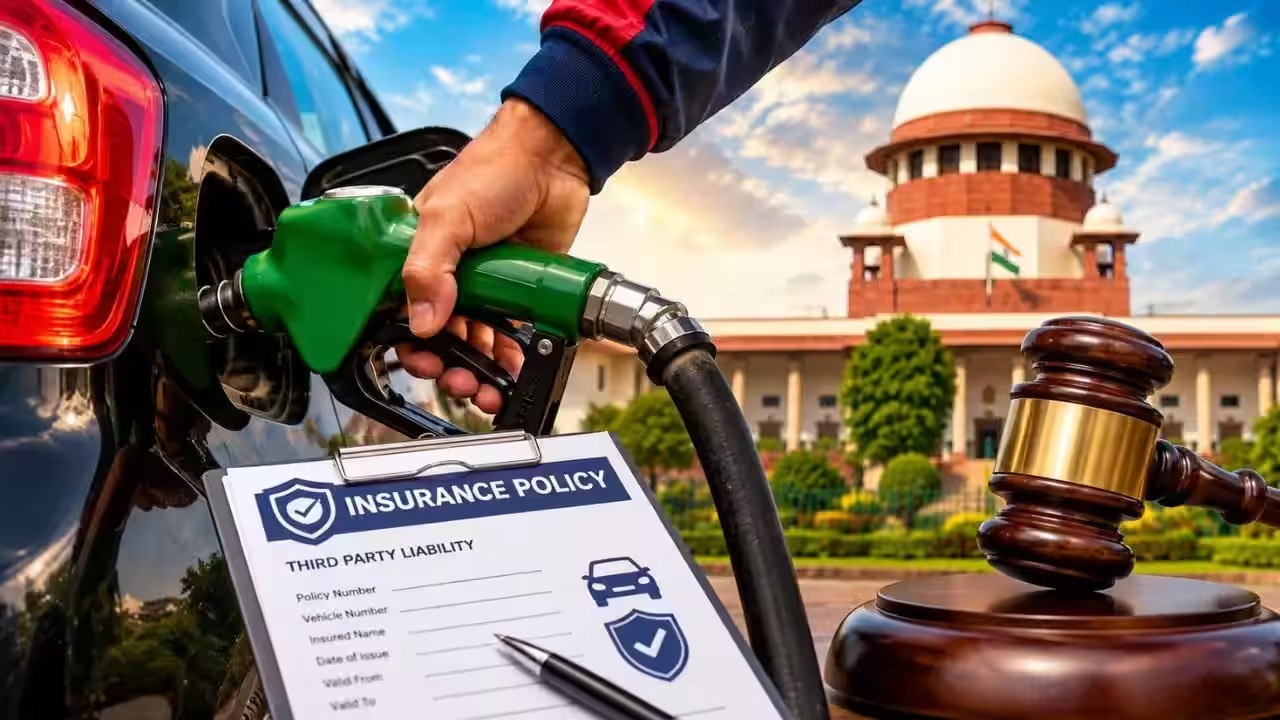
Big Change on the Roads ? Uninsured Vehicles Could Face Fuel Restrictions Under Pilot Plan
New Delhi : In a significant proposal aimed at strengthening road safety and ensuring stricter compliance with mandatory motor vehicle insurance rules, the Supreme Court has suggested a pilot project under which vehicles without valid insurance could potentially be denied petrol or diesel at fuel stations. The proposal is aimed at creating a technology-driven system that would enable petrol pumps to verify the insurance status of a vehicle before supplying fuel, thereby making it more difficult for uninsured vehicles to continue operating on public roads.
The court has suggested that the Insurance Regulatory and Development Authority of India (IRDAI) and the Ministry of Road Transport and Highways (MoRTH) work together to develop and examine the feasibility of such a pilot project. The recommendation was made by a bench comprising Justice Sanjay Karol and Justice Prashant Kumar Mishra, as part of broader efforts to strengthen road safety and improve enforcement of existing motor vehicle insurance requirements. The Supreme Court has also proposed expanding the use of Automatic Number Plate Recognition (ANPR) cameras on highways and linking these cameras with vehicle databases and insurance records, allowing authorities to identify whether a particular vehicle has valid insurance while it is travelling on the road.
ANPR technology is already used in several places to detect violations such as overspeeding, jumping red lights and driving on the wrong side of the road, and linking the system with insurance databases could add another layer of enforcement. Under the proposed mechanism, traffic police could be provided with mobile applications or handheld devices to instantly check a vehicle’s insurance status during roadside inspections, while ane-challan could be automatically or promptly issued to the registered owner if the vehicle is found to be uninsured.
The court has also suggested that the existing system of checking vehicle insurance should be made more efficient by connecting relevant databases and providing enforcement agencies with real-time access to insurance information. In another important recommendation, the court has suggested increasing the third-party insurance validity period for newly purchased vehicles, with the proposed period potentially increasing from three years to four years for new cars and from five years to six years for new two-wheelers.
The objective behind these recommendations is to ensure that vehicle owners maintain continuous insurance coverage and that uninsured vehicles are identified and dealt with more effectively. However, it is important to note that the “No Insurance, No Fuel” proposal is currently only at the pilot-project stage and does not mean that petrol pumps across India will immediately stop providing fuel to vehicles without insurance. The proposed system would first have to be developed, tested and evaluated before any decision is taken regarding wider implementation.
If successfully introduced in the future, the integrated system could connect fuel stations, vehicle registration databases, insurance records, ANPR cameras and traffic enforcement mechanisms, creating a more comprehensive digital network for monitoring compliance.
The move could represent a major shift in how India enforces mandatory vehicle insurance rules, while also helping authorities identify uninsured vehicles more quickly and potentially improve accountability among vehicle owners.
For motorists, the proposal serves as a reminder of the importance of keeping vehicle insurance valid and up to date, while for authorities, it could provide a technology-based method to strengthen road safety and ensure that insurance regulations are effectively enforced across the country.


 Mudasir Maqbool