

 newspop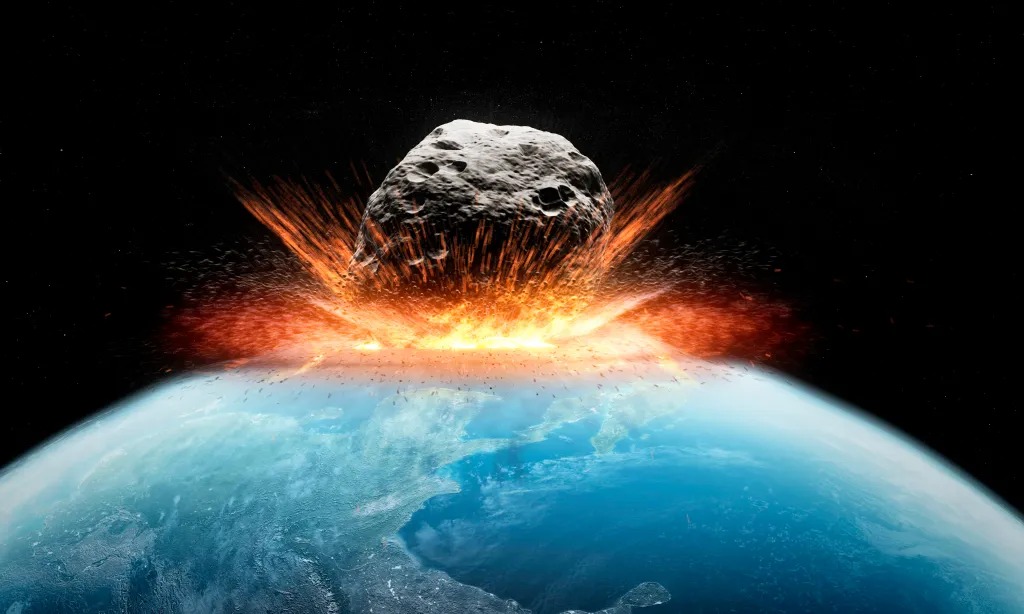
SHOCKING : A 710-Metre ‘Space Monster’ Is Spinning Through Our Solar System !
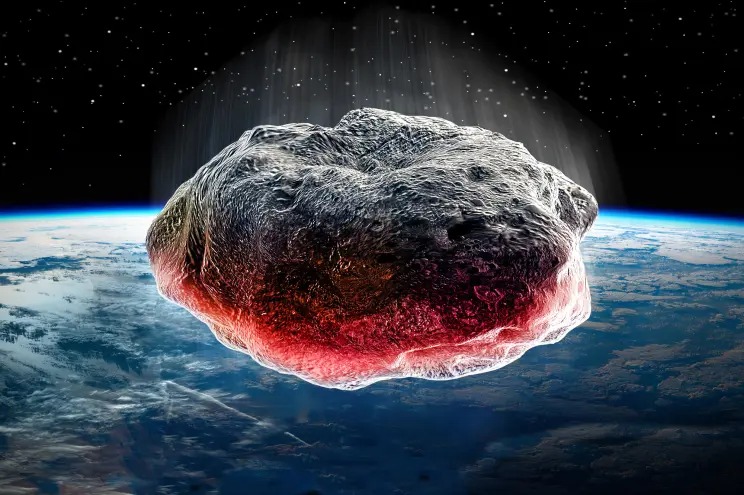
Imagine a gigantic rock nearly the size of eight football fields spinning once every 112 seconds as it races through the darkness of space. That’s what has stunned astronomers after the discovery of asteroid 2025 MN45. The enormous space rock is around 710 metres wide and rotates at an astonishing speed of just 1.88 minutes per turn a rate so extreme that scientists are studying how such a massive asteroid can remain intact.
But here’s the twist, there is currently no evidence that 2025 MN45 is heading toward Earth or poses an imminent collision threat. The asteroid is located in the main asteroid belt between Mars and Jupiter, making its record-breaking spin not an impending impact the real scientific mystery.
A massive asteroid has captured the attention of astronomers after scientists identified 2025 MN45, an estimated 710-metre-wide space rock that is spinning at an extraordinary speed. The asteroid completes one full rotation in just 1.88 minutes, making it the fastest-spinning known asteroid larger than 500 metres. Scientists detected it using data from the NSF–DOE Vera C. Rubin Observatory, and its size is roughly comparable to eight American football fields.
What makes 2025 MN45 particularly unusual is not that it is currently heading toward Earth, but its extreme rotation. Most large asteroids are believed to be loosely assembled “rubble piles,” but an object spinning this rapidly would likely need considerable internal strength to avoid breaking apart. Researchers estimate that its material must have strength comparable to solid rock.
The asteroid is located in the main asteroid belt between Mars and Jupiter, rather than being identified as an asteroid currently on a collision course with Earth. It takes about 3.81 years to orbit the Sun and follows a relatively low-eccentricity orbit. Therefore, the dramatic claims that 2025 MN45 is currently “racing toward Earth” or could soon wipe a country off the map are not supported by the scientific information currently available.
If an asteroid of this size were ever to strike Earth, the consequences could be extremely severe, depending on its composition, speed and impact location. A major impact could produce powerful shock waves, enormous amounts of heat and debris, and potentially devastating regional or global environmental effects. However, those are hypothetical consequences and should not be presented as evidence that 2025 MN45 is going to hit Earth.
The discovery is nevertheless scientifically important because it gives astronomers a rare opportunity to study how an unusually large asteroid can survive such an extraordinary rotation rate. Researchers are continuing to examine its properties, orbit and composition as observatories such as Rubin dramatically expand humanity’s ability to detect and study objects across the Solar System.