
 newspop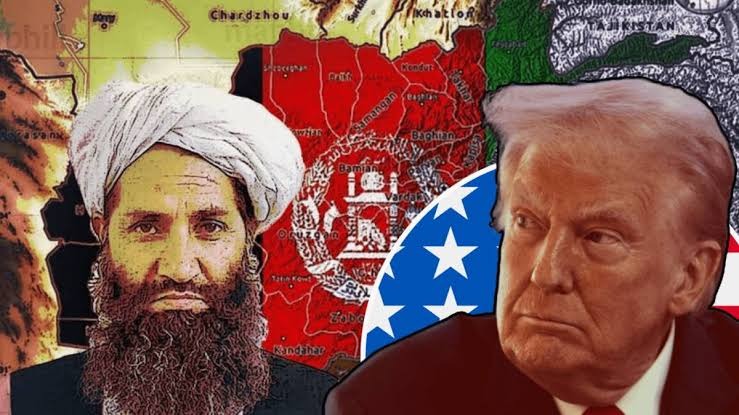
Embassy for Investment ? Taliban’s Bold Offer Puts Washington in a Tough Spot
New Delhi: In a significant diplomatic and economic outreach, Afghanistan’s Taliban government has reportedly put forward a massive investment proposition aimed at improving ties with the United States and seeking relief from long-standing economic restrictions. Nearly five years after returning to power in Kabul, the Taliban is attempting to reposition Afghanistan as an investment destination by offering American companies access to its vast mineral resources, infrastructure projects, agriculture and trade opportunities. According to remarks attributed to Taliban Foreign Minister Amir Khan Muttaqi in an interview with the Financial Times, Afghanistan is prepared to welcome American investment across key sectors and wants Washington to look beyond the two decades of conflict and focus on potential future cooperation.
At the heart of the proposal is Afghanistan’s enormous untapped natural-resource base, which includes lithium, copper, iron, cobalt, gold and rare-earth elements. Estimates cited by the US Geological Survey have placed the potential value of Afghanistan’s mineral wealth at around $1 trillion or more, although converting these estimated resources into commercially viable projects would require major investment, infrastructure and security. The Taliban’s reported offer goes beyond mining, with Kabul seeking American participation in infrastructure development, agriculture and bilateral trade.
However, the proposed economic engagement comes with a major diplomatic condition: the Taliban wants the United States to reopen its embassy in Kabul and ease or remove restrictions that have limited Afghanistan’s access to international financial and commercial systems. Kabul has also indicated that it would provide security guarantees for an American diplomatic mission. The proposal comes against the backdrop of a complicated US-Afghanistan relationship that has remained deeply affected by the Taliban’s return to power in August 2021. Following the September 11, 2001 terrorist attacks, Washington imposed extensive sanctions and restrictions targeting the Taliban and individuals associated with the group.
After the Taliban seized control of Kabul in 2021, billions of dollars in Afghan central-bank assets held abroad were frozen, further worsening the country’s economic and financial crisis. The Taliban’s latest initiative appears to be an attempt to use Afghanistan’s strategic mineral potential as leverage for a broader diplomatic and economic reset with Washington.
The country’s mineral reserves have attracted international attention because resources such as lithium, copper and rare-earth elements are increasingly important for batteries, electronics, renewable-energy technologies and other strategic industries. For the United States, deeper economic engagement with Afghanistan could potentially offer access to strategically important minerals, but any major investment would also involve substantial political, legal, security and reputational risks.
The Taliban, meanwhile, faces the challenge of attracting foreign capital while remaining under extensive international scrutiny and without broad diplomatic recognition. Whether Washington will respond positively to Kabul’s proposal remains uncertain.
Any significant easing of sanctions or restoration of diplomatic relations would likely depend on a range of political, security and human-rights considerations, rather than the value of Afghanistan’s mineral resources alone. The reported $1 trillion proposition therefore represents more than a business pitch it is a potentially significant diplomatic gamble by Kabul.
The Taliban hopes that Afghanistan’s vast natural resources can open the door to renewed engagement with the world’s largest economy, while Washington must weigh economic opportunities against its broader foreign-policy concerns.
For now, the key question remains : Can Afghanistan’s enormous mineral wealth persuade the United States to reconsider its restrictions and reopen a diplomatic channel with Kabul ?