 newspop
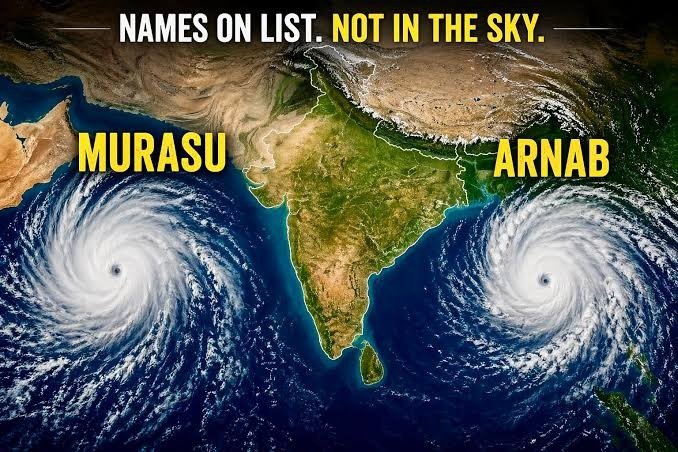
From Phailin and Fani to Dana, Odisha has witnessed several devastating cyclones, and now ‘Murasu’ has become the latest name drawing attention across the eastern coast. But have you ever wondered who decides these unusual names and why ? Cyclones are not named randomly or by any single country at its own discretion. Under an international system coordinated by the World Meteorological Organization (WMO) and the United Nations Economic and Social Commission for Asia and the Pacific (ESCAP), a panel of 13 countries in the North Indian Ocean region India, Bangladesh, Iran, Maldives, Myanmar, Oman, Pakistan, Qatar, Saudi Arabia, Sri Lanka, Thailand, the UAE and Yemen contributes names for cyclones.
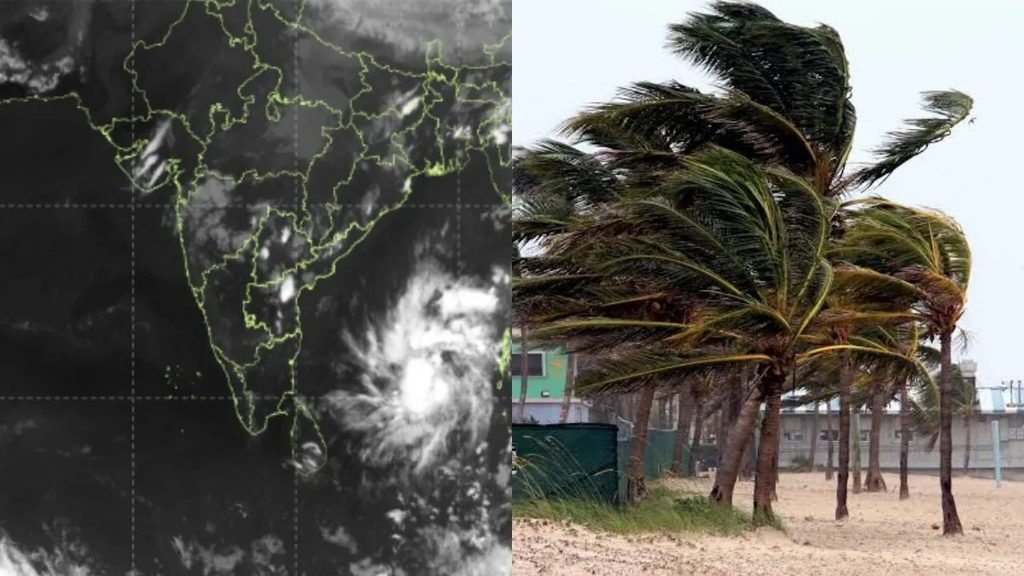
Each country has submitted 13 names, creating a list of 169 names that are used in sequence. In this region, the India Meteorological Department (IMD), through its Regional Specialised Meteorological Centre in New Delhi, is responsible for assigning names to qualifying cyclonic storms over the Bay of Bengal and Arabian Sea. A weather system does not receive a name as soon as a low-pressure area develops; it is named when its sustained wind speed reaches 34 knots, or around 62 kmph.
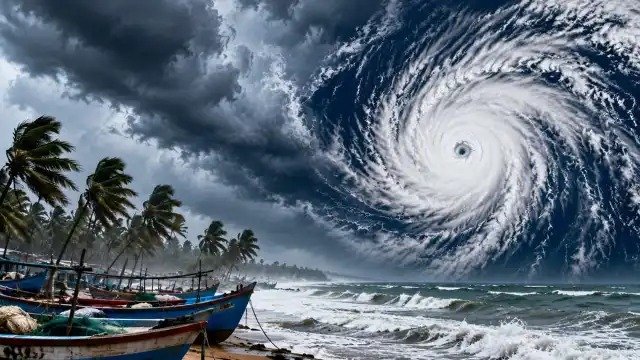
Interestingly, ‘Murasu’ is a name proposed by India in the list submitted in 2020. It is a Tamil word meaning a traditional drum or war drum, historically used to announce important messages and information. Other names proposed by India include Gati, Tej, Aag, Vyom and Neer. But why do Odisha and Andhra Pradesh repeatedly face cyclone threats ? The answer lies partly in the Bay of Bengal’s warm sea surface temperatures, high moisture content and favourable atmospheric conditions, which can support the formation and intensification of cyclones.

Many systems also move westward or northwestward, bringing the eastern coastline, including Odisha and Andhra Pradesh, into their potential paths. Cyclone activity also follows seasonal patterns: October often brings greater cyclone threats to the Odisha and West Bengal coasts, November to Andhra Pradesh, and December to Tamil Nadu, according to historical IMD records cited in the report. Naming cyclones makes weather warnings easier to communicate, helps authorities and the public distinguish between multiple storms, and improves coordination during emergencies.
The names must be short, easy to pronounce and free from controversial references; once used, a name is not repeated in the regional list. However, a cyclone’s name says nothing about how destructive it may become. Its actual impact depends on wind speed, rainfall, storm surge and its movement.

So, the next time a cyclone’s name makes headlines, remember: it is not the name that determines the danger it is the storm’s strength and the preparedness on the ground.