

 newspop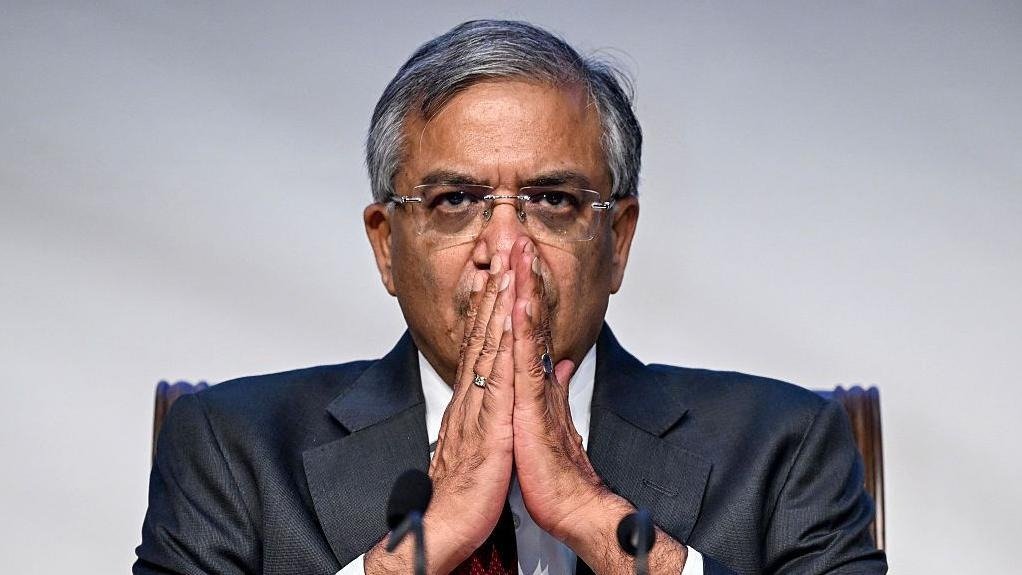
NewDelhi: Can a Chief Election Commissioner be removed from office ? And has any CEC in India ever actually been impeached ? As the political controversy surrounding Chief Election Commissioner Gyanesh Kumar intensifies in 2026, these questions have once again moved to the centre of national debate.
Opposition parties are preparing another removal motion against Kumar after an earlier attempt was rejected in April. According to the latest move follows an investigation reporting that Election Commissioners Sukhbir Singh Sandhu and Vivek Joshi raised objections on record at least 14 times over the past 10 months on issues linked to the functioning of the poll panel and the Special Intensive Revision (SIR).
The Election Commission, however, has said that differences and observations are a normal part of institutional deliberation and that decisions taken by the Commission over the past year were unanimous.
The present controversy is not the first major confrontation involving India’s election machinery. One of the most prominent episodes came in the 1990s, when then CEC T.N. Seshan emerged as a powerful figure in enforcing election rules. In 1993, the government expanded the Election Commission into a multi-member body, appointing M.S. Gill and G.V.G. Krishnamurthy as Election Commissioners.
Seshan challenged the move before the Supreme Court, arguing that it diluted his authority under Article 324. The Supreme Court ultimately upheld the multi-member structure, establishing an important chapter in the constitutional history of the Election Commission.
The Seshan era also witnessed disagreements within the Commission itself. G.V.G. Krishnamurthy and Seshan had differences, illustrating that internal disagreement among members of the poll panel is not entirely a new phenomenon. Similar questions resurfaced in later years. In 2009, the appointment of Navin Chawla as Chief Election Commissioner became controversial, with the BJP opposing his appointment and raising questions about his earlier record.
The episode brought renewed attention to the neutrality and appointment of Election Commission officials.
Another notable episode came during the 2019 Lok Sabha elections, when Election Commissioner Ashok Lavasa differed from the majority on decisions relating to alleged Model Code of Conduct violations. Lavasa later left the Election Commission before completing his tenure and joined the Asian Development Bank. His dissent became part of the wider discussion over how differences of opinion within a constitutional body should be handled.
The latest controversy surrounding Gyanesh Kumar has again brought the Election Commission’s internal functioning and removal mechanism under intense scrutiny. In April 2026, an Opposition-backed notice seeking Kumar’s removal was rejected by the Rajya Sabha Chairman and Lok Sabha Speaker. The Rajya Sabha Chairman said the allegations did not provide the proof necessary to establish a prima facie case of “misbehaviour” required for removal.
The Constitution sets an exceptionally high threshold for removing a CEC: under Article 324(5), the Chief Election Commissioner can be removed only in the same manner and on the same grounds as a Supreme Court judge. Under the constitutional process, removal requires proven misbehaviour or incapacity and approval by the required majorities in both Houses of Parliament.
The Opposition is now preparing another motion against Kumar, with sources saying the proposal is being drafted with legal experts and may be submitted in both Houses. Meanwhile, the Election Commission has maintained that differing views and internal observations are part of normal decision-making and that its final decisions have been unanimous.
The larger historical picture is clear: disagreements, political criticism and demands for action against Election Commission officials have surfaced at different points in independent India’s history but no Chief Election Commissioner has ever been removed through Parliament’s constitutional removal process.