 newspop
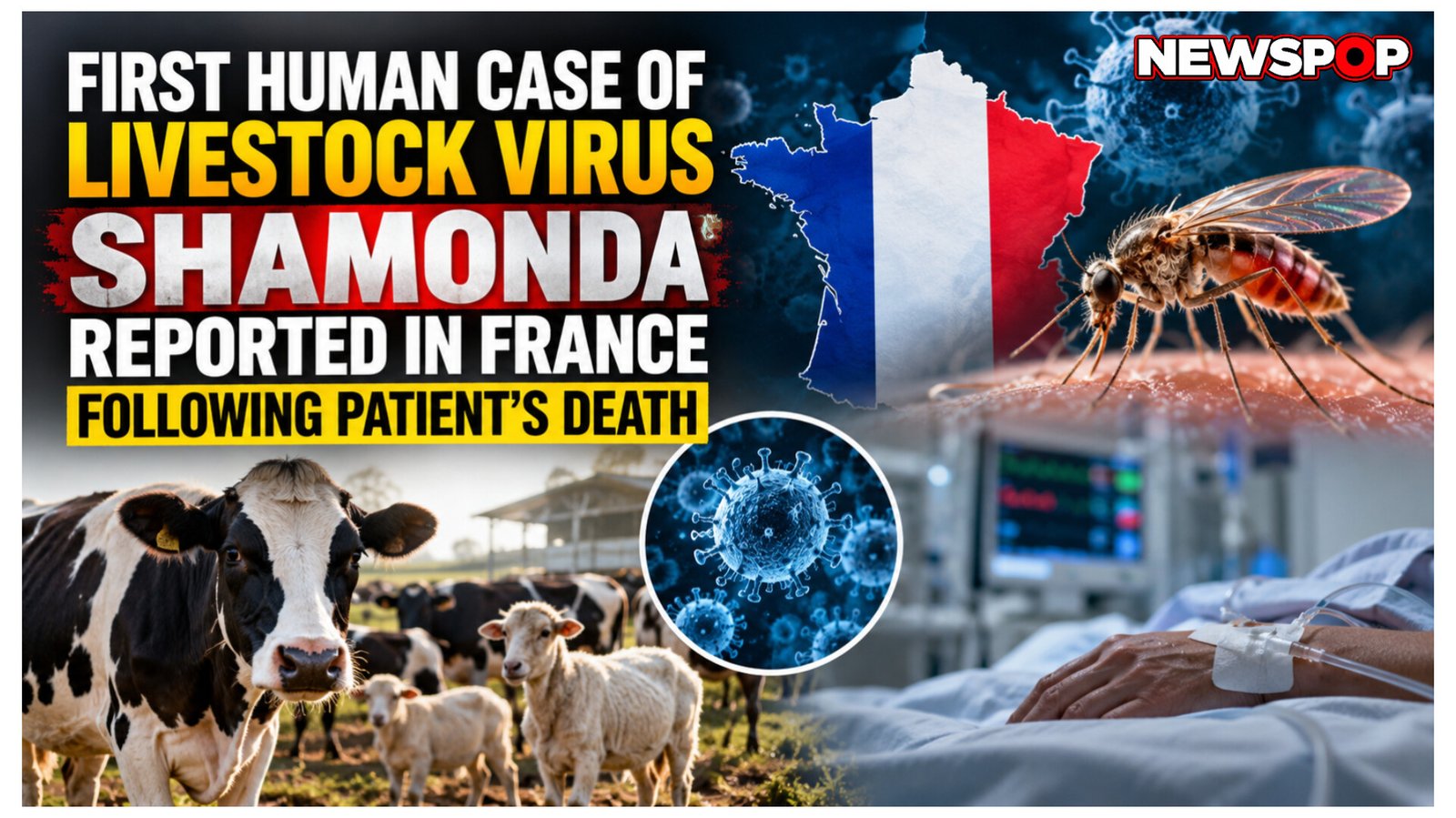
New Delhi : France has reported its first-ever human case of the Shamonda virus, a pathogen primarily associated with livestock and transmitted by biting midges. The infected patient, who was already receiving treatment for a serious underlying medical condition, died in early October.
The European Centre for Disease Prevention and Control (ECDC) has confirmed that investigations are underway to establish how the patient contracted the virus and whether the infection played a role in the death. Authorities have, however, reassured the public that the case currently poses no identified health risk to the general population.
First identified in Nigeria in the mid-1960s, the Shamonda virus predominantly affects cattle but has also been detected in other animals, including sheep, goats, horses and alpacas, according to the World Organisation for Animal Health (WOAH).
The virus attracted attention in Europe in late July after genetic testing detected it in sick livestock in southern Germany, Switzerland and eastern France. Subsequent surveillance has indicated its presence in several other European countries, including Austria, Belgium, Ireland, Italy and Spain, as well as Jersey in the Channel Islands.
Beyond its potential public health implications, the virus has raised concerns for the agricultural sector because of its impact on livestock productivity. A recent study involving nine dairy farms in France found that milk production in affected herds declined by as much as 75%, highlighting the potential economic consequences for farmers.
There are currently no commercially available vaccines against the Shamonda virus. French health authorities and the ECDC are continuing to monitor developments, investigate the circumstances surrounding the human infection and assess any potential implications for public health.
Officials are expected to gain a clearer understanding of the case as investigations progress, while current assessments indicate that the wider public faces no identified health threat.




 Mudasir Maqbool