
 newspop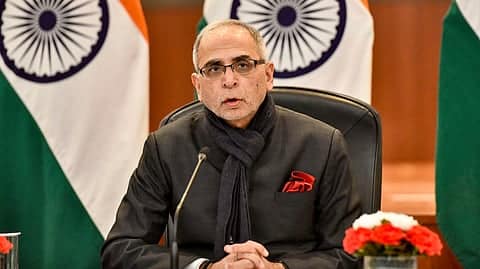
New Delhi : India’s Ambassador to the United States, Vinay Kwatra, has strongly defended New Delhi’s decision to place the Indus Waters Treaty (IWT) in abeyance, asserting that Pakistan had already undermined the agreement through decades of hostility and obstruction.
In an opinion piece published in Newsweek, Kwatra argued that the 1960 treaty was founded on goodwill and mutual trust, but Pakistan’s conduct steadily eroded that spirit long before India suspended the pact. “Pakistan spent half a century dismantling that goodwill and friendship. The abeyance merely acknowledges what Pakistan’s conduct had already destroyed,” he wrote.
His remarks came days after Pakistan hosted a conference criticising India’s decision, where a former Pakistani official warned of military conflict over the Indus river system. Rejecting the rhetoric, Kwatra said Islamabad has long relied on creating external crises to divert attention from its domestic political and economic challenges.
The ambassador noted that under the Indus Waters Treaty, Pakistan received control of the western rivers, accounting for nearly 80% of the basin’s waters, while India retained the eastern rivers. Despite this arrangement, he said, India consistently honoured the agreement for decades even as Pakistan resisted efforts to modernise the treaty in line with changing climate conditions, technological advancements and growing development needs.
Kwatra further stated that Pakistan’s repeated obstruction weakened India’s confidence in the treaty and made meaningful cooperation increasingly difficult.
Reiterating India’s position on bilateral engagement, he echoed Prime Minister Narendra Modi’s stance that “terror and talks cannot go together,” adding that “terror and trade cannot go together” and “water and blood cannot flow together.” India placed the treaty in abeyance after the April 22, 2025, Pahalgam terror attack in Jammu and Kashmir, in which 26 people were killed. Indian authorities linked the attack to Pakistan-backed terror groups.
Responding to allegations that India is using water as a weapon, Kwatra said Pakistan’s water crisis is rooted in its own systemic failures. He pointed to heavy transit losses due to ageing infrastructure, poor water management, and inefficient irrigation systems, arguing that Islamabad should focus on fixing these long-standing issues instead of blaming its neighbours.


 Mudasir Maqbool