

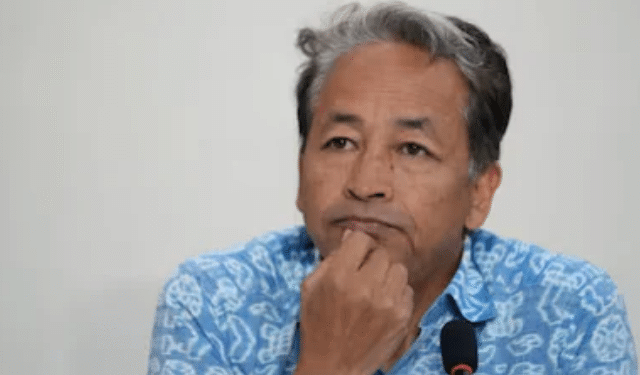
New Delhi : Climate activist Sonam Wangchuk has reportedly been placed under a 60-day house arrest in Ladakh, with the Leh administration restricting him from participating in public rallies. The preventive order was issued by the Additional District Magistrate under Section 163 of the Bharatiya Nagarik Suraksha Sanhita (BNSS).
The move comes amid growing opposition to the administration’s decision to conduct elections to the Ladakh Autonomous Hill Development Councils (LAHDC) and local bodies on December 4.
Wangchuk, who was removed from a protest location before the order was issued, took to social media platform X to raise concerns over the restrictions. He claimed that dozens of armed security personnel had surrounded him for raising uncomfortable questions, including the delay in releasing the Judicial Enquiry Commission report and the decision to hold elections during the harsh winter season.
Winter Elections Trigger Political Backlash
The proposed electoral exercise, one of the major elections in Ladakh since its separation from the erstwhile state of Jammu and Kashmir in 2019, has triggered strong resistance from political and civil society organisations.
The Ladakh Buddhist Association has announced a boycott of the municipal elections, while residents in Kargil observed a complete shutdown in protest.
Opposition groups argue that freezing temperatures, difficult weather conditions and seasonal migration could prevent large sections of the population from exercising their voting rights.
Administration Defends December 4 Poll Schedule
Defending the election timetable, Chief Secretary Ashish Kundra said the newly restructured councils need to be constituted without delay to facilitate the preparation of upcoming budgets and administrative planning.
He also assured that arrangements would be made to minimise inconvenience to voters, including heaters at polling stations, separate queues for senior citizens and necessary operational support.
Elections Across Eight New District Councils
The restructured electoral exercise will cover 100 constituencies across eight newly created district councils, along with elections to local panchayats and municipal bodies.
However, the decision to proceed with winter polling has intensified tensions between the administration and sections of Ladakh’s political and civil society, with concerns over democratic participation and the region’s difficult winter conditions remaining at the centre of the controversy.
