

 newspop
₹10 and ₹20 Plastic Notes to Be Rolled Out for Pilot Testing ; Existing Paper Notes Will Continue
New Delhi: In a major step towards strengthening India’s currency security, the Reserve Bank of India (RBI) is set to introduce 200 crore polymer (plastic) banknotes as part of a large-scale pilot project. The initiative has received approval from the Central Government, Minister of State for Finance Pankaj Chaudhary informed Parliament on Monday.
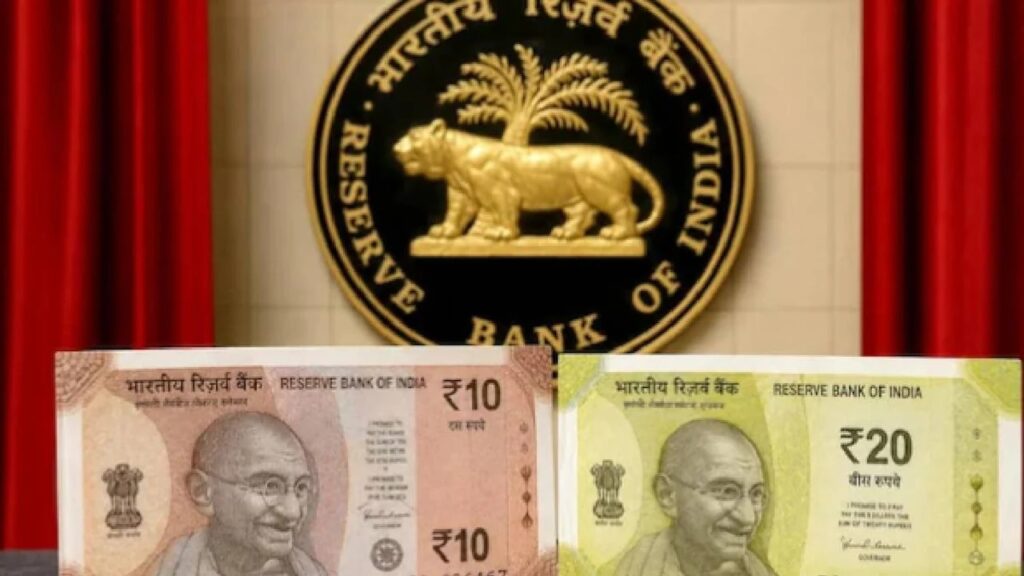
Under the pilot programme, RBI will issue 100 crore ₹10 notes and 100 crore ₹20 notes made from advanced polymer material. These notes will be circulated in selected regions for field testing. If the trial proves successful, the central bank plans to introduce polymer notes of these denominations on a regular basis across the country.
The proposal was made following recommendations from the RBI’s Central Board, which sought government approval to launch polymer banknotes as a safer and more durable alternative to traditional paper currency.
Importantly, the government has clarified that paper currency will continue to remain in circulation alongside polymer notes, and there are currently no plans to phase out existing paper banknotes.
Earlier in June, RBI Governor Sanjay Malhotra had confirmed that work on introducing polymer banknotes was progressing. RBI’s currency printing unit has also issued a global Expression of Interest (EOI) inviting manufacturers to supply specialised polymer substrate sheets, the material used to print these advanced banknotes. The last date for submitting bids under the tender is August 18.
Polymer banknotes offer several advantages over conventional paper notes. They are water-resistant, dust-resistant, and far more durable, making them less likely to tear or wear out during everyday use. Their longer lifespan also reduces replacement costs over time.
One of the biggest advantages of polymer currency is its ability to incorporate state-of-the-art security features, making counterfeiting significantly more difficult. Experts believe this move will help curb the circulation of fake currency and further strengthen India’s financial security.
The pilot marks an important milestone in India’s efforts to modernise its currency system while enhancing durability, security, and public convenience.