
 newspop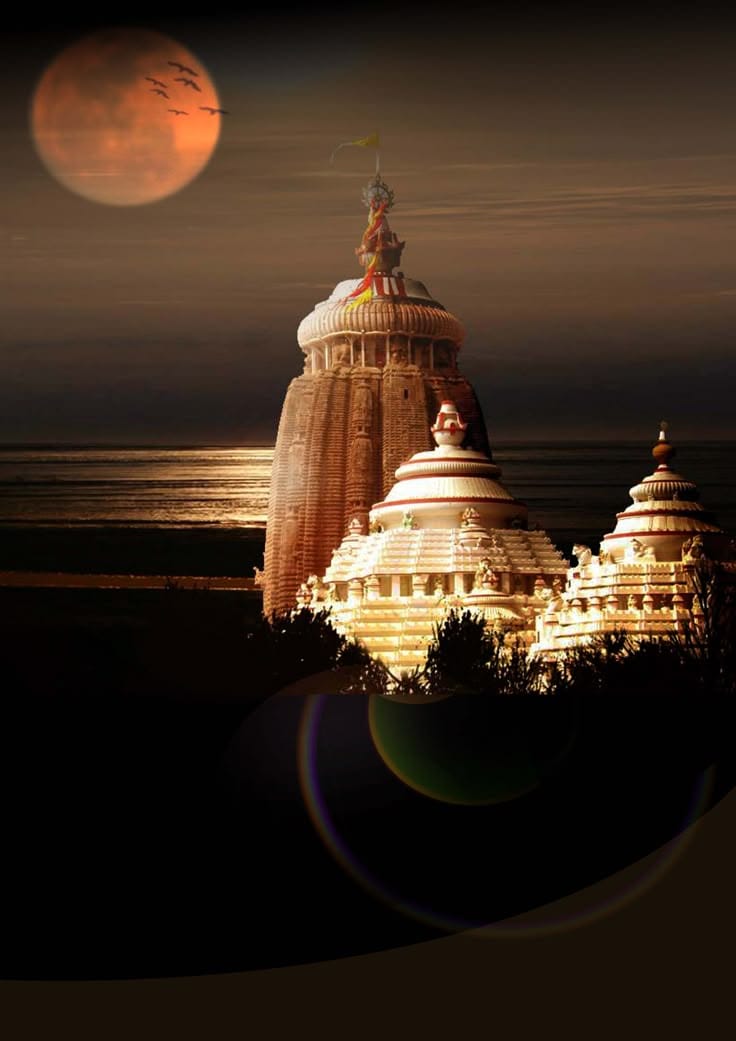
SPECIAL STORY: Where faith meets mystery, every stone tells a story and every tradition carries a secret
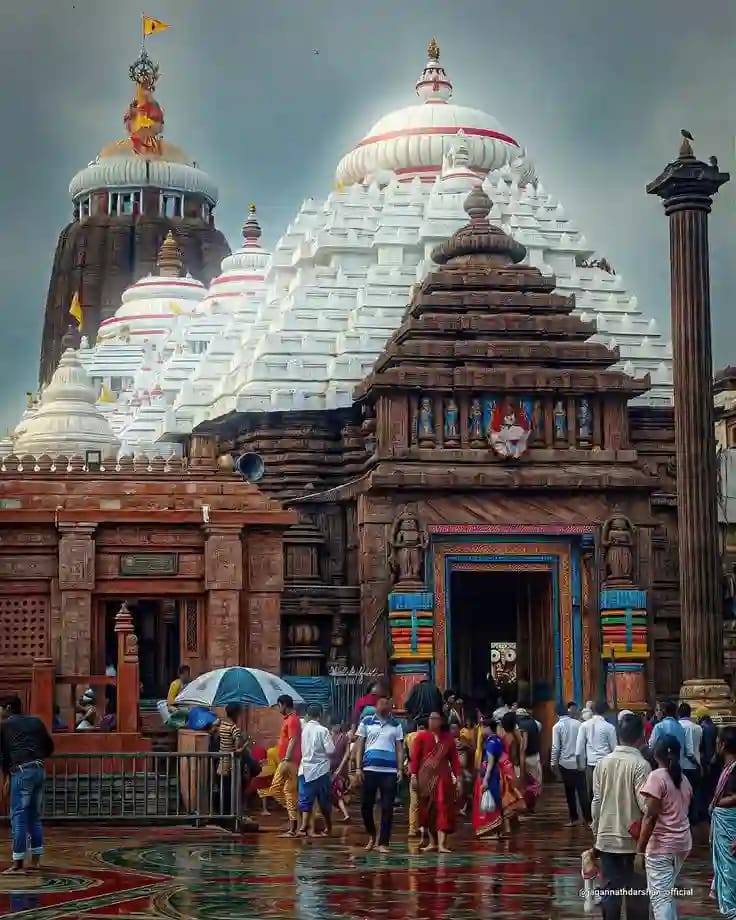
PURI, ODISHA: There are places where history can be read in books and then there are places where history is felt in the heart. The Shree Jagannath Temple in Puri, one of Odisha’s most sacred spiritual landmarks, belongs to the second category.
For centuries, millions of devotees have travelled to Puri seeking the blessings of Lord Jagannath, Lord Balabhadra and Devi Subhadra. The magnificent temple, rising above the holy city, is not merely an architectural monument. It is the centre of a living tradition that has survived generations, dynasties, invasions, political changes and the passage of time.
Yet beyond the daily rituals and grand festivals lies another fascinating side of the temple its mysteries.
From the famous Mahaprasad tradition, and the unusual temple kitchen to the Neelachakra, the flag that appears to move against the direction of the wind, the absence of birds and aircraft directly above the main temple structure, and countless legends associated with Lord Jagannath, Puri has inspired questions for generations.
Some stories are deeply rooted in religious belief. Others have historical explanations. And some remain fascinating mysteries precisely because they cannot easily be separated from centuries-old tradition.
A TEMPLE WHERE GOD IS WORSHIPPED AS A LIVING PRESENCE
The first mystery of Jagannath is perhaps the most beautiful one: Lord Jagannath is not worshipped merely as a divine image, but as a living presence. The rituals surrounding the deities resemble the daily routine of a living king. The deities are offered food, dressed in different forms, taken to ceremonial journeys and even given periods of rest.
This distinctive tradition is one reason why the Jagannath culture feels different from many other Hindu temples. The annual Rath Yatra transforms Puri into a sea of devotion, as the three deities leave the sanctum and travel on their massive chariots. Millions of devotees gather to witness the journey, believing that even a glimpse of the Lord during this sacred festival can bring divine blessings.
THE UNUSUAL IDOLS OF LORD JAGANNATH
One of the most distinctive features of the Puri temple is the appearance of its principal deities. Unlike conventional stone idols, Lord Jagannath, Lord Balabhadra and Devi Subhadra are represented through wooden forms known as Daru.
The tradition of periodically replacing the wooden bodies of the deities is known as Nabakalebara, literally associated with a “new body.” The ceremony is conducted according to elaborate religious traditions and is considered one of the most extraordinary rituals associated with the Jagannath culture.
The identity and selection of the sacred wood are governed by strict customary rules, making Nabakalebara one of the most closely guarded and spiritually significant traditions of the temple.
THE MYSTERY OF THE WORLD-FAMOUS TEMPLE KITCHEN
Perhaps no discussion about Jagannath Temple mysteries is complete without mentioning its enormous kitchen.
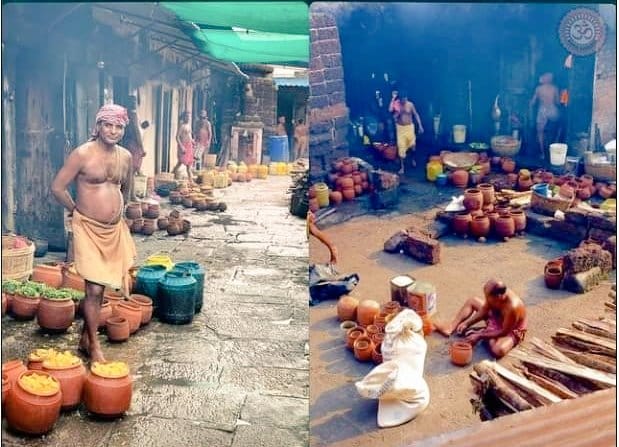
The temple kitchen is traditionally regarded as one of the largest kitchens associated with a religious institution. Food prepared there becomes Mahaprasad, which holds immense spiritual importance for devotees. One of the most fascinating traditional claims concerns the cooking method.
According to temple tradition, several earthen pots may be placed one above another over the fire, and the food in the upper pots is said to cook before or along with the lower ones. Devotees regard this as another divine wonder associated with Lord Jagannath.
From a scientific perspective, however, cooking in stacked vessels can be influenced by heat transfer, steam and the design of the cooking system. Therefore, the phenomenon should be understood as part of a traditional cooking method rather than automatically described as something scientifically impossible.
THE FLAG THAT DEFIES THE WIND ?
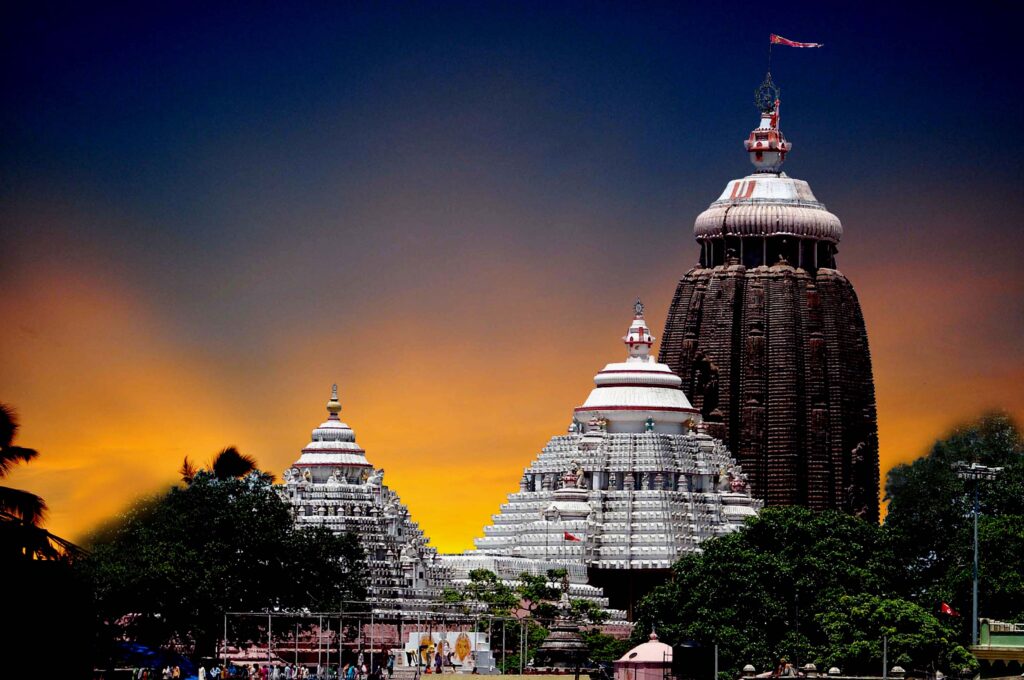
High above the temple flies the sacred Patitapavana Bana, the temple flag. A popular belief says that the flag appears to flutter in a direction opposite to the prevailing wind. For devotees, this is considered one of the many signs of the divine power of Lord Jagannath.
However, wind around a large architectural structure can behave differently from wind measured in an open area. Airflow can change direction because of the shape, height and surrounding structures of the temple. Thus, what appears mysterious from the ground can also be examined through atmospheric science. But for millions of devotees, the flag remains much more than a physical object it is a powerful symbol of the presence of the Lord.
THE NEELACHAKRA: A SACRED SYMBOL AT THE TOP
Another fascinating feature is the Neelachakra, the sacred wheel positioned at the top of the temple. The wheel is traditionally associated with Lord Vishnu and holds immense religious significance.
One of the most striking aspects of the Neelachakra is its visibility from different parts of Puri. Its presence above the temple has become an unmistakable symbol of Jagannath consciousness. The sacred flag is attached to the Neelachakra, and the daily flag changing ritual itself is a remarkable tradition.
WHY DO PEOPLE SAY BIRDS DO NOT FLY ABOVE THE TEMPLE ?
A widely repeated mystery surrounding the Jagannath Temple is that birds do not fly over the main temple. Stories about this have travelled far beyond Odisha and have contributed to the temple’s aura of mystery.
However, claims that absolutely no bird ever passes over the temple should be treated cautiously. There is no need to turn a traditional observation into an established scientific fact without reliable evidence. The temple’s extraordinary height, surrounding airflow, urban environment and human activity can all influence bird movement. Yet the belief continues to fascinate devotees and visitors because it has become part of the cultural mythology surrounding Puri.
ANOTHER FAMOUS CLAIM : NO AIRCRAFT OVER THE TEMPLE ?
Another popular story claims that aircraft never fly directly above the Jagannath Temple. This is sometimes presented as a supernatural phenomenon.
In reality, aviation routes and restricted or controlled airspace can explain why aircraft may not normally pass directly over particular sensitive areas. Therefore, the claim should not automatically be described as evidence of supernatural forces.
Still, the fact that such stories have survived for generations demonstrates how deeply mystery and devotion are intertwined in Puri.

THE SEA THAT SEEMS TO CHANGE ITS SOUND
Puri’s location beside the Bay of Bengal adds another layer to its mystical atmosphere.
One popular belief says that the sound of the sea becomes less audible after entering the temple premises through the Singhadwara, or Lion Gate.
Devotees have interpreted this as another divine phenomenon. Acoustic conditions, walls, distance and the structure of the surrounding area can affect how sound is perceived. Yet the traditional story continues to hold an important place in the spiritual imagination of devotees. In Puri, such stories are not simply about proving or disproving a phenomenon they are part of the cultural experience of the sacred city.
THE TEMPLE’S FOUR GATES
The Jagannath Temple has four principal gates, traditionally known as :
Singhadwara The Lion Gate
Ashwadwara : The Horse Gate
Vyaghradwara : The Tiger Gate
Hastidwara : The Elephant Gate
Each gate carries symbolic significance and reflects the rich religious and architectural traditions associated with the temple. The Singhadwara is the principal entrance and is especially important to devotees.
WHY IS MAHAPRASAD SO SPECIAL ?
For a devotee, Mahaprasad is not simply food. It is sacred. The food offered to Lord Jagannath is distributed as Mahaprasad and is traditionally regarded as spiritually pure. People from different backgrounds share it together, reflecting the inclusive character often associated with Jagannath culture. The Ananda Bazaar inside the temple complex is famous for the sale and distribution of Mahaprasad. One of the strongest messages associated with the tradition is that Mahaprasad is meant to transcend social distinctions.
THE MYSTERY OF THE SACRED DARU
Among the most intriguing traditions is the search for the sacred neem trees used during Nabakalebara. The process is surrounded by detailed rituals and religious signs. Specific characteristics of the tree, its surroundings and associated traditions are considered before the sacred wood is selected. For believers, this is not merely the cutting of a tree. It is the discovery of the Lord’s next body. That spiritual interpretation makes the process one of the most extraordinary living traditions in India.
THE SECRET RITUALS OF THE TEMPLE
The Jagannath Temple follows an elaborate daily ritual schedule. Many rituals are conducted according to centuries-old traditions, and certain practices are restricted to authorised servitors. Because outsiders cannot witness every ritual, stories about hidden chambers, secret ceremonies and mysterious objects have circulated for generations. However, many sensational claims found on social media should be treated carefully.The temple’s genuine traditions are already extraordinary enough without adding unverified stories.
THE MOST IMPORTANT ‘MYSTERY’ MAY BE FAITH ITSELF
Perhaps the greatest mystery of Jagannath is not whether a flag moves against the wind or whether birds fly above the temple. It is the extraordinary emotional connection between the deity and devotees.
People arrive in Puri from villages, cities and countries far away. Some come after years of waiting. Some come carrying personal struggles. Some come simply to stand before the Lord for a few moments. For many, the experience is impossible to explain scientifically. And faith is one of the most powerful forces behind the enduring story of Jagannath.
A LIVING HERITAGE, NOT JUST AN ANCIENT MONUMENT
The Shree Jagannath Temple of Puri is more than an old building. It is a living institution.
Its rituals continue. Its kitchen continues to prepare Mahaprasad. Its servitors continue ancient responsibilities. Its festivals continue to bring enormous crowds to Puri.
The temple connects mythology, history, architecture, ritual, food, music, art and community life in a way few places can.
That is why every generation discovers something new in Jagannath. For some, the temple is a historical wonder. For others, it is an architectural marvel. For many, it is a place of miracles.And for millions of devotees, it is simply the home of Mahaprabhu.
JAI JAGANNATH
As the sacred flag rises above the Neelachakra and the chants of “Jai Jagannath” echo through the holy city, Puri reminds the world of something timeless:
Some mysteries are not meant merely to be solved they are meant to be experienced. And perhaps that is the enduring magic of Jagannath Dham:
where history meets faith, tradition meets mystery, and every journey ends with the same prayer.