
 newspop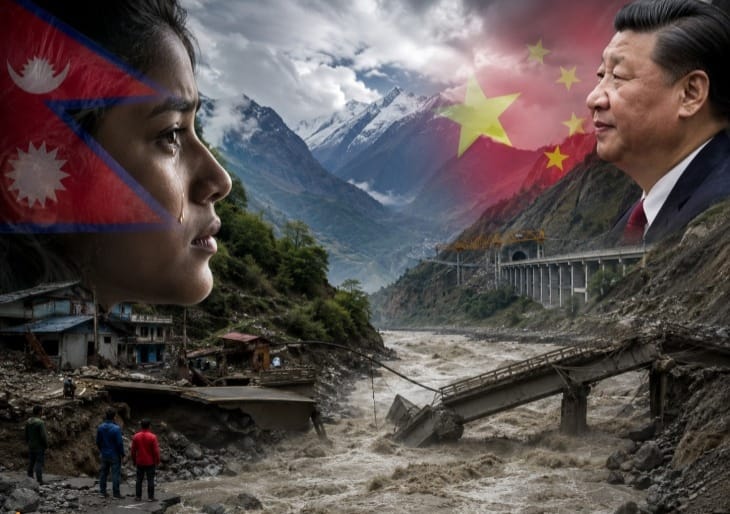
Hundreds Dead in Nepal, Few Reported in Tibet: Why the Huge Difference ?
New Delhi : A devastating flood has left Nepal struggling with death and destruction, while questions are being raised over what happened on the other side of the Himalayas in Tibet. With reports of a huge difference in the number of casualties, concerns over restricted access and the lack of independent information have fueled speculation. But is there really something being hidden or is the mystery being amplified by the information vacuum?
The Himalayan region has witnessed a devastating natural disaster, with powerful torrents of water, mud and debris sweeping through villages and destroying homes and infrastructure in Nepal. As rescue teams continue searching for survivors and missing people, the death toll has reportedly climbed to nearly 600, while many others remain unaccounted for. Amid the tragedy, attention has also turned toward Tibet, across Nepal’s northern border, where similar flooding reportedly affected areas close to the Nepal border.
The striking difference in reported casualties has triggered questions. Reports have suggested that while Nepal has recorded hundreds of deaths, Chinese authorities have reported only a handful of fatalities in the affected areas of Tibet. This contrast has led to speculation about whether the full extent of the disaster on the Tibetan side is being publicly disclosed.
However, the actual scale of damage and casualties would require independent verification, particularly because access to some parts of Tibet is tightly controlled.According to reports cited by international media, areas around the Gyirong border crossing and nearby settlements in Tibet were also affected by severe flooding. The region is home to thousands of people and lies close to Nepal’s border.
While Chinese authorities have released information about rescue and relief operations, independent journalists and outside observers face significant restrictions when attempting to report from Tibet.The lack of unrestricted access has further intensified the debate. Images released through Chinese state media have largely focused on rescue and relief efforts, while independent accounts from residents can be difficult to obtain.
Analysts and China experts have long pointed to the strict restrictions on information and movement in Tibet, arguing that such limitations can make it difficult for the outside world to independently assess events unfolding in the region.China expert Professor Steve Tsang, director of the China Institute at SOAS University of London, has previously highlighted the Chinese government’s emphasis on national security when dealing with sensitive developments in Tibet. Such observations have added to concerns among observers about the transparency of information coming from the region.
At the same time, the disaster has raised another crucial question: what triggered the catastrophic flooding in Nepal? The Himalayas are highly vulnerable to extreme rainfall, landslides, glacial lake outburst floods and other climate-related hazards. If water originated from upstream areas in the Tibetan plateau, scientists and authorities would need detailed hydrological and satellite data to determine exactly how the disaster unfolded.
Speculation about whether a glacial lake burst or another upstream event contributed to the flooding should therefore be treated cautiously until scientific evidence is available. There is currently no established evidence in the information provided that the disaster was deliberately caused by China. Similarly, differences in reported casualty figures alone cannot prove that deaths or damage are being concealed.
What is clear, however, is that the disaster has created an urgent need for transparent information, independent verification and greater cross-border cooperation. Satellite imagery, hydrological records, rainfall data and on-ground assessments could help establish the sequence of events and determine the true scale of destruction on both sides of the border.
For families in Nepal still waiting for news of missing loved ones, the most important question is not political speculation it is the truth about what happened. As rescue and relief operations continue, greater transparency from all authorities could help answer those questions and ensure that the victims of this devastating Himalayan disaster are not forgotten.