

 newspop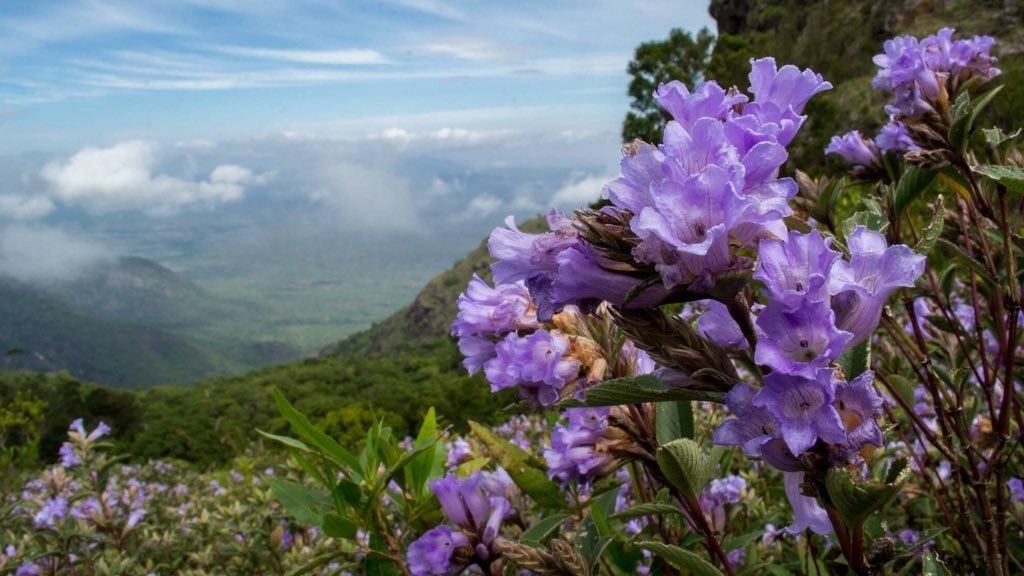
Munnar : Sometimes, nature creates a spectacle so breathtaking that it feels less like reality and more like a dream. After a long wait of 12 years, the hills of Munnar in Kerala are once again witnessing one of nature’s rarest and most enchanting phenomena the blooming of the Neelakurinji flowers. The slopes of Korandakadu hills near Mattupetty have burst into shades of blue and violet, creating a mesmerizing landscape that appears to be covered with a vast blue carpet.
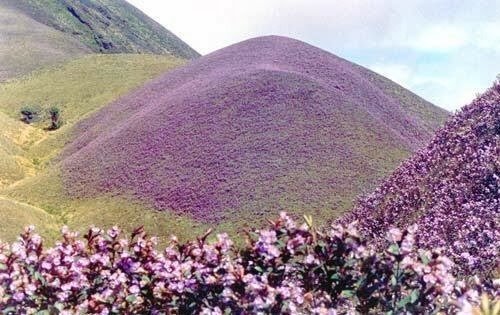
For nature lovers, photographers and visitors, the sight is nothing short of magical, as entire stretches of the Western Ghats seem to have been painted by nature herself. Scientifically known as Strobilanthes kunthiana, Neelakurinji is famous for its unusual flowering cycle, with the plant generally blooming once every 12 years.
When thousands of these tiny flowers bloom together, they transform the green mountain slopes into a spectacular sea of blue and purple. The phenomenon is not merely a visual treat but also an important part of the ecological and cultural heritage of the Western Ghats. Neelakurinji is closely associated with the unique shola grassland ecosystem, which supports a rich variety of flora and fauna.
The plant generally grows in high-altitude regions, particularly at elevations of around 1,300 to 2,400 metres, and under favourable conditions can grow considerably taller than its usual size. One of the most remarkable aspects of the plant is its life cycle. After flowering and producing seeds, the plant completes its life cycle and dies, making its mass blooming an especially rare natural event. Across India, more than 40 species of the Strobilanthes group are reported, although not all follow exactly the same flowering cycle.
The Neelakurinji bloom also carries deep cultural significance for the Paliyan tribal community, who have traditionally associated the flowering cycle with the passage of time and used the appearance of the flowers as a traditional way of calculating age.
For generations, the flower has therefore represented much more than beauty it has served as a natural marker of time, memory and generations. The name ‘Neelakurinji’ is also associated with the Kunthi River, which flows through Kerala’s Silent Valley region, where related plants are found.
The plant’s connection with the high-altitude landscapes of the Western Ghats further highlights the importance of protecting these fragile ecosystems from habitat loss and environmental degradation. Kerala’s Kurinjimala Sanctuary was established in part to protect the unique habitat of Neelakurinji, with a large area dedicated to the conservation of its natural environment.
The conservation of these grasslands is also important for wildlife, particularly the endangered Nilgiri tahr, a species closely associated with the high-altitude grasslands of the Western Ghats. The spectacular flowering of Neelakurinji is therefore a reminder of the delicate relationship between plants, animals, local communities and the mountain ecosystem.
As the blue-violet blossoms return to Munnar after years of waiting, they bring with them a powerful message from nature that some of the most beautiful moments in life are worth waiting for. For Munnar, this is not simply a season of flowers; it is a once-in-years celebration of nature, biodiversity, culture and the timeless beauty of the Western Ghats.