
 newspop
From War to Trade : Modi’s Big Push for a More Balanced Global Order at BRICS
New Delhi : India delivered a strong message to the world from the BRICS Summit, calling for an end to conflicts, greater restraint in the use of tariffs and a more representative global order in which developing nations have a stronger role in shaping international rules. At the 18th BRICS Summit, Prime Minister Narendra Modi underlined the principles of “Humanity First” and called for transforming the Global South from a “rule-taker” into a “rule-shaper.”
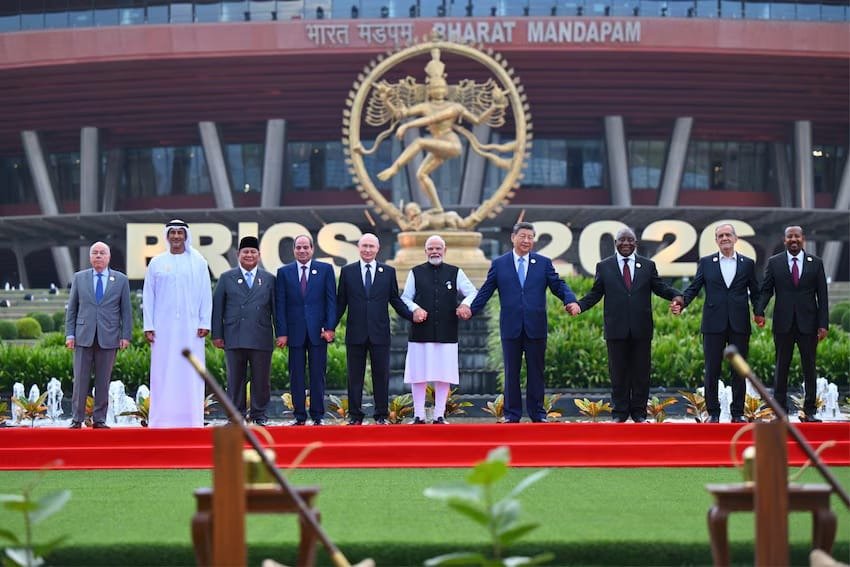
The summit also witnessed the unanimous adoption of the New Delhi Declaration, marking an important diplomatic outcome for India’s BRICS chairship. In a striking image from the summit, Prime Minister Modi, Chinese President Xi Jinping and Russian President Vladimir Putin were seen together in the same frame as BRICS leaders reiterated the need for dialogue, diplomacy and peaceful resolution of conflicts.
The New Delhi Declaration expressed concern over escalating tensions in West Asia and called on all parties to exercise maximum restraint, while condemning unilateral military actions and attacks. It also stressed the need to protect civilians, ensure the continuity of maritime transport and safeguard global supply chains amid ongoing conflicts in the Middle East.
The declaration further called for greater representation of the Global South and developing countries in major international institutions such as the IMF and WTO, reflecting changing global economic realities. On trade, BRICS countries backed efforts to encourage greater use of local currencies in mutual transactions, reducing dependence on the US dollar.
Terrorism also featured prominently in the declaration, with BRICS nations strongly condemning all forms of terrorism and specifically referring to the Pahalgam terror attack in India, while calling for tougher action against terror financing and state-sponsored terrorism.
Addressing the summit, PM Modi said BRICS has now reached a level of maturity and must prepare an ambitious new agenda for the next 20 years. He proposed strengthening the BRICS Troika Tracking Mechanism to ensure continuity, follow-up and implementation of decisions even as the BRICS chairmanship changes from one country to another.
Modi also called for a more effective implementation system and suggested that a roadmap for global governance reforms should focus on three key areas representation, responsiveness and rule-making. He further stressed that reforms of the United Nations Security Council can no longer be delayed and that discussions on the issue should be completed within a defined timeframe with concrete outcomes.
Modi’s broader vision was to transform global governance from a “pyramid of privileges” into a “platform of partnership,” giving the Global South a greater voice in decisions that shape the world. He also highlighted the importance of ensuring that developing countries have a meaningful role in framing rules for emerging areas such as artificial intelligence, cyberspace, outer space and biotechnology.
Chinese President Xi Jinping also called on BRICS nations to work towards global peace, stressing that wars serve no one’s interests and that conflicts should be resolved through diplomatic means. He pointed to the impact of wars on civilians and global energy markets and called for efforts to end the ongoing conflict in the Middle East.
The BRICS grouping, which began in 2006 with four countries, has now expanded into a much larger platform with 21 members, reflecting its growing influence in global affairs. Marking two decades of the BRICS journey, Prime Minister Modi also released two commemorative postage stamps, adding a symbolic touch to the summit and highlighting the grouping’s evolution over the past 20 years.