
 newspop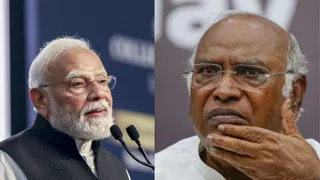
New labels to mask failures
New Delhi : Opposition leaders have launched a scathing attack regarding Prime Minister Narendra Modi’s address at the centenary celebrations of Delhi University’s Shri Ram College of Commerce (SRCC).
The opposition alleged that instead of discussing substantive issues concerning students, the youth, and education, the Prime Minister used a prestigious academic platform to target his political adversaries.
In his speech, the Prime Minister revisited the term “Urban Naxal” —which he had previously mentioned during his Independence Day address—stating that those who support the ideologies he had criticized are now being exposed.
At the SRCC event, PM Modi remarked that the moment he administered the “homeopathic dose” regarding “Urban Naxals,” these individuals began to emerge one by one. He added that the public is now witnessing the true faces of those who propagate this “malady.”
He also spoke of two types of people in society: one section transforms societal strength into national strength, while the other—likened to a Naraz Fufa—gets annoyed whenever a new initiative begins and opposes everything.
Targeting the Prime Minister’s visit, Congress President Mallikarjun Kharge stated that the SRCC platform should have been an opportunity for a meaningful dialogue with the youth regarding education, employment, and the future; instead, it was reduced to a mere political campaign.
Kharge remarked that it has become Modi’s modus operandi to coin a new epithet for the opposition every year to suppress questions and mask his government’s failures—labels ranging from “disgruntled uncle” and “Urban Naxal” to “Khan Market Gang,” “Andolanjeevi”, and “parasites.” While the labels change, the Modi government’s anti-people policies remain unchanged. Congress leader Pawan Khera also attacked the Prime Minister, stating that the repeated attacks on the opposition reflect the Prime Minister’s sense of inferiority. Khera remarked that after being in power for 12 years, the Prime Minister should have presented an inspiring vision to the nation’s youth from a platform like SRCC, rather than engaging in political rhetoric.
Manoj Kumar Jha, a Rashtriya Janata Dal (RJD) MP and a former student and teacher at Delhi University, also criticized PM Modi’s statement. He said that the Prime Minister should have used the occasion to discuss the fundamental issues faced by students and teachers.
Jha stated that he would not make irresponsible remarks like the Prime Minister and would uphold the dignity of the office. The college he visited has a history spanning over a century; that institution deserved respect.
Previously, questioning the government at DU was not considered a crime. Today, however, anyone who questions the government’s ‘development narrative’ is labeled a traitor, a ‘Naraz Fufa’, or an ‘Urban Naxal’.
Pointing to long-standing issues regarding infrastructure and faculty at the university, Jha remarked that such words are recalled only when the time for departure draws near.
Meanwhile, in his speech lasting approximately 50 minutes, Prime Minister Narendra Modi recalled his previous visit to SRCC in February 2013, when he was the Chief Minister of Gujarat. Comparing the economic situation of 2013 with the present, he stated that the country has moved beyond the phase of ‘policy paralysis’ and entered an era of ‘policy dynamism’.
The PM noted that in 2013, India was grappling with challenges such as terror attacks, inflation, and corruption; the growth rate was low, and inflation was at its peak. He also took aim at critics who had categorized India among the ‘Fragile Five’ economies during that period and who are now unable to acknowledge the country’s economic growth.
Report – Abhijit Tushar Bhatt (Political Editor)