
 newspop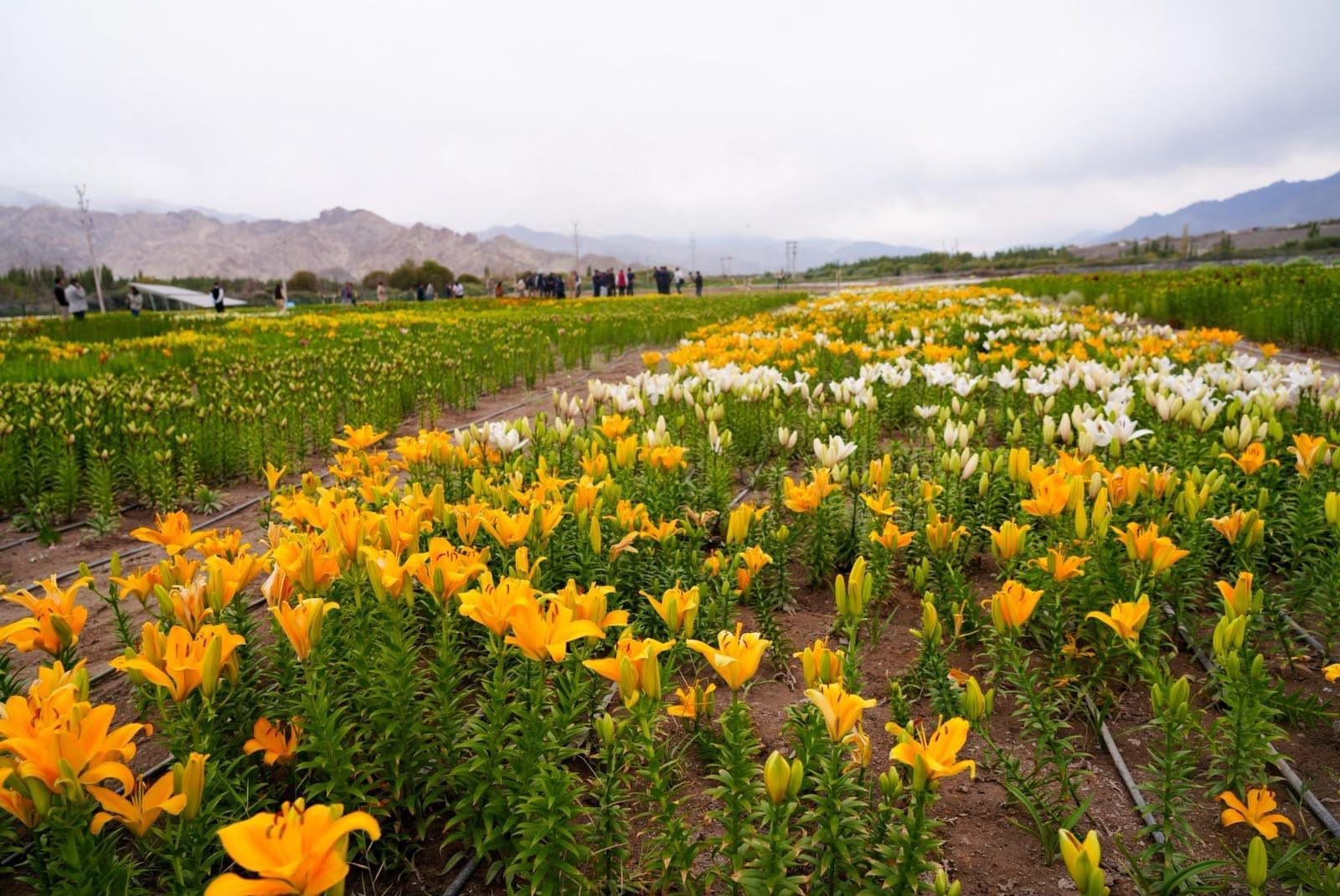
25 Lakh High Value Blooms Mark New Push for Floriculture, Tourism and Rural Livelihoods
Leh : In a striking experiment in high altitude agriculture Ladakh has unveiled twin flower fields at Choglamsar and Stakna in Leh located at around 10,600 feet above sea level and spread across nearly 40 acres.
Lieutenant Governor Vinai Kumar Saxena inaugurated and dedicated the two fields to the people of Ladakh coinciding with Prime Minister Narendra Modi’s 76th birth anniversary and the observance of Sewa Diwas.
The project brings together more than 25 lakh high value flowers including around 24 lakh Lilium and one lakh Gladiolus and is being positioned as a new model for commercial floriculture in the Union Territory.
The Ladakh Administration describes the twin fields as the world’s highest altitude flower fields and the highest and largest such fields in the country.
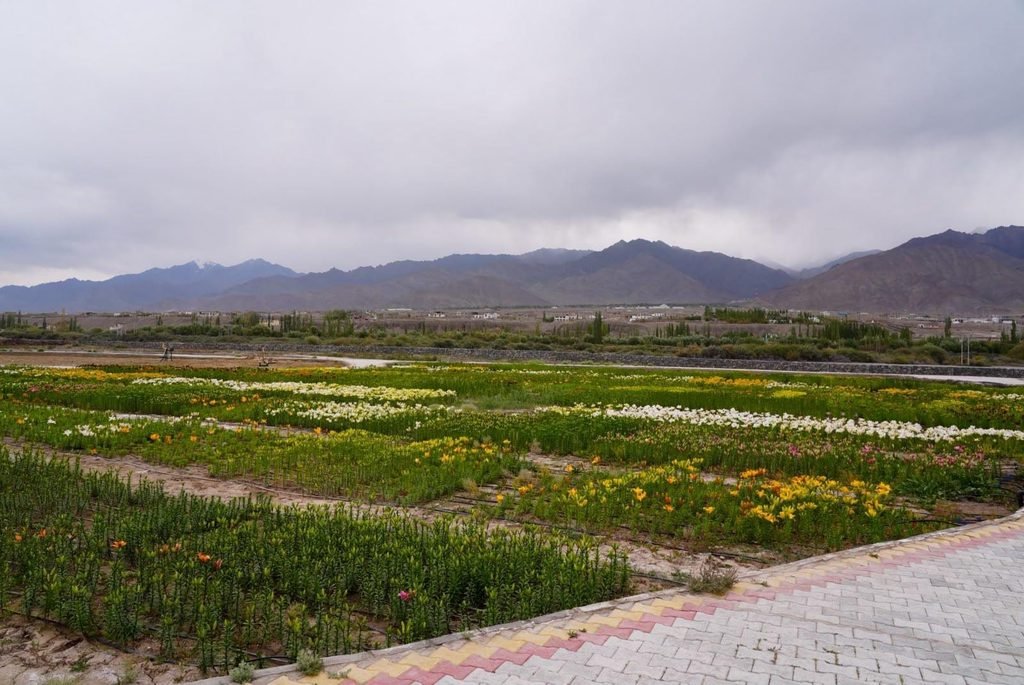
Beyond their visual appeal the fields are intended to test whether commercial flower cultivation can become a viable source of additional income for farmers in a region where agriculture is constrained by altitude climate and a relatively short growing season.
The Choglamsar field has been developed in a remarkably short period. Plantation began on July 16, with the first blooms appearing in the first week of September.
At Stakna nearly 14 lakh Lilium were planted from August with the first flowering expected towards the end of October. The scale of the initiative makes it one of the most ambitious organised floriculture experiments undertaken in Ladakh.
The administration hopes the experience will provide a template that can eventually be adapted in other suitable parts of Ladakh.
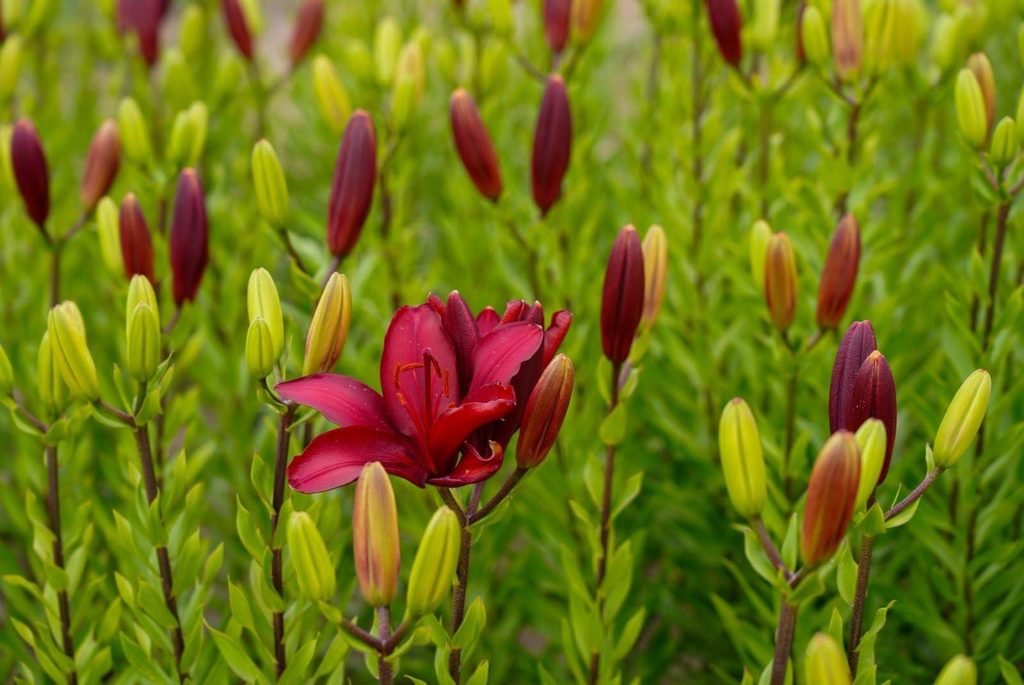
The idea is to use the region’s distinctive climatic conditions while tapping into demand for premium flowers in domestic and international markets.
Lilium, in particular commands premium prices with wholesale rates cited by the administration at around ₹60–70 per stem, while retail prices can be higher.
Farmers youth at the centre of the project
The Choglamsar facility is planned not merely as a flower growing site but as a demonstration and training centre.
Farmers and young people will be exposed to scientific cultivation methods modern floriculture practices, post harvest handling and commercial aspects of flower production. The objective is to enable local communities to eventually take up floriculture at the farm and village level.
The Agriculture Department will initially develop the fields and, during the flowering phase, transfer them to selected self-help groups and cooperative societies.
Officials will provide handholding support in cultivation and marketing, while the cooperatives are expected to progressively take responsibility for commercial cultivation, harvesting and value addition.
The model is therefore designed to move beyond a government-developed showcase and towards community-led commercial activity.
Alongside their agricultural and training functions, the flower fields are intended to serve as recreational and educational spaces for residents and visitors.
The Choglamsar park will feature Lilium, Gladiolus, tulips and other ornamental varieties with commercial potential.
For a destination globally associated with mountains, monasteries, lakes and stark high-altitude landscapes, organised flower cultivation could offer visitors another seasonal attraction while creating opportunities for associated local businesses.
The twin fields also represent an attempt to demonstrate that economic activity in a fragile and geographically challenging environment can be diversified through locally adapted agricultural enterprises.
Speaking at the inauguration, LG Saxena said the initiative was intended to go beyond flower cultivation and create opportunities in livelihoods, skills and entrepreneurship.
Floriculture is a high value agricultural activity that can complement traditional farming, enhance farmers’ incomes and open new avenues for employment and entrepreneurship,he said, according to the Ladakh Administration.
The project follows the laying of the foundation for the twin high-altitude fields in June. Earlier, the administration had said the Choglamsar facility would be developed as an organised high-altitude floriculture park with the objective of creating sustainable livelihood opportunities for farmers, self-help groups and cooperatives.
The flower garden will open to the public from September 18. Entry has been fixed at ₹25 for adults and ₹10 for children with the administration saying the proceeds will be used for maintenance and upkeep.
At a time when Ladakh is looking to expand livelihood options beyond traditional agriculture and tourism, the fields at Choglamsar and Stakna offer a distinctly different proposition: turning the region’s extreme altitude from a constraint into an advantage for a new high value agricultural enterprise.


 Mudasir Maqbool