
 newspop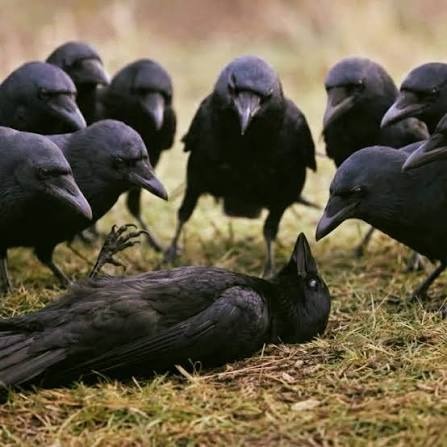
The Hidden Meaning of a Crow’s Final Goodbye: Nature’s Most Mysterious Ritual
SPECIAL STORY : Every day, we see crows flying across the sky. But have you ever wondered why hundreds of them suddenly gather around a dead crow ? Is it a funeral, a final farewell, or something even more extraordinary ?
This mysterious behaviour has fascinated scientists and bird lovers for decades. The answer reveals a remarkable story of intelligence, survival, and one of nature’s most intriguing social rituals.When a crow dies, something extraordinary often unfolds in the sky. Within minutes, dozens or sometimes even hundreds of crows gather around the lifeless bird.
They caw loudly, circle overhead, perch nearby, and refuse to leave for several minutes. To many observers, it appears as though the birds are holding a funeral or paying their final respects to a fallen companion.
But are crows really mourning their dead?Scientists say the answer is both fascinating and more complex than it seems.Researchers have long observed that crows display unusual behaviour around deceased members of their species. Some approach the body cautiously, touch it with their beaks, remain silently nearby, or even bring leaves and small objects close to the dead bird.
These scenes have led many people to describe the gatherings as “crow funerals.”However, according to scientists, these assemblies are not simply emotional farewells. They are also highly intelligent survival lessons.Experts believe crows gather to investigate how one of their own died.
They carefully inspect the surroundings for signs of predators, poison, disease, or any other danger. If they identify a threat, they communicate the information to other crows through loud warning calls, helping the entire flock avoid the area in the future.
This remarkable behaviour highlights the crow’s exceptional intelligence.Crows are considered among the smartest birds in the world. They possess highly developed brains relative to their body size, can recognize individual human faces, solve complex problems, use tools, and remember dangerous places for years.Renowned University of Washington researcher John Marzluff, who has spent years studying crow behaviour, found that crows learn from the deaths of other crows.
These encounters help them identify future threats and improve their chances of survival, demonstrating an advanced level of social learning rarely seen in the animal kingdom.Interestingly, this behaviour is not unique to crows.Animals such as elephants, dolphins, chimpanzees, and even some whales have been observed displaying behaviours that resemble grief after the death of a companion.
These acts continue to intrigue scientists studying animal emotions and intelligence.Beyond science, crows also hold deep cultural significance in India.In Hindu tradition, crows are regarded as messengers of ancestors. During Shraddha and Pitru Paksha, offering food to crows is considered an important ritual believed to honour departed souls.
Across many rural communities, crow calls are associated with various traditional beliefs and folklore, although these remain matters of faith rather than scientific evidence.
Whether it is an emotional farewell or a remarkable survival strategy, one thing is certain crows possess an extraordinary level of intelligence and social awareness. Their mysterious gatherings around fallen companions continue to remind us that nature still holds countless secrets waiting to be understood.