
 newspop
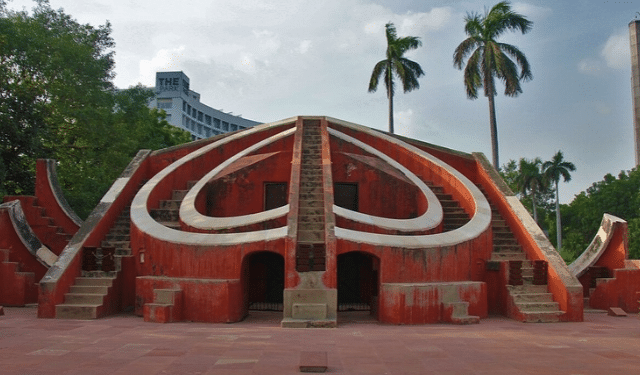
New Delhi : Delhi’s iconic Jantar Mantar, an 18th-century astronomical observatory built by Maharaja Sawai Jai Singh II, has been included as an official venue for the upcoming India Biennale 2026, adding another historic landmark to the capital’s expanding cultural showcase.
Organised by the Ministry of Culture, the 108-day festival will run from December 4, 2026, to March 21, 2027. According to the updated itinerary, Jantar Mantar will feature alongside 18 other heritage and cultural locations across Delhi, transforming the city into a platform for art, architecture and design.
The 16th-century Purana Qila will serve as the festival’s principal hub, while other prominent locations include Lodhi Gardens, the Qutub Minar complex, Agrasen ki Baoli, the Red Fort and Safdarjung Tomb. Leading cultural institutions, including the National Gallery of Modern Art, Kiran Nadar Museum of Art and Nita Mukesh Ambani Cultural Centre, are also expected to contribute to the event.
The inclusion of Jantar Mantar comes amid changes to the management of public demonstrations in the capital. On October 11, Jantar Mantar Road was reportedly denotified as a designated protest site, with authorities identifying Ramlila Maidan, Burari Ground and CBD Ground as alternative locations for public gatherings.
The development follows recent Supreme Court observations advocating larger and better-equipped venues for demonstrations and public assemblies, in remarks associated with Chief Justice of India Surya Kant.
With its inclusion in the Biennale, Jantar Mantar is set to feature in a major cultural event that seeks to bring contemporary creative expression into dialogue with Delhi’s historic architecture and heritage.