

 newspop
Death Toll Rises as Rescuers Hunt for Survivors
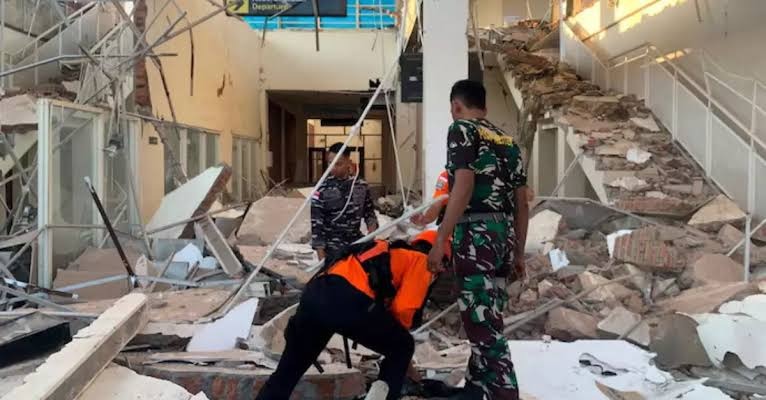
Jakarta: Panic and chaos gripped eastern Indonesia early Saturday after a powerful 7.7-magnitude earthquake struck off the coast of Flores Island, killing at least 40 people, injuring dozens and leaving buildings damaged or collapsed across parts of East Nusa Tenggara. The strong tremor also triggered landslides, blocked roads and disrupted power and communications, making rescue operations difficult as emergency teams rushed to search collapsed structures and reach affected communities. The earthquake sparked an immediate tsunami warning, prompting authorities to urge residents along vulnerable coastal areas to move away from the shoreline and seek higher ground, with thousands evacuating their homes in fear of potentially dangerous waves.
The warning was later lifted after authorities determined that there was no continuing major tsunami threat, although limited tsunami waves were reportedly recorded in some locations. Rescue workers continued clearing debris and assessing damage, while residents remained cautious amid the threat of aftershocks and unstable buildings. The disaster has once again highlighted Indonesia’s vulnerability to powerful earthquakes, as the country lies along the Pacific Ring of Fire, where several tectonic plates meet and seismic activity is frequent.
The latest tragedy also brought back memories of the devastating 1992 Flores earthquake and tsunami, which killed around 2,500 people, and the catastrophic 2004 Indian Ocean earthquake and tsunami, which claimed roughly 220,000 lives across the region, including about 170,000 in Indonesia. As rescue and relief operations continue, authorities are assessing the full scale of the destruction and warning people to stay away from damaged structures. With families desperately waiting for news of loved ones and rescuers racing against time, eastern Indonesia remains gripped by fear and uncertainty after one of the region’s most powerful recent earthquakes.