

 newspop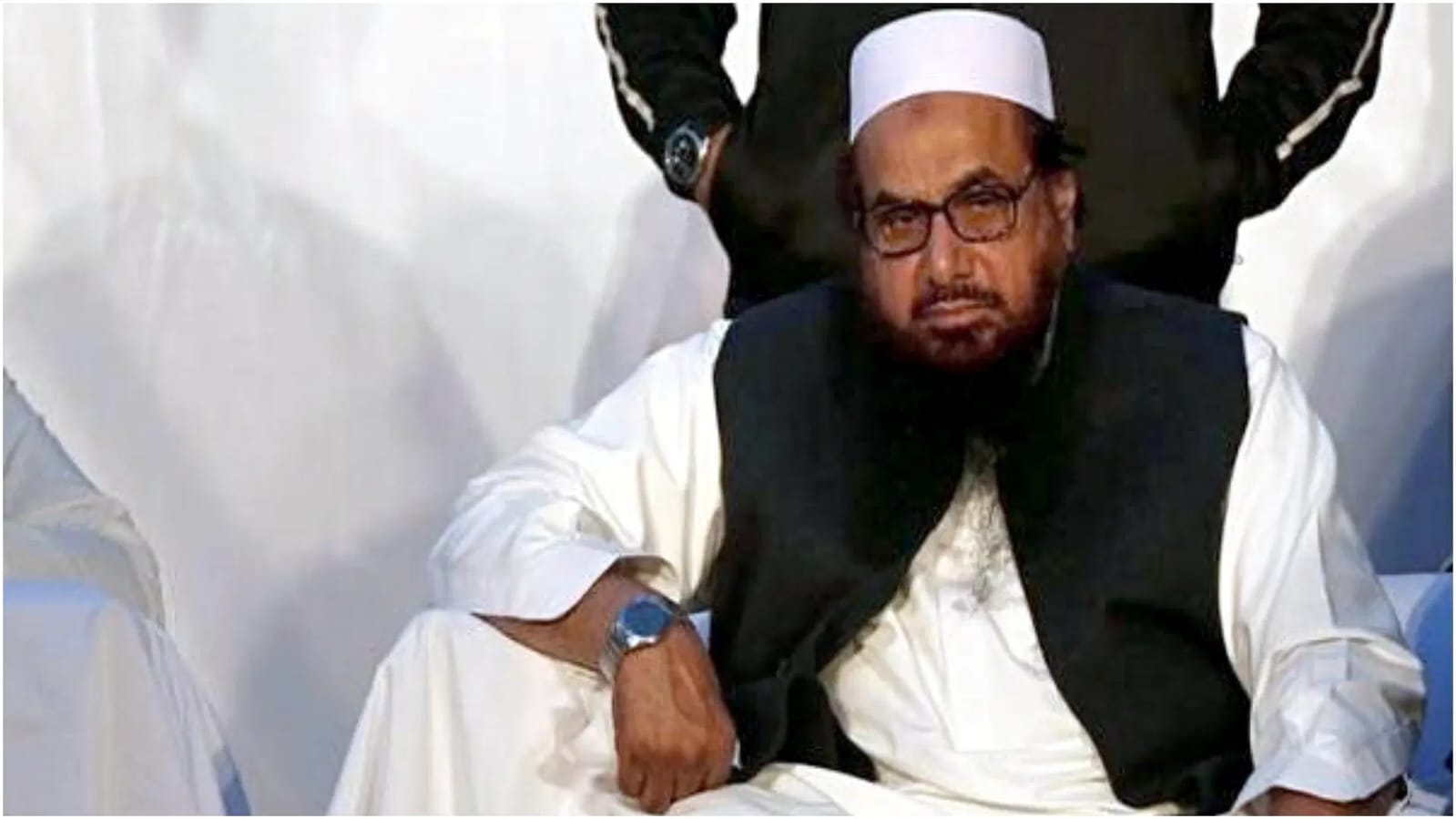
New Delhi : India is preparing to further tighten the legal noose around Hafiz Saeed, the founder of Lashkar-e-Taiba and the mastermind behind the Pahalgam terror attack. A court summons will now be sent to the Pakistan-based Hafiz Saeed through the Ministry of External Affairs. The NIA court in Jammu has already issued a non-bailable warrant against him. If he fails to appear in court, the trial can proceed even in his absence; in other words, it will not be easy for Hafiz Saeed to evade Indian judicial proceedings while remaining in Pakistan.
The National Investigation Agency (NIA) has named Hafiz Saeed as an accused in the Pahalgam terror attack case and has filed a supplementary charge sheet against him. The process of issuing a court summons for him to participate in the trial is now set to begin. Since Hafiz Saeed is in Pakistan, arrangements are being made to route the summons through the Ministry of External Affairs. The NIA court in Jammu has already issued a non-bailable warrant against him.
A crucial aspect of this case is that if Hafiz Saeed fails to appear in court despite the summons, the trial can commence in his absence. Action to this effect can be taken under Section 365 of the Bharatiya Nagarik Suraksha Sanhita (BNSS), 2023. This is commonly referred to as “trial in absentia” a process where the trial proceeds without the accused being physically present. This means the trial will not be stalled indefinitely simply because the accused is abroad or fails to appear before the court. Terrorists had targeted tourists in the Baisaran Valley of Pahalgam on April 22, 2025.
The attack claimed the lives of innocent people and sparked nationwide outrage. During the investigation, the NIA probed the conspiracy behind the attack and the terrorist network involved. Hafiz Saeed, currently in Pakistan, has been named an accused in this case. India has long regarded Hafiz Saeed as a prominent face of terrorism and has consistently demanded action against him.
Meanwhile, Pakistan’s Planning Minister Ahsan Iqbal has made a significant statement regarding the issue of water vis-à-vis India. Expressing concern over India’s decision to put the Indus Waters Treaty in abeyance, he stated that Pakistan faces the risk of water being used as a weapon. Iqbal noted that India is geographically situated such that several rivers flowing into Pakistan originate there.
He alleges that India could exploit this position to exert pressure on Pakistan. India had decided to put the Indus Waters Treaty in abeyance following the terror attack in Pahalgam. India maintains that Pakistan must take effective action against cross-border terrorism, holding the stance that terrorism and normal relations cannot coexist. Conversely, Pakistan has consistently termed this decision by India as unilateral and illegal.
Report – Abhijit Tushar Bhatt (Political Editor)