 newspop
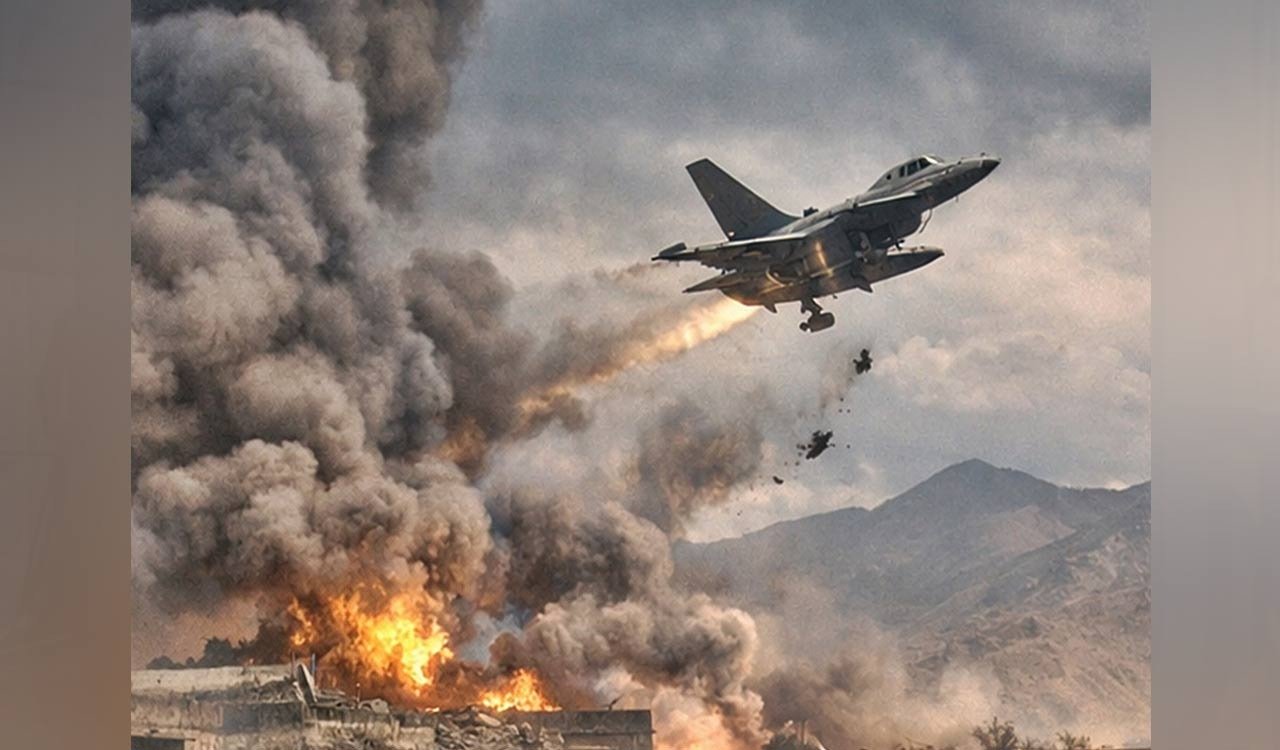
New Delhi : Tensions between Afghanistan and Pakistan have entered another dangerous phase after Pakistani airstrikes targeted areas in Afghanistan’s Kunar and Helmand provinces, with the Taliban government and Islamabad presenting sharply different accounts of the targets and casualties. According to Taliban authorities, the overnight strikes hit locations in Shultan district of Kunar and Garmser district of Helmand, destroying three houses and killing nine people, including women and children, while 11 others were injured. Pakistan, however, said the operation was carefully planned and targeted militant hideouts at two locations, claiming that 22 militants were killed and weapons and ammunition were destroyed, while saying precautions were taken to avoid civilian casualties. The competing casualty claims have not been independently verified.
The latest strikes are part of a rapidly deteriorating security relationship between the two neighbours, which has been marked by accusations of cross-border militancy, Pakistani air operations inside Afghanistan and armed clashes along their shared frontier. Islamabad has repeatedly accused the Taliban authorities of allowing the Tehrik-e-Taliban Pakistan (TTP) and other armed groups to operate from Afghan territory and carry out attacks inside Pakistan, while the Taliban government rejects the allegations and maintains that Afghanistan is not being used to threaten neighbouring countries. The confrontation has intensified following a series of deadly security incidents in Pakistan’s northwestern region, after which Islamabad has carried out multiple operations against what it describes as militant camps and hideouts inside Afghanistan. Taliban officials, meanwhile, have condemned the strikes as violations of Afghan sovereignty and have repeatedly warned that attacks will receive a response.
Earlier Pakistani strikes in Kunar and Paktika were also followed by conflicting claims: Pakistan said it had targeted militant positions and claimed militants were killed, while Taliban authorities reported civilian casualties the UN Assistance Mission in Afghanistan (UNAMA) separately confirmed civilian deaths and injuries in Kunar following the September 21 strikes. Against this increasingly volatile backdrop, reports about a particularly strong statement attributed to Taliban minister Nurullah Noori, suggesting that an Afghan flag could be raised in Peshawar within two days, have generated considerable attention.
However, that specific claim has not been independently confirmed by the reliable sources reviewed for this report and should therefore be treated cautiously rather than as an established fact. What has been clearly reported is that senior Taliban officials have warned Pakistan not to underestimate Afghanistan and have indicated that Kabul would respond to military attacks.
The dispute is rooted in deeper disagreements over border security, militant activity and responsibility for attacks inside Pakistan. Islamabad argues that armed groups operating from Afghan territory pose a direct security threat, while the Taliban government denies providing a base for such attacks and instead accuses Pakistan of using Afghan territory as a target for military operations.
The two sides have also experienced repeated border confrontations, while diplomatic efforts have so far failed to produce a durable settlement. The human cost of the escalating confrontation has also become a growing concern. UNAMA has said that cross-border armed violence has caused more than 1,100 civilian deaths and injuries in Afghanistan during 2026, underlining the wider impact of the continuing confrontation on people living near the frontier.
With fresh airstrikes now adding to an already tense environment, both sides are facing increasing pressure to prevent the confrontation from developing into a wider military crisis. For now, the two governments continue to disagree sharply over who is responsible for the violence, whether the targets were militant positions or civilian areas, and the actual scale of casualties.
As diplomatic tensions rise alongside military activity, the latest strikes have once again brought the fragile Pakistan-Afghanistan border into the spotlight, with fears that continued retaliation, cross-border attacks and competing accusations could further destabilise an already volatile region.