
 newspop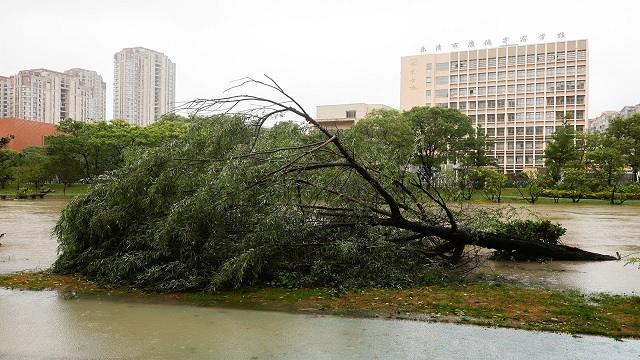
New Delhi : China has evacuated more than 1.7 million people after Typhoon Bavi, the ninth typhoon of the year, made landfall along the coast of Zhejiang Province late Saturday night, unleashing powerful winds, torrential rain, and widespread disruption across eastern China.
According to Chinese authorities, Bavi struck the coastline around 11:20 pm local time, packing maximum sustained winds of 144 kmph (89 mph) near its centre. The storm had earlier lashed Japan’s southern islands and Taiwan before moving toward China.
The Chinese government issued an orange typhoon alert, the country’s second-highest warning level, as authorities rushed to prepare for severe weather.
Hundreds of flights have been cancelled, rail services scaled back, while schools and ferry operations have been suspended in several affected regions.Meteorologists expect Bavi to weaken gradually as it moves inland toward the northwest.
However, officials have warned that the typhoon continues to pose a serious threat due to the enormous amount of moisture it carries, raising concerns over flash floods and landslides.
In Fujian Province, more than 3,700 residents from vulnerable coastal areas have already been relocated, while over 17,000 emergency rescue personnel remain on standby to respond to any emergencies.
The latest storm comes just days after Tropical Storm Maysak battered southern China, leaving at least 39 people dead in Nanning, where a dam breach triggered devastating floods.
The impact of Bavi has also been felt beyond China. In the Philippines, at least 17 people lost their lives after heavy rains intensified by the storm triggered deadly landslides and flooding.
Authorities continue to monitor Bavi closely as emergency teams remain deployed across the affected regions.