 newspop
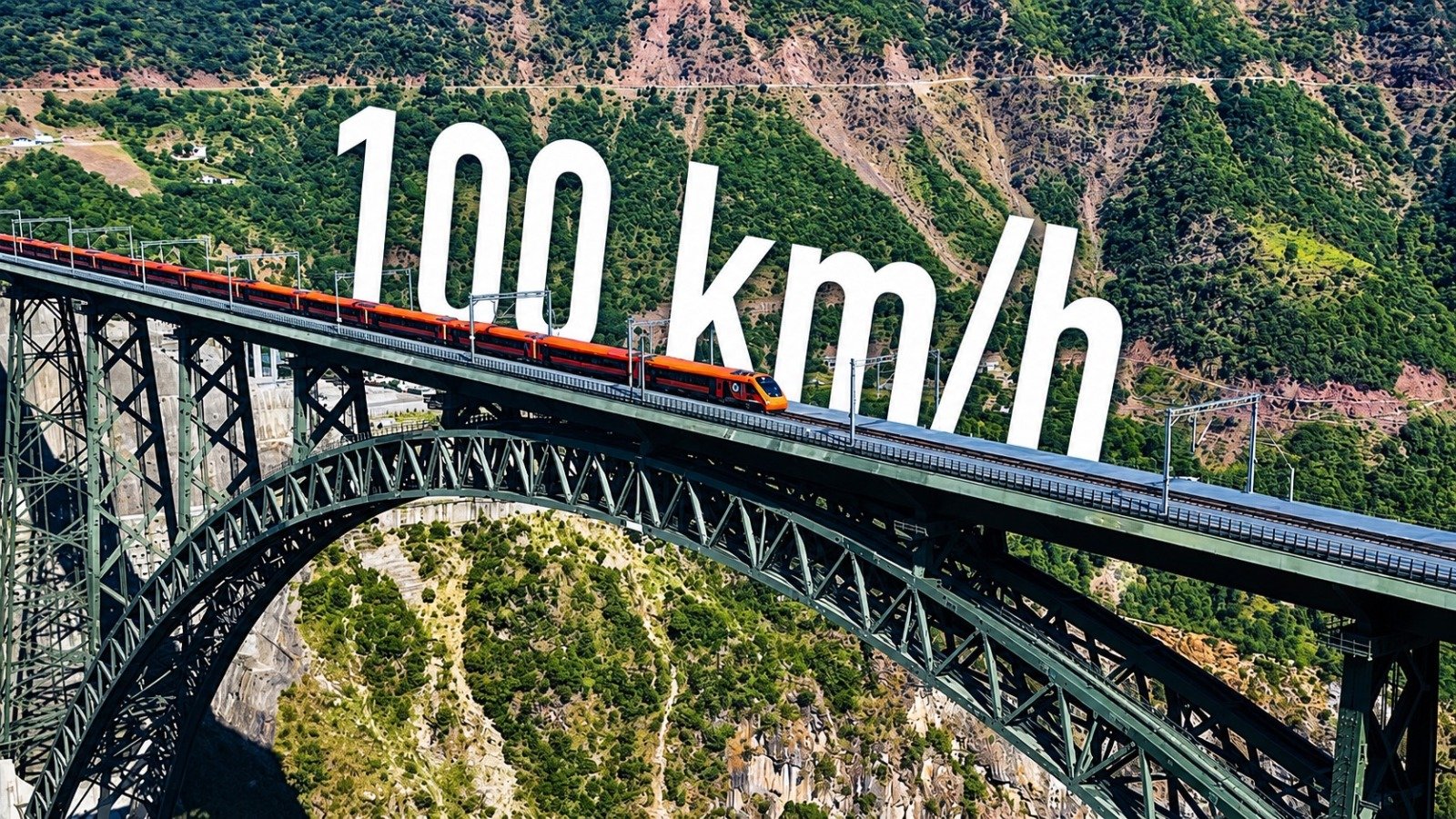
Jammu & Kashmir: In a major engineering and railway milestone, a Vande Bharat Express successfully crossed the iconic Chenab Rail Bridge in Jammu & Kashmir at a speed of 100 kmph, marking a significant step forward in the development of rail connectivity to the Kashmir Valley.
The trial was carried out on the Udhampur–Srinagar–Baramulla Rail Link (USBRL), with Railway Minister Ashwini Vaishnaw sharing a video of the train crossing the bridge and describing the achievement as a “historic moment.” The Vande Bharat Express also successfully traversed the Anji Bridge at 100 kmph, adding another landmark to the trial as the bridge is India’s first cable-stayed railway bridge.
The successful high-speed trial has led to the maximum permissible speed on the 111-km Shri Mata Vaishno Devi Katra–Banihal section being increased from 75 kmph to 100 kmph, which is expected to improve operational efficiency and reduce journey time for passengers travelling between Jammu and the Kashmir Valley.
The speed enhancement is an important development for the 272-km-long USBRL project, which was built at an estimated cost of around ₹43,780 crore and passes through some of the most challenging and mountainous terrain in the Himalayas. The project includes an extensive network of 36 tunnels with a combined length of around 119 km and 943 bridges, built to overcome steep mountains, deep valleys and difficult geological conditions. At the centre of this railway achievement is the Chenab Rail Bridge, which stands approximately 359 metres above the Chenab River and stretches for about 1,315 metres, making it the world’s highest railway bridge.
The massive steel structure has been specially engineered to withstand extreme weather and environmental conditions, including earthquakes, floods, heavy snowfall and high-speed winds, while incorporating safety measures designed for the challenging Himalayan environment. The bridge has become one of the most prominent symbols of India’s railway engineering capabilities and forms a crucial part of the rail link connecting the Kashmir Valley with the rest of the country.
The Anji Bridge, meanwhile, has its own distinction as India’s first cable-stayed railway bridge and is located across the Anji River valley, helping connect the Katra and Banihal areas. With the successful 100-kmph trials over both major bridges, Indian Railways has demonstrated the capability of operating high-speed passenger trains across some of the most technically demanding sections of the USBRL network.
The increase in permissible speed is expected to make rail travel in the region more efficient while offering passengers a faster, safer and more comfortable journey. The development also strengthens the all-weather railway connectivity between Kashmir and other parts of India, with the USBRL emerging as a key transportation link through the mountainous region. The latest trial therefore represents not just an increase in train speed, but another important milestone in the completion and operational strengthening of one of India’s most challenging railway infrastructure projects.