

 newspop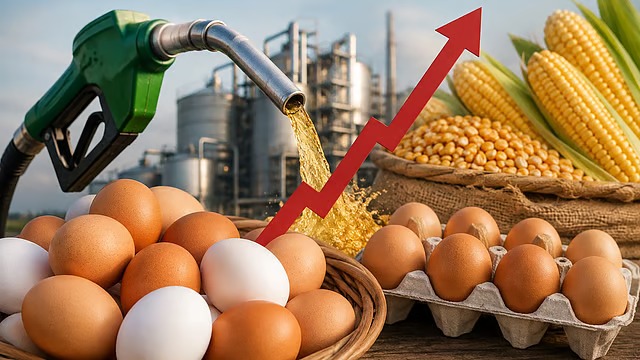
Eggs May Get Costlier : Rising Feed Prices Could Push Prices Higher

New Delhi : Consumers may have to spend more on one of the most affordable sources of protein as egg prices are expected to remain under pressure in the coming months. Egg prices across India have already increased by around 35–40% over the past year, and industry experts warn that rising poultry feed costs, particularly the prices of maize and soybean meal, could lead to another increase.
According to data from the National Egg Coordination Committee (NECC), an egg currently costs around ₹7 at the poultry farm level, while retail prices are hovering around ₹8.50–₹9 per egg in many markets. However, poultry industry and market experts estimate that during the upcoming winter season, prices of some premium, specialty and branded eggs could reach ₹20–₹25 per piece. While regular eggs may not become that expensive, higher production costs could still keep their retail prices elevated.
One of the biggest reasons behind the rising cost of egg production is the sharp increase in the price of poultry feed. Maize accounts for nearly 60–70% of poultry feed, making its price a major factor in determining the cost of producing eggs. The growing demand for maize from the ethanol industry has further tightened supplies.
According to parliamentary data cited in the report, India produces around 43.4 million tonnes of maize annually, of which nearly 17 million tonnes is being used for ethanol production. Over the past three years, maize prices have reportedly climbed from around ₹14,000 per tonne to nearly ₹26,500 per tonne due to increased demand. At the same time, the price of soybean meal, another major protein source used in poultry feed, has also risen significantly, adding to the financial burden on poultry farmers.
The situation could become more challenging during the winter season, when demand for eggs traditionally increases across India. If poultry feed prices remain high while consumer demand rises, retail egg prices could see further increases, although the actual price will vary from one state and city to another. The impact may be particularly noticeable for households that depend on eggs as an affordable and easily accessible source of protein.
If the increased demand for maize from ethanol production continues and feed costs do not come down, egg prices are unlikely to see significant relief in the near future. Consumers could therefore face a fresh price shock, with the humble egg potentially becoming a more expensive item on everyday breakfast and dinner plates.