
 newspop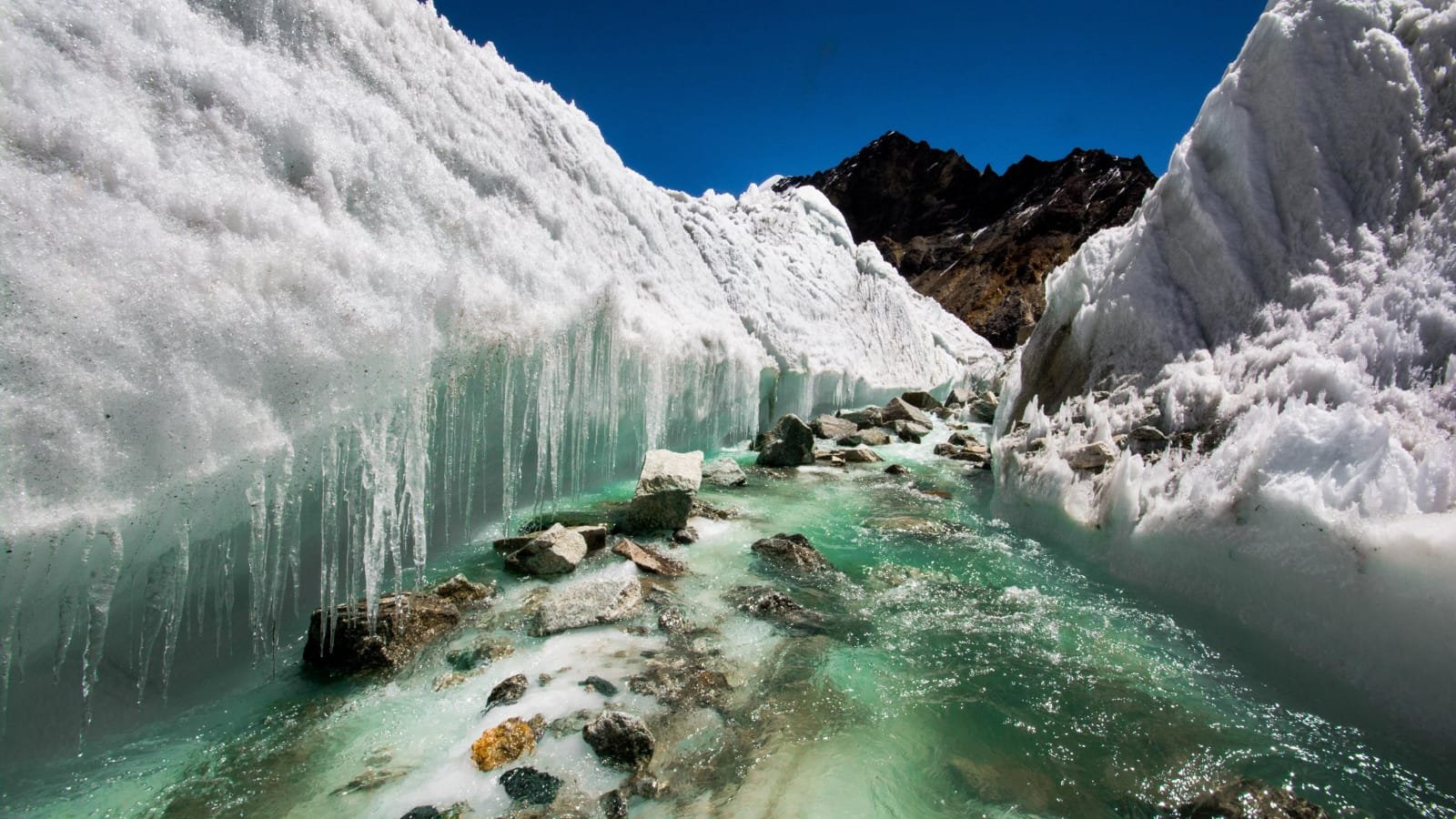
3 Million Kg of Ice Melted Every Year ? Everest Base Camp Faces a Chilling Climate Warning
SPECIAL STORY : What happens when a fragile Himalayan ecosystem is pushed beyond its limits ? A new warning surrounding Everest Base Camp has raised alarming questions about the impact of tourism, human activity and rising temperatures on the region’s rapidly changing glaciers. From fuel burned for cooking and heating to the enormous human presence at high altitude, scientists are increasingly examining how even seemingly small sources of heat and pollution can add pressure to an already vulnerable environment.
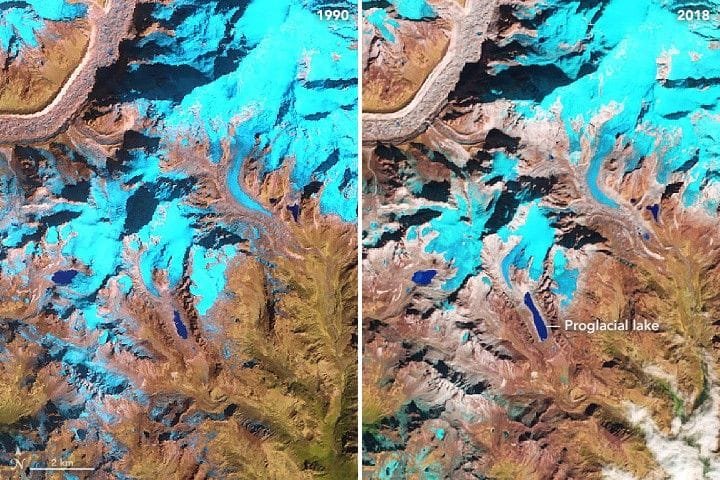
The Khumbu Glacier and other Himalayan ice bodies are retreating, while glacial lakes are expanding in some areas raising concerns about sudden Glacial Lake Outburst Floods (GLOFs), which can send enormous volumes of water downstream with little warning. The consequences could extend far beyond Nepal, because the Himalayan glaciers feed some of Asia’s most important river systems.*
HIMALAYAS UNDER PRESSURE : A MOUNTAIN SYSTEM CHANGING BEFORE OUR EYES
The Himalayas have long been described as the “water tower of Asia”, storing enormous quantities of freshwater in glaciers and snow. But that frozen reserve is changing rapidly.
Across the Himalayan region, glaciers have been retreating as temperatures rise. The problem is not limited to the loss of spectacular mountain landscapes. Glacial retreat can initially increase the amount of meltwater flowing into downstream rivers, but over the longer term, continued ice loss can reduce the glacier contribution to river systems creating serious water-security challenges for millions of people.
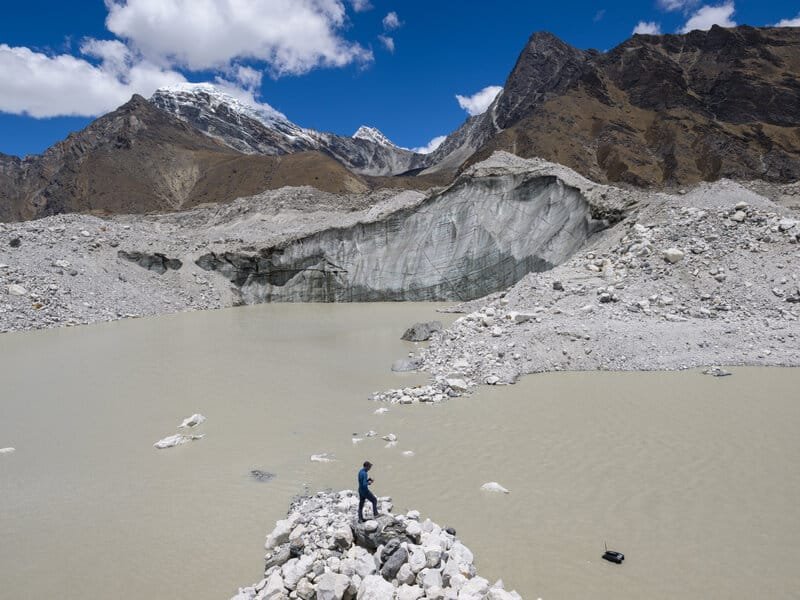
At the same time, melting ice can contribute to the formation and expansion of glacial lakes. When a natural dam holding back one of these lakes fails, a sudden wall of water can rush downstream, threatening settlements, roads, bridges and other infrastructure.
This phenomenon is known as a Glacial Lake Outburst Flood or GLOF. And it is one of the most dangerous consequences of a rapidly warming high-mountain environment.
Few places illustrate the transformation of the Himalayas better than Everest Base Camp. What was once a relatively basic resting point for mountaineers has evolved into a highly developed seasonal settlement during the climbing season.
Modern Everest expeditions can involve thousands of climbers, guides, cooks, porters and support workers. Luxury facilities have also become increasingly common. Heated dining tents, bakeries, satellite internet, charging stations and sophisticated kitchens are among the facilities available to visitors during the climbing season.
According to figures cited in the report, more than 1,600 tents can be established around the Base Camp area. During the spring climbing season of 2023, around 2,127 climbers, cooks and support staff reportedly spent approximately 50 days in the region.
That means an extraordinary concentration of human activity in one of the planet’s most environmentally sensitive landscapes. One of the most striking claims surrounding Everest Base Camp concerns the heat generated by human activity.
Cooking, heating, burning fuel and other activities produce heat and emissions in an environment where temperatures are extremely low and the surrounding snow and ice are highly sensitive.
The report cites research suggesting that human activity at Everest Base Camp could contribute to the melting of approximately 3 million kilograms of ice per year. However, this figure needs to be understood carefully.
It would be misleading to suggest that human urine itself is literally generating enough heat to melt millions of kilograms of glacier ice. The broader scientific concern relates to the cumulative environmental footprint of thousands of people including heat, fuel combustion, waste, black carbon and other forms of pollution.
In particular, black carbon produced by incomplete combustion of fuels, can settle on snow and ice. Dark particles absorb more solar radiation than clean snow, potentially accelerating melting.
So the real warning is not about one individual action.It is about the cumulative impact of thousands of people operating in an extremely fragile ecosystem.
KHUMBU GLACIER: THE GIANT ICE BODY THAT IS RETREATING
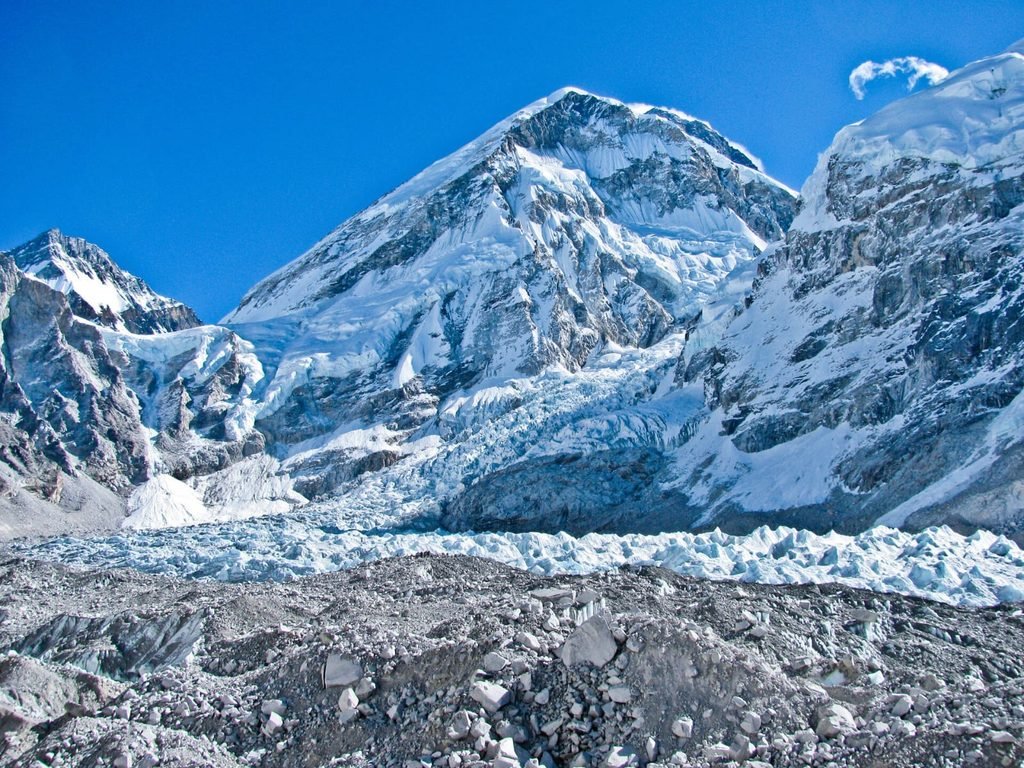
At the foot of Mount Everest lies the Khumbu Glacier, one of the most famous glaciers in the Himalayas.
Stretching for roughly 17 kilometres, the glacier forms a crucial part of the Everest landscape and the region’s high-altitude environment. Research has documented substantial retreat and thinning of Himalayan glaciers over the past several decades.
Historical observations cited in the report indicate that between 1976 and 2007, the Khumbu Glacier retreated at an average rate of approximately 18 metres per year. The nearby Rongbuk Glacier on the Tibetan side of Everest has also experienced significant retreat.
Studies of glaciers across the Everest region have found widespread retreat, demonstrating that the changes are not isolated to a single glacier.
15 EVEREST-REGION GLACIERS RETREATED
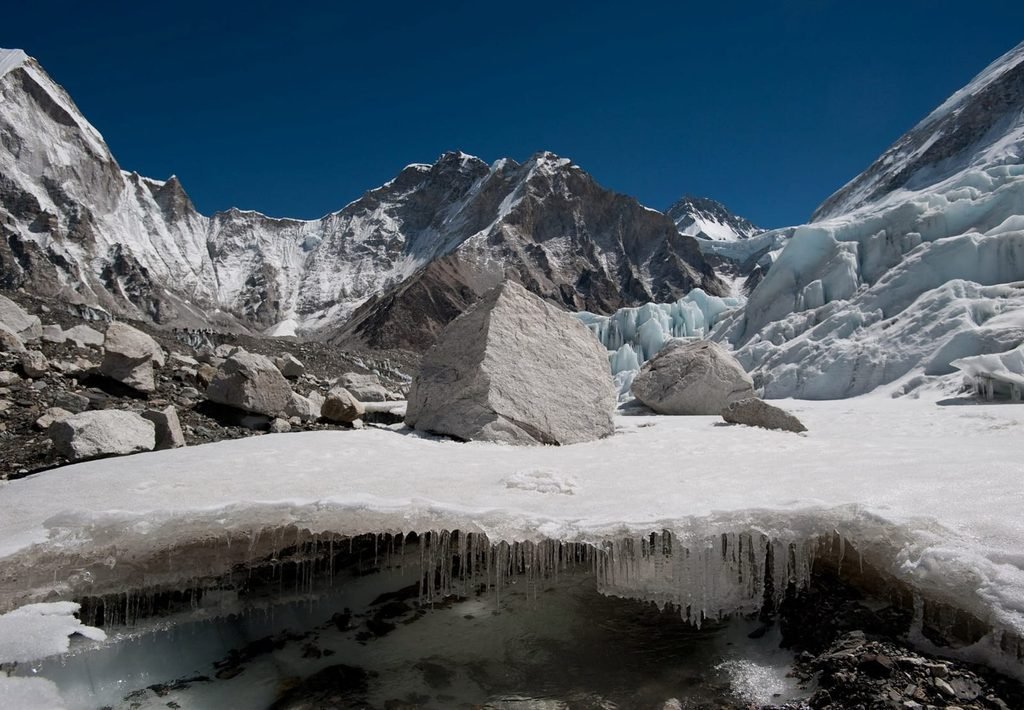
One study cited in the report examined 15 glaciers in the Everest region and found that all 15 had retreated during the period from 1976 to 2007. Their average retreat rate was reported at approximately 28 metres per year.
These numbers offer a disturbing picture of how dramatically the high-altitude environment has changed over recent decades. Glacier retreat is not merely a visual change.
Glaciers are natural freshwater reservoirs. Their ice stores water accumulated over years, decades and centuries. As global temperatures rise, the balance between snowfall, accumulation and melting changes. The result can be a dangerous transition from a landscape dominated by permanent ice to one increasingly dominated by seasonal meltwater and expanding lakes.
THE DANGEROUS PARADOX: MORE MELT TODAY, LESS WATER TOMORROW
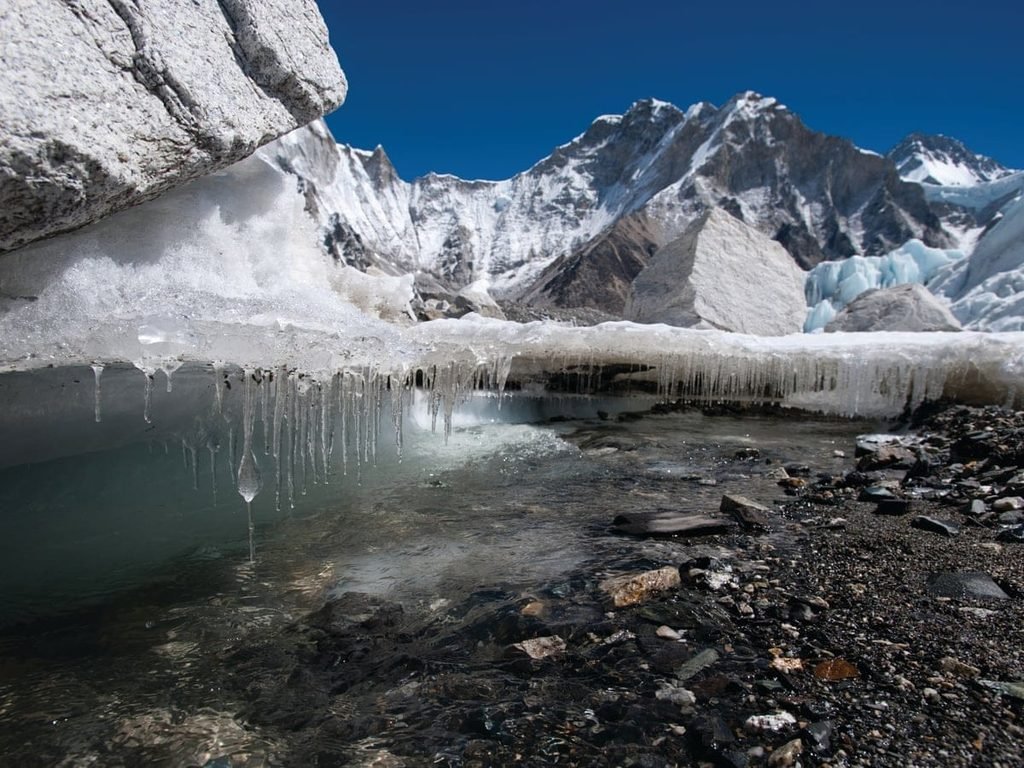
Perhaps the greatest misunderstanding about glacier loss is that melting glaciers simply mean “more water”.
The reality is much more complicated. When glaciers lose ice rapidly, downstream areas can initially experience increased meltwater.
But if the glacier continues shrinking, there is eventually less ice available to melt. That can threaten the long-term water supply of communities and ecosystems dependent on glacier-fed rivers.
Too much melting today can become too little water tomorrow. This creates a dangerous double threat. First comes the possibility of sudden floods.Later comes the possibility of water shortages.
WHEN GLACIAL LAKES BECOME TICKING TIME BOMBS
As glaciers retreat, meltwater can accumulate in depressions and behind natural ice or sediment dams, creating glacial lakes. These lakes can grow rapidly.
If a natural dam becomes unstable and collapses, enormous quantities of water can be released almost instantly.
A GLOF can send a destructive surge through mountain valleys, carrying rocks, mud, ice and debris along with the water. And crucially, heavy rainfall is not always necessary for such an event to occur.
A sudden failure of a glacial lake dam can generate catastrophic downstream flooding even when there is little or no rain at the location where the flood begins. This is why scientists and disaster-management agencies closely monitor potentially dangerous glacial lakes throughout the Himalayas.
NEPAL’S WARNING: A GLIMPSE OF WHAT MAY LIE AHEAD
The report points to flooding incidents in Nepal as a warning about the growing vulnerability of Himalayan communities.
Nepal is particularly exposed because many settlements and critical infrastructure are located in steep valleys downstream from glaciers and glacial lakes.
A flood originating high in the mountains can travel rapidly downstream, destroying bridges, roads, hydropower infrastructure and homes. And as the Himalayan region warms, the number and size of potentially hazardous glacial lakes can increase in some locations.
Nepal has identified a number of glacial lakes as potentially dangerous, highlighting the need for continuous monitoring, early-warning systems and disaster preparedness.
THE BIGGER THREAT IS NOT JUST NEPAL
The Himalayas do not belong to one country alone.
Their glaciers and snowfields are connected to river systems that sustain huge populations across Asia. Major rivers originating in or around the Himalayan and Tibetan Plateau region including the Ganges, Brahmaputra and Indus systems support agriculture, drinking-water supplies, ecosystems and millions of livelihoods.
That is why glacier loss in the Himalayas is not simply a mountain problem. It is a regional water-security problem. And ultimately, it is a global climate problem.
GLOBAL WARMING: THE ELEPHANT IN THE ROOM
Human activity at Everest Base Camp is receiving attention because it is visible and dramatic.
But the much larger driver of long-term glacier loss is global climate change.
Rising global temperatures are altering precipitation patterns, increasing glacier melt and changing the balance of snow and ice across high-mountain regions.
Tourism can add local pressure through fuel consumption, waste, infrastructure and black-carbon emissions. But it should not be presented as the primary cause of Himalayan glacier retreat.
The central scientific concern remains the warming climate.
THE HIMALAYAN WARNING IS GETTING LOUDER
The Himalayas are changing.
Glaciers are retreating.
Some glacial lakes are expanding.
Tourism is intensifying.
Mountain infrastructure is increasing.
And millions of people downstream remain exposed to the consequences.
The danger is therefore not one single disaster.
It is a chain reaction :
Rising temperatures → glacier loss → expanding glacial lakes → increased flood risk → long-term water insecurity.
The mountains may appear permanent. But their ice is not.
FROM EVEREST TO ASIA: A WARNING FOR THE FUTURE
Everest Base Camp has become a symbol of human ambition.
Thousands of people travel to one of the highest and harshest environments on Earth to stand beneath the world’s tallest mountain. But the same location is also becoming a symbol of the environmental price of that ambition.
The challenge now is to balance tourism, mountaineering and local livelihoods with the protection of an ecosystem that cannot easily recover from continued warming.
The Himalayan glaciers are more than frozen landscapes. They are natural reservoirs, regulators of river systems and critical components of Asia’s water cycle.
If their decline continues unchecked, the greatest crisis may not be the disappearance of ice itself.It could be what happens after the ice is gone.
THE FINAL WARNING
The idea that “Asia will be wiped off the map” is an exaggerated headline rather than a scientific prediction. But the underlying warning is serious: a warmer Himalaya can mean greater risks from glacier-related floods in the near term and increasing water stress over the longer term.
The question is no longer whether the Himalayas are changing.
The question is how quickly and how prepared Asia will be when the consequences reach its valleys, rivers, cities and farms.