 newspop
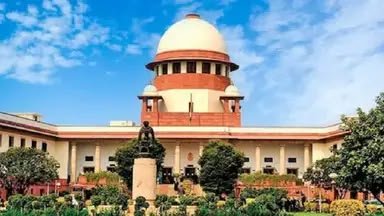
New Delhi : The Supreme Court will now hear all petitions collectively on October 15 (Thursday) regarding the ongoing protests in Delhi against Chief Election Commissioner (CEC) Gyanesh Kumar and the ‘Special Intensive Revision’ (SIR) process, as well as issues concerning restrictions on metro and rail services, the detention of lawyers and protesters, and the ban on protests at Jantar Mantar.
A bench comprising Chief Justice of India (CJI) Surya Kant, Justice Joymalya Bagchi, and Justice V. Mohana accepted the Central Government’s request regarding the scope of the hearing and granted time until Thursday to file a response.
The Court clarified that the various petitions concerning the prevailing situation in Delhi and civil rights issues would be heard together.
The petitions include:
A plea seeking contempt action against officials for the alleged violation of the Supreme Court’s October 8 order, which had directed against a complete ban on metro and rail services and public movement.
A challenge to the Delhi Police Commissioner’s October 11 order, which de-notified Jantar Mantar as a protest site and designated remote areas like Ramlila Maidan and Burari as the new venues.
A petition filed by Rahul Gandhi and 10 other opposition leaders seeking to halt the SIR process and challenging the Election Commission’s unilateral decisions; the clerical defects in this petition are currently being rectified.
The Solicitor General and counsel for the Central Government had requested the Court for additional time, citing the far-reaching implications of the petitions and the need to prepare affidavits. Acceding to this request, the Supreme Court has granted the Central Government, Delhi Police, and the Delhi Metro Rail Corporation (DMRC) permission to file their responses and compliance reports by Thursday morning.
Earlier, during a special hearing held on Sunday, the Supreme Court had issued clear directives.
The apex court stated that metro stations would not be completely shut down unless there was an extremely serious threat to law and order under Article 19(2) of the Constitution.
The Court observed that lawyers, journalists, and petitioners cannot be prevented from accessing the Supreme Court and lower courts.
Regarding internet services, the SC stated that a complete ban on internet services would not be imposed unless there were unavoidable circumstances.
Now, during the hearing scheduled for Thursday, October 15, the apex court may issue significant orders concerning the designation of protest sites in Delhi, the release of detained leaders and activists, and the dispute involving the Election Commission.
Report : Abhijit Tushar Bhatt (Political Editor)



 Mudasir Maqbool