 newspop
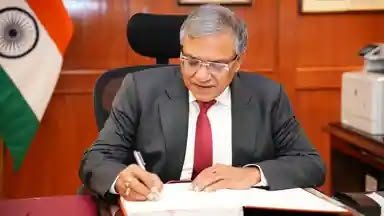
New Delhi : The ‘Special Intensive Revision’ (SIR) of electoral rolls has sparked intense debate across the country. Against this backdrop, the Election Commission has undergone a large-scale administrative restructuring. Between 2025 and 2026, approximately 18 to 20 Chief Electoral Officers (CEOs) across various states and union territories have been transferred. Chief Election Commissioner Gyanesh Kumar, who assumed office in February 2025, has overseen these changes over the subsequent 20 months a period marked by one of the most extensive reshuffles of officials within such a short timeframe.
According to reports, this period also saw significant changes among senior Election Commission officials, most notably at the level of Deputy Election Commissioners (DECs).
While the transfer of Chief Electoral Officers has occurred periodically in previous years, the 2025–26 period has been notably more active.
From February 2025 to Present: During the first 20 months of Chief Election Commissioner Gyanesh Kumar’s tenure, approximately 18 to 20 Chief Electoral Officers were transferred.
From May 2022 to February 2025: During the ~33-month tenure of former Chief Election Commissioner Rajiv Kumar a period that included the 2024 Lok Sabha elections about 23 Chief Electoral Officers were transferred.
The Preceding 41 Months: During the tenures of Chief Election Commissioners Sunil Arora and Sushil Chandra, approximately 29 Chief Electoral Officers were transferred. This period also encompassed a Lok Sabha election. According to the report, Chief Electoral Officers (CEOs) are frequently transferred during the period surrounding Lok Sabha elections. However, the pace of these transfers was notably high in 2025 and 2026.
The Election Commission typically retains a Chief Electoral Officer in their position for at least three years to ensure administrative continuity. Yet, available data indicates that among the recent transfers, at least seven officers had served in the role for less than two years. In 2025, the Chief Electoral Officers of eight to nine states and union territories were replaced. Subsequently, in 2026, at least 10 further transfers have taken place so far.
The report notes that the process of transferring Chief Electoral Officers in 2025 began in Bihar, which was the first state to undergo the ‘Systematic Institutional Rotation’ (SIR) process.
April 2025: Vinod Singh Gunjiyal took over as the Chief Electoral Officer of Bihar, replacing H.R. Srinivas.
May 2025: The Chief Electoral Officers for Nagaland and Chhattisgarh were replaced.
June 2025: Jammu & Kashmir and Haryana received new Chief Electoral Officers.
July 2025: New Chief Electoral Officers were appointed for Madhya Pradesh and Karnataka.
August 2025: New officers assumed responsibility in Manipur and Ladakh.
Towards the end of 2025: An order was issued to transfer the Chief Electoral Officer of the Union Territory of Lakshadweep, just days before the second phase of the SIR process.
The turnover of Chief Electoral Officers in Lakshadweep was particularly significant; three different officers held the position between November 2025 and October 2026. Gaurav Singh Rajawat had overseen the 2024 Lok Sabha elections in his capacity as Chief Electoral Officer, but he was transferred in November 2025. Following this, Avnish Kumar assumed the role in January 2026. However, Avnish Kumar remained in this position only until July 2026. Subsequently, AS Shivakumar was appointed as the new Chief Electoral Officer (CEO) of Lakshadweep.
The series of transfers of Chief Electoral Officers continued into 2026
January 2026: A new Chief Electoral Officer was appointed for Punjab.
February 2026: Delhi’s Chief Electoral Officer, R. Alice Vaz, was transferred. According to reports, she had already completed critical tasks related to the preparation for the Special Intensive Revision (SIR) a process that was underway in Delhi at the time. Gujarat also received a new Chief Electoral Officer that same month.
March 2026: The Chief Electoral Officer for Sikkim was replaced.
April 2026: A new officer was appointed for Chandigarh.
Following this, changes also took place at the level of Chief Electoral Officers in states that had recently concluded their Legislative Assembly elections.
In West Bengal, following the Assembly elections, Chief Electoral Officer Manoj Agarwal was appointed as the state’s Chief Secretary. Neelam Mani subsequently took over the responsibilities of the Chief Electoral Officer.
In Kerala, D. Sajith Babu succeeded Ratan U. Kelkar as the Chief Electoral Officer in August 2026. According to reports, Kelkar’s appointment as Secretary to Chief Minister V.D. Satheesan following the Assembly elections had also sparked some controversy.
Beyond the Chief Electoral Officers, at least four significant changes also occurred at the level of Deputy Election Commissioners at the Election Commission’s headquarters, Nirvachan Sadan. According to reports, Bhanu Prakash Yeturu was appointed in May 2025, followed by the appointment of Pawan Kumar Sharma to the position in September 2025.
In August 2026, Deputy Election Commissioner Sanjay Kumar was abruptly sent back to his parent cadre; subsequently, Prakash Rajpurohit was appointed to the role in October 2026. Thus, throughout the SIR process, there were frequent changes involving both the Chief Electoral Officers in the states and union territories, as well as senior administrative officials within the Election Commission.
Report : Abhijit Tushar Bhatt (Political Editor)