 newspop
Home, Car & Personal Loans May Get Costlier After RBI Rate Hike
NewDelhi : A major shock for millions of loan borrowers! After nearly four years, the Reserve Bank of India (RBI) has once again raised the repo rate. In its Monetary Policy Committee (MPC) meeting held from October 5 to October 7, the RBI increased the repo rate by 25 basis points, taking it to 5.50%. The decision was taken unanimously by the MPC, chaired by RBI Governor Sanjay Malhotra. After a prolonged period of rate cuts, the RBI’s decision to raise the repo rate again has raised concerns among bank customers, particularly those with floating-rate loans.
The RBI’s decision comes amid several economic challenges, including rising tensions in West Asia, higher crude oil prices, increasing food prices, inflationary pressures and global economic uncertainty. Volatility in global markets can also have an impact on the Indian economy. A sustained rise in crude oil prices, in particular, can affect everything from transportation and manufacturing to the prices of essential commodities. In such a situation, keeping inflation under control remains an important challenge for the central bank.
The biggest question now is what does a repo rate hike mean for ordinary people ?
The repo rate is the interest rate at which banks borrow short-term funds from the RBI. When the repo rate increases, borrowing funds from the central bank can become more expensive for banks. This can eventually influence the interest rates that banks charge on various loans.
As a result, borrowers with home loans, car loans, personal loans and other floating-rate loans could face additional financial pressure.
If lending rates rise, monthly EMIs could increase, or the repayment period could become longer, depending on the loan structure and the bank’s lending policy. For people who are already paying a large home loan or other long-term debt, the increase could mean having to reassess their monthly household budgets.
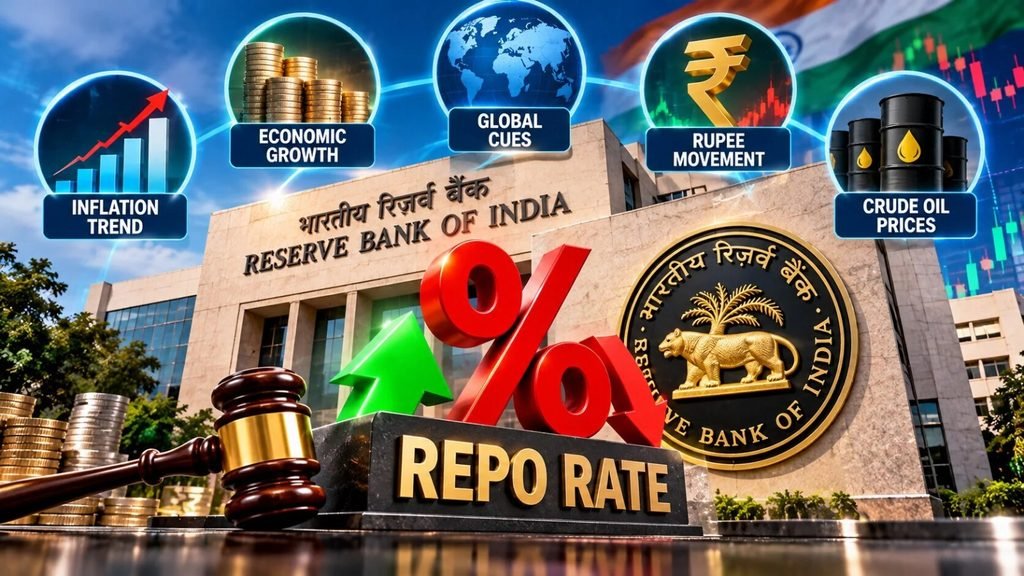
The development could be particularly significant for middle-class families. People planning to purchase a house, buy a new car or take a large loan may need to carefully consider the impact of higher interest rates. However, the actual impact will depend on each bank’s lending policies, loan type and interest-rate structure, so it cannot be assumed that every borrower’s EMI will rise by the same amount.
There is, however, another side to the development. While a repo rate hike can be a concern for borrowers, it could potentially benefit depositors. If banks increase interest rates on deposits, customers who keep their money in fixed deposits (FDs) and other savings instruments may have an opportunity to earn higher returns. Therefore, the impact of a repo rate hike is not limited only to borrowers; it can also influence people who save their money through bank deposits.
The latest move comes after a series of rate cuts in 2025. In February 2025, the RBI reduced the repo rate by 25 basis points after a prolonged gap. This was followed by another 25-basis-point cut in April, a larger 50-basis-point reduction in June and another 25-basis-point cut in December. Through these successive cuts, the repo rate came down from 6.50% to 5.25%. After remaining unchanged at 5.25% for around 10 months, the RBI has now reversed course by raising the rate by 25 basis points.
RBI Governor Sanjay Malhotra has indicated that global inflationary pressures could increase. Trade uncertainty and conflicts in West Asia could also disrupt global supply chains, potentially adding to economic pressures. At the same time, the Governor has said that the Indian economy remains resilient despite these challenges. The latest policy signals also suggest that a reduction in interest rates may not be on the immediate agenda.
The repo rate is a key monetary policy tool used by the RBI to influence borrowing costs, demand and inflation in the economy. A rate hike generally makes borrowing more expensive and can help moderate demand, while potentially supporting efforts to keep inflation under control. However, the impact on individual borrowers depends on factors such as loan tenure, outstanding principal, benchmark rate and how quickly banks transmit the RBI’s decision to their customers.
In short, the RBI’s 25-basis-point repo rate hike could have implications ranging from household budgets and loan EMIs to bank deposits and savings. For existing borrowers, the key factor to watch will be whether their bank revises its lending rate and how that change affects their monthly repayment. For depositors, attention will be on whether banks respond by offering higher interest rates on FDs and other deposit products.
The focus now shifts to how banks respond to the RBI’s latest decision and whether the 25-basis-point hike is fully passed on to borrowers and depositors in the coming weeks.