 newspop
New Delhi : A major Ebola outbreak caused by the Bundibugyo virus continues to spread across the Democratic Republic of the Congo (DRC), with the latest World Health Organization (WHO) update reporting 7,890 confirmed cases and 3,799 deaths as of September 23, 2026. The outbreak, first officially declared on May 15, has now expanded to 63 health zones across seven provinces, raising concerns about further transmission, including across international borders.
The outbreak is being driven by Bundibugyo virus disease (BVD), a species of Ebola that was confirmed through laboratory testing after clusters of severe illness and deaths were detected in Ituri Province. WHO declared the outbreak a Public Health Emergency of International Concern (PHEIC) in May after cases were also detected in Uganda among people who had travelled from the DRC.
The situation has become particularly challenging because the virus is spreading in areas affected by insecurity, population displacement, high mobility and limited access to healthcare. WHO said the outbreak has continued to expand geographically, with the latest affected areas including Bulu health zone in Sud-Ubangi province and Dungu health zone in Haut-Uélé province, the latter bordering South Sudan.
The expansion has increased concerns about possible cross-border transmission.
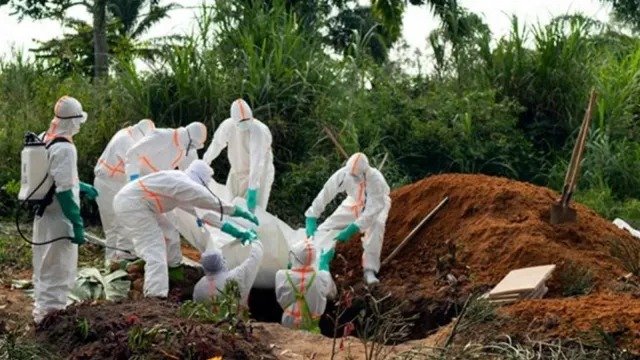
One of the biggest challenges is that there is currently no approved vaccine or specific treatment for Bundibugyo virus disease. WHO says outbreak control therefore depends heavily on early identification of cases, isolation and clinical care, contact tracing, safe burials, laboratory testing and strong community engagement. Although there is no licensed vaccine or specific therapeutic specifically approved for Bundibugyo virus, early supportive care can be lifesaving.
The latest figures underline the scale of the crisis. WHO has described the 2026 Bundibugyo outbreak as the largest Ebola disease outbreak ever recorded in the Democratic Republic of the Congo, with sustained transmission and high mortality. The agency has warned that insecurity and attacks affecting healthcare facilities and response teams are making surveillance, treatment and contact tracing more difficult.
Health authorities and international partners continue to strengthen surveillance, laboratory capacity, treatment facilities, infection-prevention measures and community-based response operations. WHO has also stressed that the outbreak requires continued international coordination as authorities work to contain transmission and prevent further geographic spread.