
 newspop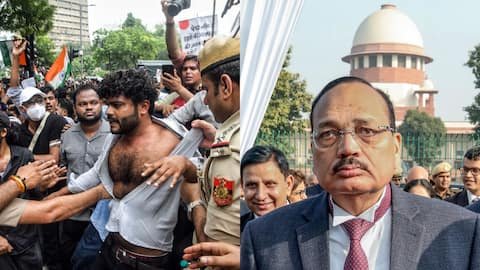
New Delhi : The Executive Magistrate of Greater Noida had issued a notice to a second-year law student—who was participating in the proposed ‘Cockroach Janata Party’ (CJP) protest—directing him to maintain the peace. Taking a serious view of the matter, the Supreme Court reprimanded the Greater Noida Magistrate.
Although the Greater Noida Magistrate had withdrawn the notice, the Supreme Court observed that this was a serious issue, given that a nationwide directive issued on September 1 had prohibited action against students.
Expressing objection to the Magistrate’s action, the CJI remarked, “How can a Magistrate dare to issue such a notice? We had made it clear that no punitive action would be taken against any student. No Magistrate can violate that order.”
On Wednesday, September 9, the Supreme Court questioned the notice issued under Section 130 of the ‘Bharatiya Nagarik Suraksha Sanhita’ by the Greater Noida Executive Magistrate against a student who was campaigning for participation in the CJP protest.
The Court asked how the Executive Magistrate could issue such a notice when the Supreme Court had quashed FIRs related to student protests and restrained any future punitive action against students regarding the CJP protests.
The matter was orally brought to the attention of the bench led by Chief Justice of India (CJI) Surya Kant by Senior Advocate Vishwajit Bhattacharya.
Advocate Vishwajit Bhattacharya stated, “Based on information from the Noida Police, the Greater Noida Executive Magistrate issued a notice to the second-year student; it was set to be enforced, but later, reports appeared in the press that it had been withdrawn.”
The lawyer further added, “This is an experiment being conducted on the students of India.” “Prima facie, this amounts to contempt of court. Officials from Noida and UP cannot create an atmosphere of fear among students.”
Justice Joymalya Bagchi asked what grounds for action remained if the notice had been withdrawn. The lawyer replied that once contempt has occurred, merely withdrawing the notice cannot nullify it.
The lawyer stated, “This is a contempt of this court’s dignity. This is the country’s apex court, which upholds our democracy.”
The CJI asked the lawyer to place the notice on record via a petition and stated that the Court would seek an explanation from the concerned official.
The court of the Executive Magistrate III, Greater Noida, had issued a notice against Akshat Tripathi under Sections 126/135 of the Bharatiya Nagarik Suraksha Sanhita (BNSS).
This action followed a police report alleging that he was inciting other students to participate in a proposed protest.
According to the notice dated September 4, 2026, the police alleged that Tripathi was spreading anti-government and misleading information among university students, inciting them, and encouraging them to join a proposed sit-in protest organized by the CJP.
Meanwhile, the Supreme Court questioned how the Greater Noida Magistrate could issue such a notice when there was a prohibition against taking any punitive action against the students.
Report – Abhijit Tushar Bhatt (Political Editor)