
 newspop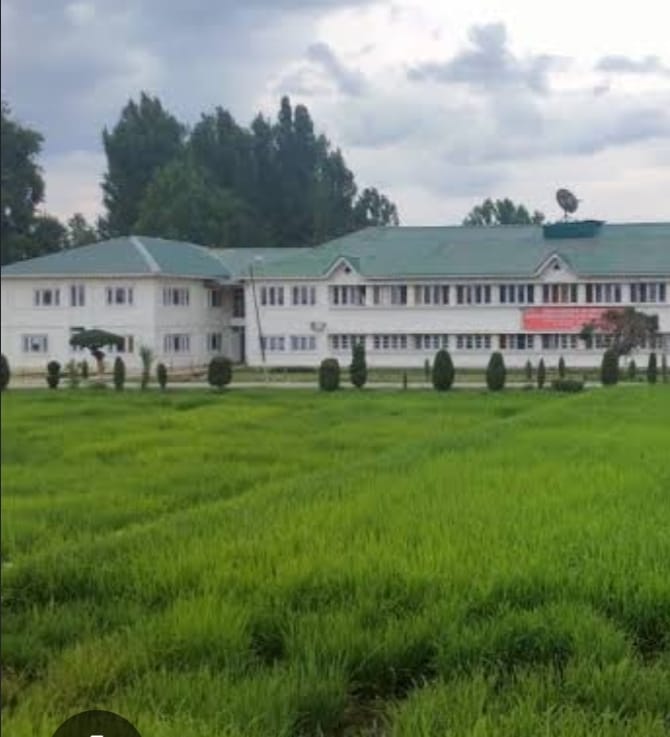
Kulgam Station Stands Among World’s Top Rice Research Centres
Kulgam, J & K : With Kashmir’s paddy harvests now surpassing 100 quintals per hectare roughly triple the national figure the accomplishment is attributed to a Kulgam based research facility that has devoted decades to ensuring the Valley’s nutritional security.
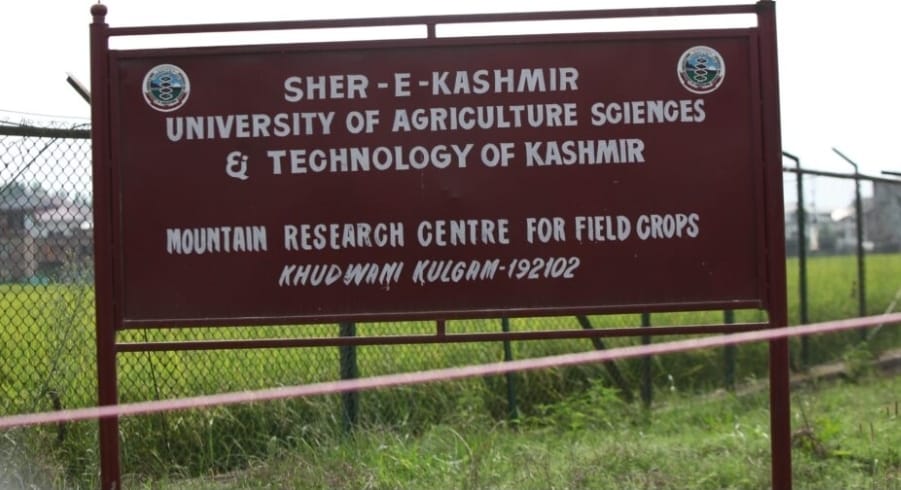
During a Saturday visit to the facility, Prof (Dr) Nazir Ahmad Ganai, Vice Chancellor of Sher-e-Kashmir University of Agricultural Sciences and Technology, Kashmir (SKUAST-K), hailed the Mountain Research Station for Field Crops (MRFC) at Khudwani as the cornerstone of the Kashmir’s rice transformation.
The Vice Chancellor noted that yields in the area once languished at approximately one tonne per hectare, yet the station’s rigorous research over the last 30 to 40 years has elevated potential output to between 10 and 12 tonnes.
“This advancement has occurred despite Kashmir contending with an expanding population, diminishing farmland, and escalating pressures from climate change and global warming all of which intensify food demands even as resources dwindle,” he remarked.
The VC further disclosed that MRFC Khudwani also serves as the nation’s National Blast Reference Centre, where every rice variety released across India undergoes screening for blast disease resilience. “The station’s evaluations indicate that most nationally released cultivars and traditional landraces experience yield losses ranging from 50 to 100 percent when afflicted by blast,” he explained.
Prof Ganai highlighted the case of Mushk Budji, an indigenous Kashmiri variety once rendered extinct due to extreme blast susceptibility. Scientists at the station revived it through targeted breeding for blast tolerance. Similarly, Kashmir’s red rice a local landrace prized for its superior quality and high nutritional value, notably its iron and zinc content had also proven vulnerable to blast and was restored through the station’s breeding initiatives.
The Vice Chancellor also announced the development of what he termed Kashmir’s inaugural Basmati rice variety. This medium grain cultivar boasts a more pronounced aroma than plain-origin Basmati types and offers a yield potential of eight to nine tonnes. He emphasized that Basmati rice had traditionally been confined to the plains and had never before been grown in Kashmir.
Prof Ganai added that the station’s ongoing efforts are directed at minimizing pesticide application and labour inputs in rice farming. He6 cited Direct Seeded Rice (DSR), a novel technique introduced by the university, which has substantially reduced manpower, water usage, and labour demands in cultivation.
He observed that Kashmir’s current paddy productivity exceeding 100 quintals per hectare against the national average of roughly 30 quintals—is nearly triple the all-India figure. “The prospective yield of a new cultivar under development at the station, approaching 12 tonnes or 120 quintals per hectare, would rank it among the highest productivity levels recorded globally, comparable to those achieved in China,” he stated.
The Vice Chancellor expressed pride that the station’s research stands shoulder to shoulder with that of the International Rice Research Institute (IRRI) in the Philippines, a premier global rice research body. He noted that senior scientists at the Indian Council of Agricultural Research (ICAR) engaged in rice breeding are well aware of the facility’s accomplishments.
He lauded the station’s breeders, agronomists, and pathologists—both past and present—for their contributions to these advances. The university’s ongoing mission, he said, is to enhance farmer profitability while reducing production costs, given that rice remains an indispensable staple for Kashmir.
The VC SKUAST-K also announced that the station, which has hitherto operated exclusively as a rice research institute, is being upgraded this year into a postgraduate agricultural college for South Kashmir, offering Master’s and PhD programmes in agriculture. “This initiative aims to address the rising demand, both within Kashmir and across the nation, for proficient and well-trained agricultural scientists,” he said.
Prof Ganai further noted that the station’s breeding work encompasses varieties suited to low, medium, and high altitudes, as maturation periods vary considerably with elevation, and cultivars optimal for lower regions do not necessarily mature at higher altitudes.
Finally, the Vice Chancellor revealed that construction is underway on an academic and laboratory block, along with separate hostel accommodations for male and female students, as part of the university’s broader plan to transform the station into a cutting edge Centre of Excellence for South Kashmir.
Report By – Mudasir Maqbool