 newspop

With Hundreds of Twin Pairs Reportedly Calling It Home, This Kerala Village Has Captured Global Attention, But Science Is Still Searching for Answers.
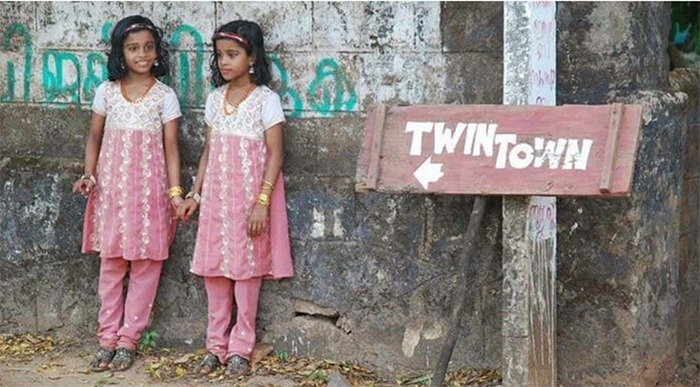
SPECIAL STORY : Imagine walking into a village where seeing two children with nearly identical faces is not unusual, school classrooms have multiple pairs of twins, and families share the unique experience of raising children born together. Welcome to Kodinhi, a village in Kerala’s Malappuram district that has earned the fascinating nickname of India’s ‘Twin Town’ because of its unusually high reported number of twin births.
Over the years, Kodinhi has attracted widespread attention for its remarkable concentration of twins. Media reports have associated the village with more than 400 pairs of twins, along with reported cases of triplets. Although the exact numbers vary across reports and records, the village’s unusual reputation has sparked curiosity among visitors, journalists and researchers interested in understanding the science behind multiple births.
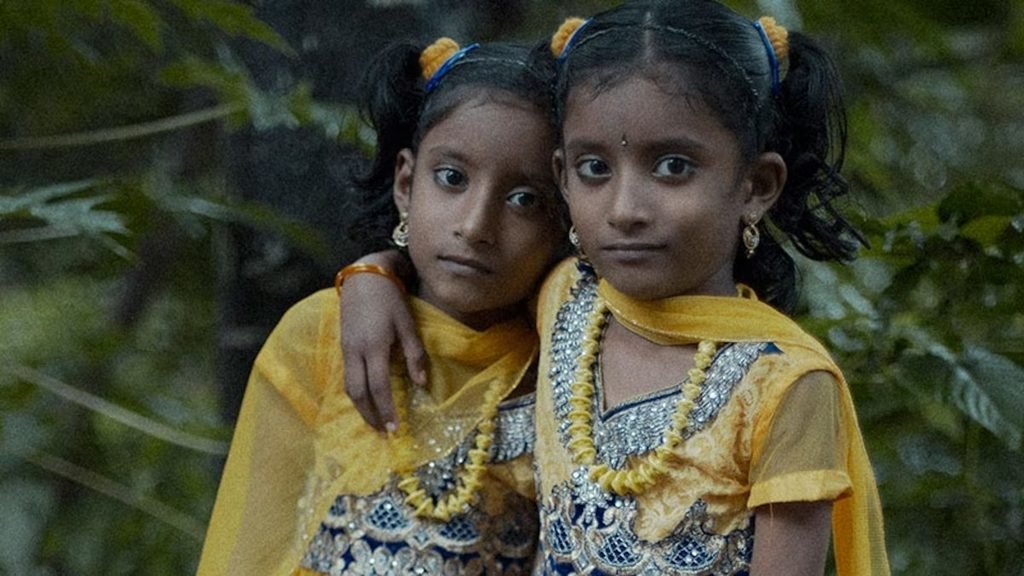
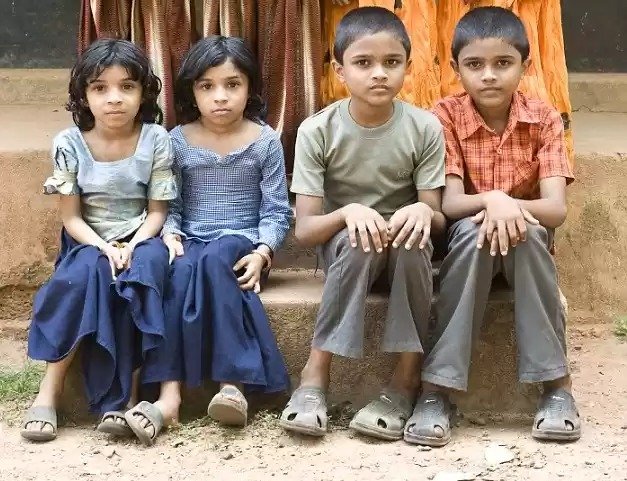
For outsiders, the sight of so many twins in one place can be astonishing. For local residents, however, it is a familiar part of everyday life. From schoolchildren sharing classrooms to adults participating in community gatherings, twins have become one of the most distinctive features associated with this otherwise quiet Kerala village.
But behind the fascinating photographs and headlines lies a question that continues to intrigue people: Why does Kodinhi appear to have such an unusually high concentration of twin births?
Scientifically, twins develop through two different biological processes. Identical twins occur when a single fertilised egg splits into two embryos, while fraternal twins develop when two separate eggs are fertilised during the same pregnancy. These processes have different biological mechanisms, and the factors influencing them can vary.

Researchers examining Kodinhi’s reported pattern may consider several possibilities, including genetic influences, family histories, maternal age and demographic characteristics. Some forms of twinning, particularly fraternal twinning, can be associated with inherited tendencies. Studying generations of families and comparing birth records with those of other populations could help scientists investigate whether genetics plays a role.
Questions have also been raised about whether local food habits, drinking water or environmental conditions could contribute to the phenomenon. However, such theories should be treated cautiously. No particular food, water source or environmental factor has been conclusively established as the cause of Kodinhi’s reported concentration of twins.
Understanding the phenomenon requires reliable birth records, detailed family histories and scientifically designed studies. Researchers would also need to distinguish between identical and fraternal twins and account for changes in population size, migration and record-keeping. Without sufficient evidence, attributing the pattern to a single cause would be premature.
Beyond the scientific mystery, Kodinhi is home to families whose experiences extend far beyond the label of a ‘Twin Town’. Raising twins can bring double the celebrations and shared childhood memories, alongside the everyday responsibilities of managing school schedules, healthcare and family routines. Although twins may share physical similarities and a close bond, each develops an individual personality, interests and ambitions.
The village’s unusual reputation has also helped it gain recognition beyond Kerala, demonstrating how a small community can become a subject of international curiosity. For some, the attraction lies in seeing so many lookalikes in one place; for others, Kodinhi represents an intriguing opportunity to explore human biology and heredity.
For now, the precise reasons behind the village’s reported concentration of twin births remain unresolved. Further scientific research could help establish how unusual the pattern is and whether identifiable biological or demographic factors contribute to it.
Kodinhi is more than just India’s ‘Twin Town’. It is a living community at the centre of a fascinating biological question, reminding us that some of nature’s most intriguing patterns do not have simple explanations. Until stronger scientific evidence provides clearer answers, this remarkable village in Kerala will continue to fascinate people curious about the mystery of twins.