
 newspop
Where Earth Meets Heaven : The Mystical Spiritual Power of Mount Kailash

SPECIAL STORY : In the silent grandeur of the Himalayas, where snow-covered peaks rise towards the heavens and the air itself seems filled with divine energy, stands Mount Kailash one of the most sacred and mysterious mountains in the world. Revered for centuries in Hinduism, Buddhism, Jainism and Bon traditions, Kailash is believed to be the spiritual abode of Lord Shiva and a divine point where the earthly world connects with the heavenly realm.
According to Hindu belief, the majestic mountain is associated with Mount Meru, the cosmic centre of the universe, while sacred traditions say that the Pandavas and Draupadi undertook a final spiritual journey towards the Himalayas in their quest for liberation, or moksha. For devotees, the journey around Kailash is not merely a physical pilgrimage but a deeply spiritual experience, with the sacred Kailash Parikrama traditionally beginning at Yamdwar and passing through the dramatic landscapes surrounding the mountain.
As pilgrims move along the route, different sides of Kailash appear from changing perspectives, revealing its extraordinary symmetry, towering cliffs and snow-covered formations. One particular rock formation on the western side has captivated devotees because its natural contours are said to resemble a human face, which many Shiva devotees lovingly interpret as the divine face of Mahadev.
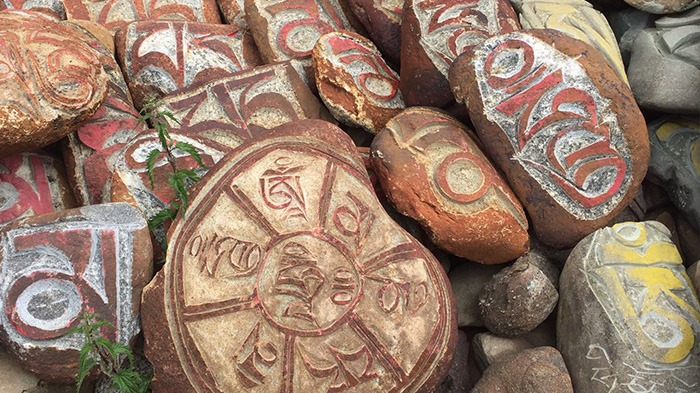
While such interpretations belong to the realm of faith and spiritual belief rather than established scientific fact, the sight has become a powerful part of the mountain’s enduring mystique. The four prominent faces of Mount Kailash, traditionally associated with the four cardinal directions, further deepen its sacred symbolism, with devotees viewing the mountain not simply as a geographical wonder but as a manifestation of divine presence. The belief that Shiva resides in Kailash has inspired generations of pilgrims, saints and spiritual seekers, who regard the mountain as a gateway between the mortal and the eternal.
The legendary journey of the Pandavas is also deeply woven into the spiritual imagination surrounding the Himalayas, with traditions describing their ascent as a final pilgrimage toward liberation, during which Yudhishthira is believed to have continued farther than his brothers and Draupadi.
Today, Mount Kailash remains one of the most revered pilgrimage destinations on Earth, its remote location, immense natural beauty and profound religious significance creating an atmosphere unlike anywhere else. For the devotees who look upon its snow-covered summit with folded hands, Kailash is more than a mountain it is Mahadev’s sacred abode, a symbol of eternal consciousness, a reminder of the journey from life towards liberation, and a place where faith makes the distance between Earth and the divine seem almost invisible.