
 newspop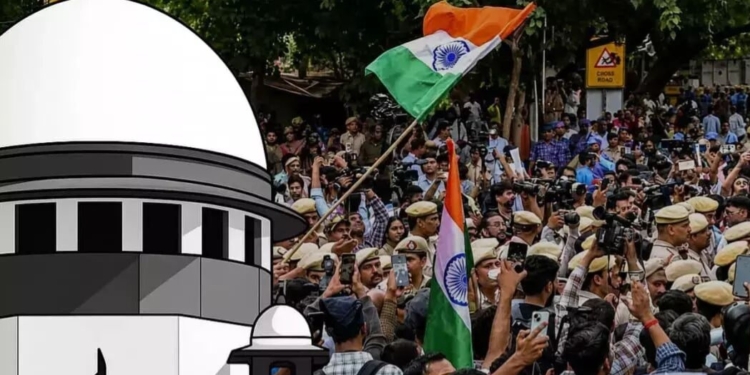
New Delhi : The Supreme Court has granted major relief to protesters involved in the nationwide agitation over alleged irregularities and paper leaks in the 2026 NEET examination, directing that FIRs linked to the protests between July 20 and 25 be quashed and closed.
A bench headed by Chief Justice of India Surya Kant, along with Justices Joymalya Bagchi and V Mohana, invoked its extraordinary powers under Article 142 of the Constitution to prevent further investigation or prosecution in cases covered by the order.
The court also made it clear that similar FIRs registered in other states and Union territories would receive the same treatment, even if those cases had not been separately placed before the bench. Authorities have further been directed not to register fresh FIRs over the same incidents.
The decision followed assurances from the Centre that it would honour commitments made during discussions with the protesters, including withdrawal of criminal cases and a compensation framework for eligible families affected by the examination controversy.
Following the Supreme Court’s intervention, CJP co-convener Saurav Das announced the withdrawal of the organisation’s proposed September 5 march from India Gate to Delhi Police Headquarters. The protest group had earlier announced the march, alleging that commitments made during negotiations had not been implemented.
The court, however, carved out a limited exception involving 2,837 people identified by Delhi Police as having serious criminal antecedents and being prima facie present at the protest site. Authorities will be permitted to separately examine their individual roles in incidents involving alleged bodily harm or damage to public property.
The Supreme Court said the broader relief was intended to protect protesters who participated in the agitation as part of legitimate democratic demands, while allowing authorities to deal separately with cases involving individuals accused of more serious conduct.
The Centre has also reiterated its commitment to frame a nationwide policy for compensation to eligible families affected by the NEET controversy. The government told the court that it would require three months to finalise the framework in consultation with the states.
The protests had intensified in June over allegations of examination irregularities and paper leaks, eventually leading to large-scale demonstrations in Delhi and other parts of the country. The July 20 march towards Parliament became a major flashpoint, with clashes between protesters and security personnel and allegations from both sides regarding the conduct of the confrontation.
A five-member committee headed by former Supreme Court judge Justice R Subhash Reddy is separately examining allegations surrounding the protests, including claims of excessive use of force, injuries, violence and damage to public property.
The latest order effectively brings nationwide legal relief to protesters covered by the Supreme Court’s directions, while keeping a narrow window open for authorities to separately investigate the 2,837 individuals identified by Delhi Police.