

 newspop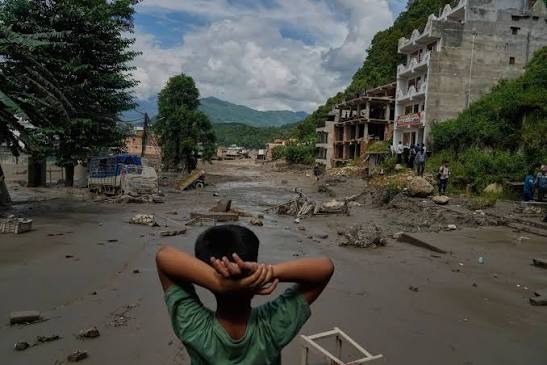
Wall of Water Hits Nepal: Villages Swept Away, Hundreds Feared Missing
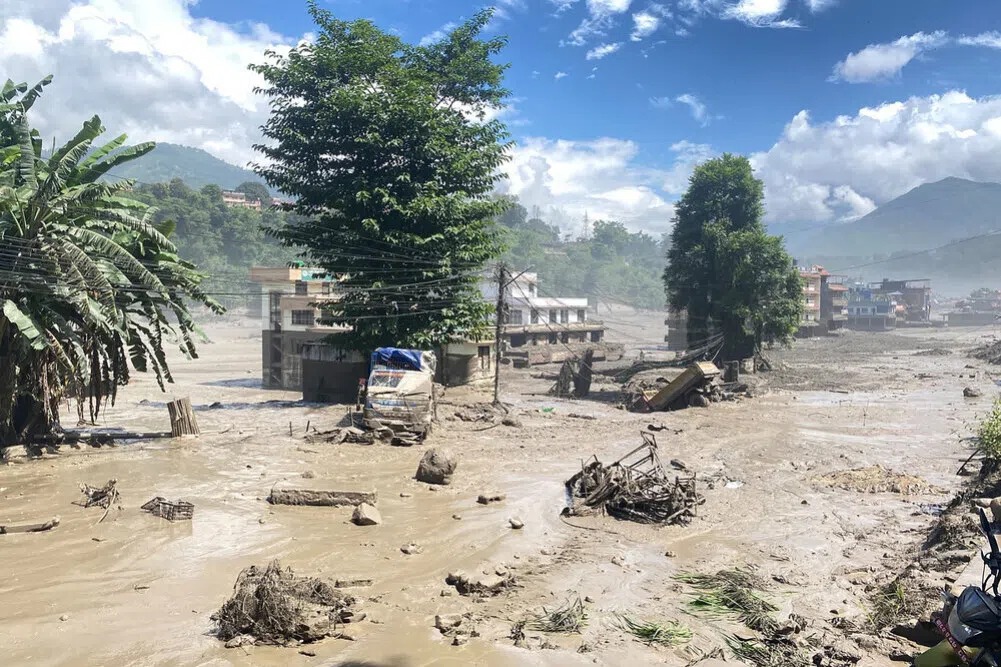
New Delhi : Nepal is battling a devastating flash-flood disaster after a sudden and massive surge of water swept through the Himalayan region along the Nepal–Tibet border, leaving a trail of destruction across Rasuwa district and surrounding areas.
According to the information provided, at least 165 people have died, while more than 1,000 people are reported missing, including 133 Indians and over 400 tourists who had travelled to the region, many of them for the Kailash Mansarovar pilgrimage.
More than 85 security personnel are also reportedly missing, raising fears that the death toll could increase as rescue teams reach areas cut off by floodwaters, mud and debris. The disaster struck suddenly at around 9 am on Wednesday, when the water level in the Bhote Koshi River rose dramatically from the direction of Tikret, sending a powerful torrent into populated areas around Timure, Syabrubesi and other parts of Rasuwa.
Videos emerging from the affected region show an alarming wall of muddy water rushing through settlements, carrying away vehicles, houses, bridges, roads and other infrastructure within moments. Several hydropower projects and vital transport links have also reportedly suffered extensive damage, while large stretches of roads connecting the border region have been washed away, making access extremely difficult for rescue teams.
The flash flood is believed to have been linked to a chain of events in the Himalayan region, with reports indicating that a 4.4-magnitude earthquake occurred near the Tibetan region at around 8:20 am, followed by an avalanche and a massive accumulation of ice, rocks and debris that reportedly blocked a river channel.
As water pressure increased, the natural obstruction was breached, sending a destructive surge downstream through the Lehende, Bhote Koshi and Trishuli river systems and into Nepal. Satellite imagery and expert assessments cited in reports suggest that a huge mass of ice, water and debris descended from a high-altitude glacier, dramatically increasing the force of the flood.
The impact has been particularly severe in Rasuwa, where numerous villages and settlements have been affected and major stretches of roads have been destroyed.
The Nepal Army, Nepal Police and Armed Police Force have been mobilised on a large scale, with helicopters and disaster-response teams deployed to search for missing people and provide emergency relief. The Nepal Army has reportedly deployed 14 helicopters for rescue and relief operations, while authorities are facing enormous challenges because floodwaters, thick mud, damaged roads and piles of debris are obstructing access to several affected areas.
Meanwhile, the reported disappearance of hundreds of Indian nationals has triggered concern in India, with the Indian Embassy in Nepal issuing a helpline to gather information about missing citizens and assist families searching for their loved ones.
Prime Minister Narendra Modi has spoken with Nepal’s Prime Minister Balendra Shah, expressing condolences over the loss of lives and assuring Nepal of India’s full support during the crisis. India has also sent around 10 tonnes of relief material by Indian Air Force aircraft to assist flood-hit communities. The disaster has also raised concerns downstream in Bihar, where authorities have issued alerts in districts along the Kosi, Gandak and Ganga river systems amid fears of rising water levels. Union Home Minister Amit Shah has spoken with Bihar Chief Minister Samrat Choudhary to review the situation, while rescue teams have been asked to remain prepared.
The tragedy has also caused anguish in Odisha after an Odia-origin couple living in Australia, identified as Sandeep Mahapatra and Siddharthi Kumari Sahu, were reported missing after arriving in Kathmandu on August 22. Sandeep was born in Bhubaneswar and his wife in Berhampur, and their whereabouts remain unknown following the disaster, according to information from Odisha Bhawan in Delhi.
As rescue operations continue amid extremely difficult conditions, the Nepal flood disaster has become a grim reminder of the growing vulnerability of Himalayan communities and travellers to sudden flash floods, landslides, glacier-related hazards and extreme weather events. With hundreds still unaccounted for, authorities are racing against time to locate survivors, restore connectivity and deliver relief to isolated communities, while families in Nepal and India wait anxiously for news of their loved ones. The full scale of the devastation is still emerging, and the final toll could rise as rescue teams reach more remote and severely affected areas.