
 newspop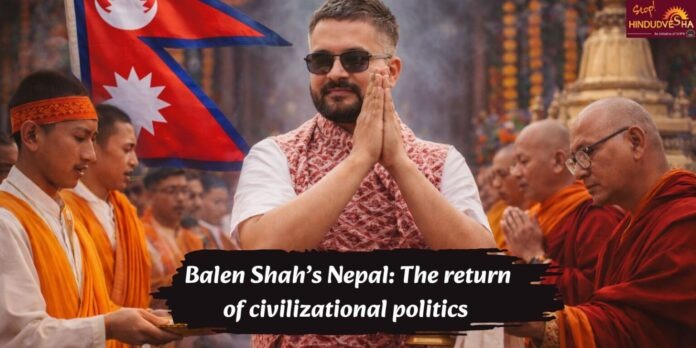
Kathmandu, Nepal : The demand to restore Nepal’s identity as a Hindu nation has once again gained political momentum, triggering a fresh debate over the country’s constitutional and religious identity. The issue has returned to the centre of Nepal’s political discourse amid renewed calls from Hindu groups and sections of political parties for constitutional changes.
Former Prime Minister and Nepali Congress leader Sher Bahadur Deuba has added a new dimension to the debate by supporting the recognition of Sanatan Dharma as part of Nepal’s national identity. The development has intensified political discussions over whether Nepal should reconsider its secular status established under the 2015 Constitution.
Sher Bahadur Deuba’s Statement Sparks Fresh Debate
At the Nepali Congress’s 14th national convention, a proposal was reportedly put forward to promote Sanatan Dharma as part of Nepal’s national identity. The slogan “I am Hindu” was also heard during the convention.
Deuba said Sanatan Dharma has been recognised as part of Nepal’s identity, a statement that has fuelled fresh political discussion across the country.
However, the proposal also stresses religious freedom, tolerance and social harmony, while calling for the preservation of Hindu, Buddhist, Kirat and nature-based religious traditions.
Nepal was officially a Hindu kingdom until the country transitioned to a secular republic. The 2015 Constitution established Nepal as a secular, federal democratic republic.
Now, Hindu organisations and political groups seeking restoration of the Hindu-state identity are increasingly pushing for the issue to be included in the constitutional amendment debate.
The Vishwa Hindu Parishad Nepal has reportedly submitted a written proposal to the government, calling for the removal of the word “secular” from Article 4 of the Constitution and advocating a Nepal based on Sanatan Dharma.
The Rastriya Prajatantra Party (RPP) has also sought to include the Hindu Rashtra question in the broader discussion on constitutional amendments.
The renewed demand presents a significant political challenge for Prime Minister Balen Shah’s government, as the question touches upon Nepal’s constitutional structure, religious freedom and cultural identity.
RPP president Rajendra Prasad Lingden and his party have reportedly met Prime Minister Balen Shah, arguing that Nepal’s religious and cultural identity should be part of the debate surrounding comprehensive constitutional amendments.
Hindu Rashtra supporters maintain that their proposed model would continue to protect religious freedom and tolerance, while giving greater constitutional recognition to Nepal’s traditional religious and cultural heritage.
The debate over Nepal’s identity is likely to intensify as political parties, religious organisations and civil society groups discuss possible constitutional changes.
For supporters, restoring Hindu Rashtra status represents a return to Nepal’s historical and cultural roots. Critics, however, are likely to focus on preserving Nepal’s secular constitutional framework and equal rights for all religious communities.
The key question now is whether the Balen Shah government will allow the Hindu Rashtra demand to become part of the formal constitutional amendment process and what position Nepal’s major political parties will ultimately take.
With calls for constitutional reform growing louder, Nepal appears to be heading toward a crucial political debate over religion, identity, secularism and the future direction of the republic.