
 newspop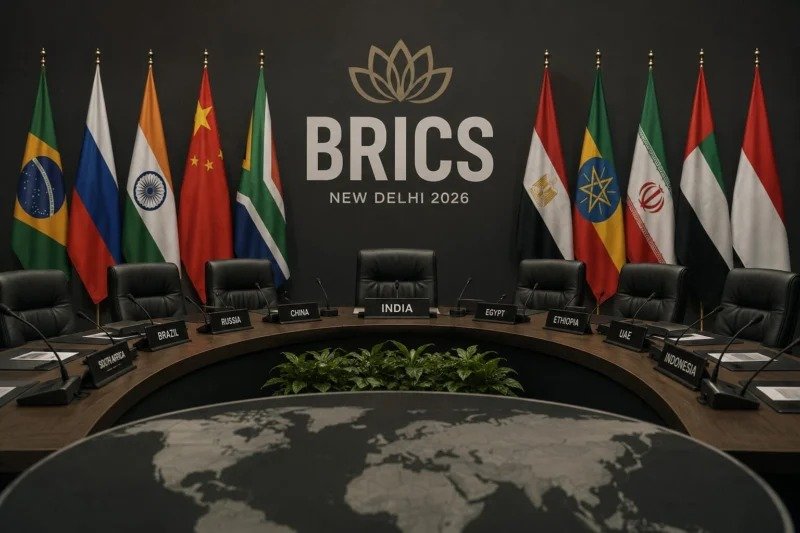
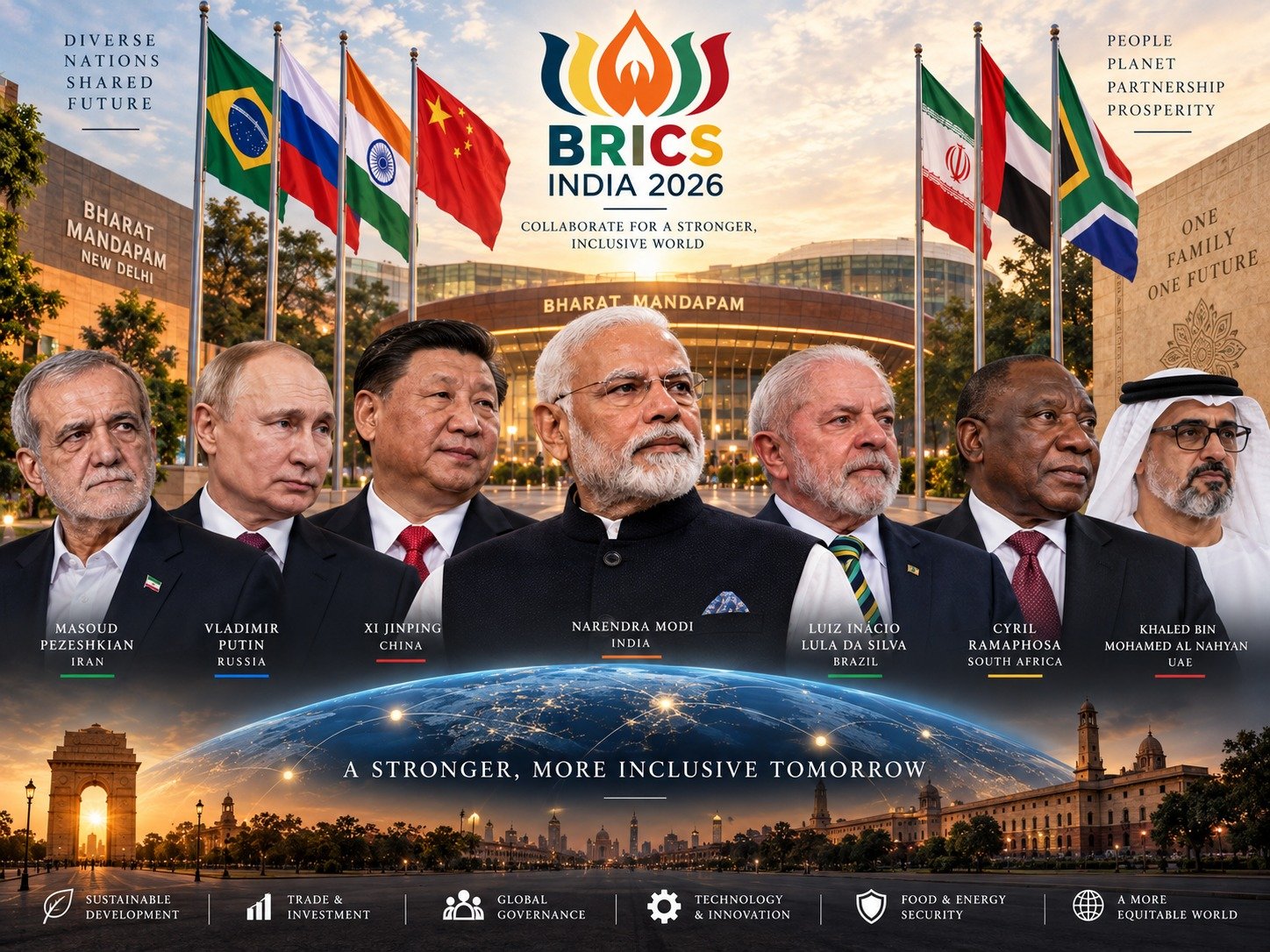
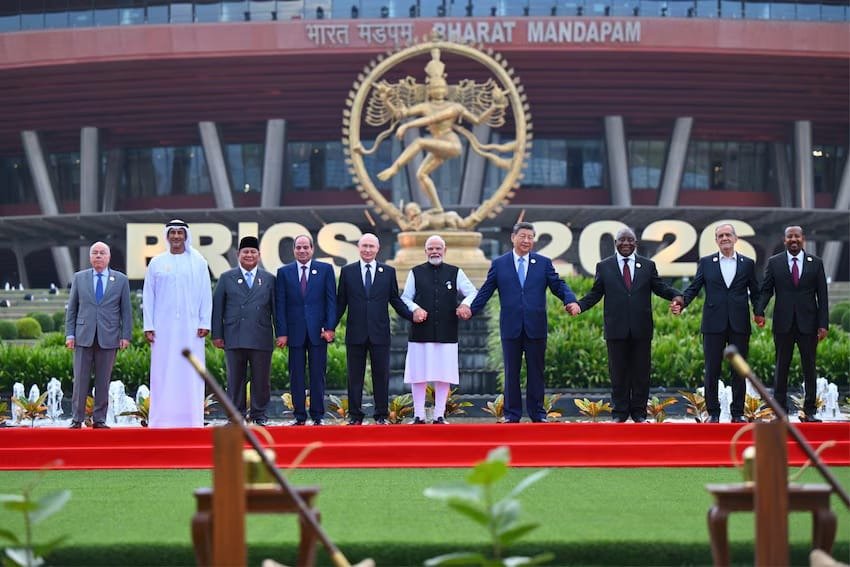
New Delhi: The world’s attention is firmly on New Delhi as India hosts the 18th BRICS Summit on September 12–13, bringing together leaders of major emerging economies at a time of deep geopolitical tensions, wars, economic uncertainty and a rapidly changing global order. Under India’s 2026 chairship, BRICS is focusing on “Building for Resilience, Innovation, Cooperation and Sustainability”, with an emphasis on development, technology, trade, sustainability and the aspirations of the Global South.
The expanded BRICS grouping now comprises 11 countries Brazil, China, Egypt, Ethiopia, India, Indonesia, Iran, Russia, Saudi Arabia, South Africa and the UAE. Together, they account for around 49.5% of the world’s population, 40% of global GDP and 26% of global trade, underlining the bloc’s growing weight in the international system.
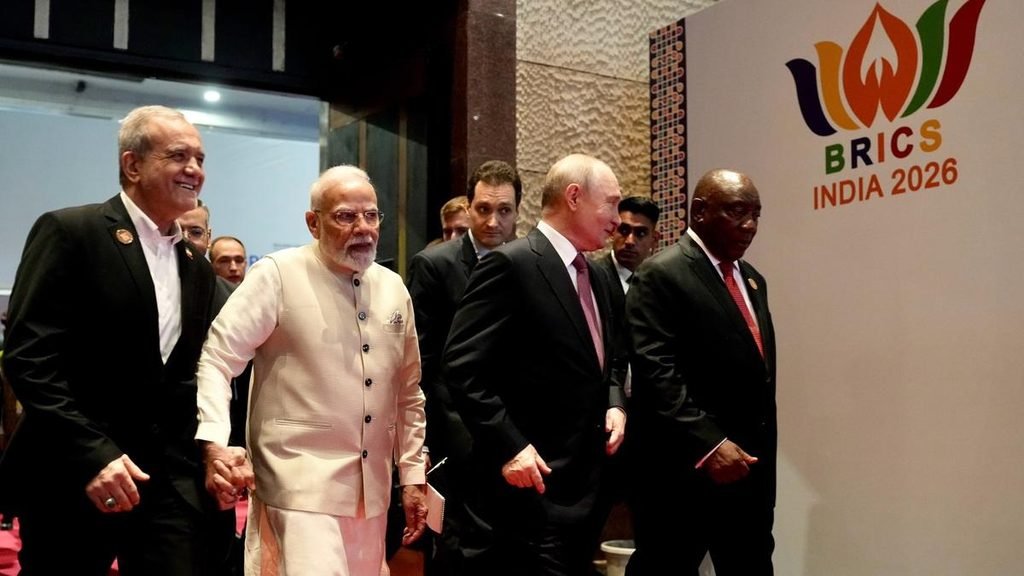
The summit has also turned into a major diplomatic moment for India, with leaders including Russian President Vladimir Putin, Chinese President Xi Jinping and Iranian President Masoud Pezeshkian in New Delhi. The gathering comes against the backdrop of the Ukraine war, conflicts in West Asia, trade disruptions and tensions between major global powers, putting India’s diplomatic balancing skills firmly in the spotlight.
Prime Minister Narendra Modi has used the BRICS platform to underline that the grouping should not be viewed as an anti-Western alliance. India is instead pushing for a more representative and inclusive global system, including reforms to international institutions. Modi has called for urgent reform of the UN Security Council, greater representation for developing countries and stronger cooperation among BRICS nations.
The summit is also highlighting the need to turn BRICS from a platform for dialogue into a forum capable of delivering practical outcomes. Discussions are focusing on economic cooperation, technology, infrastructure, financial systems, trade, energy security, innovation and sustainable development. Russia, meanwhile, has called for BRICS to evolve into a more practical economic partnership with stronger cooperation in payments, technology, investment and infrastructure.
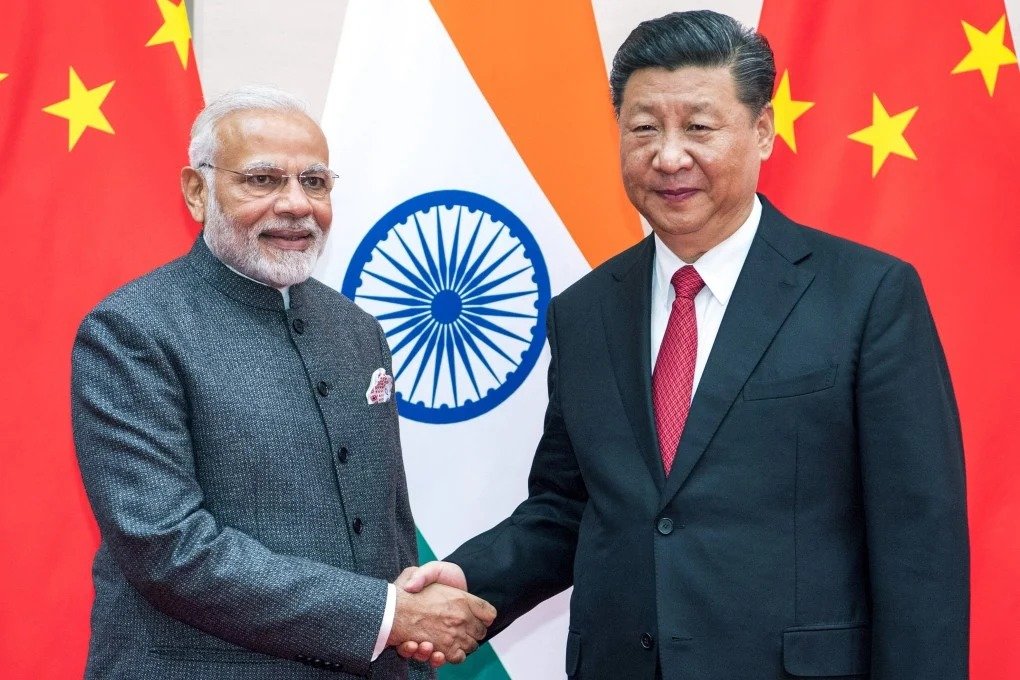
A key diplomatic spotlight is also on India-China engagement. The presence of President Xi Jinping in Delhi, alongside the ongoing effort to stabilize bilateral relations, gives the summit added significance. At the same time, India continues to maintain its longstanding strategic partnership with Russia while deepening its engagement with the United States, Europe and other major global powers.
With BRICS representing nearly half of humanity and a substantial share of the global economy, the Delhi summit is more than another international gathering. It is a test of whether emerging powers can turn their growing economic and political influence into coordinated action and whether India can use its BRICS chairship to shape a more balanced, inclusive and multipolar world.
From Delhi to the World, India’s BRICS message is clear:
Dialogue over conflict. Cooperation over confrontation. Development over division. And a greater voice for the Global South.