 newspop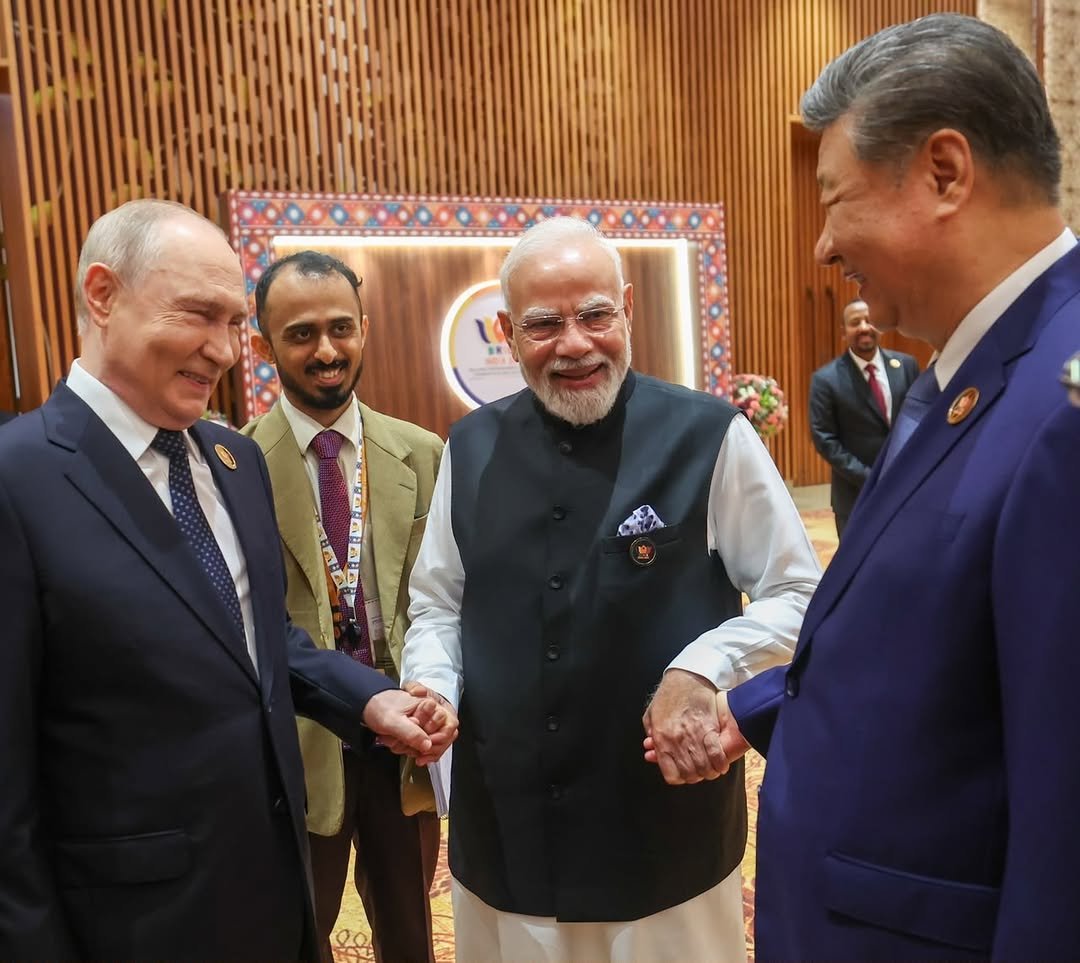
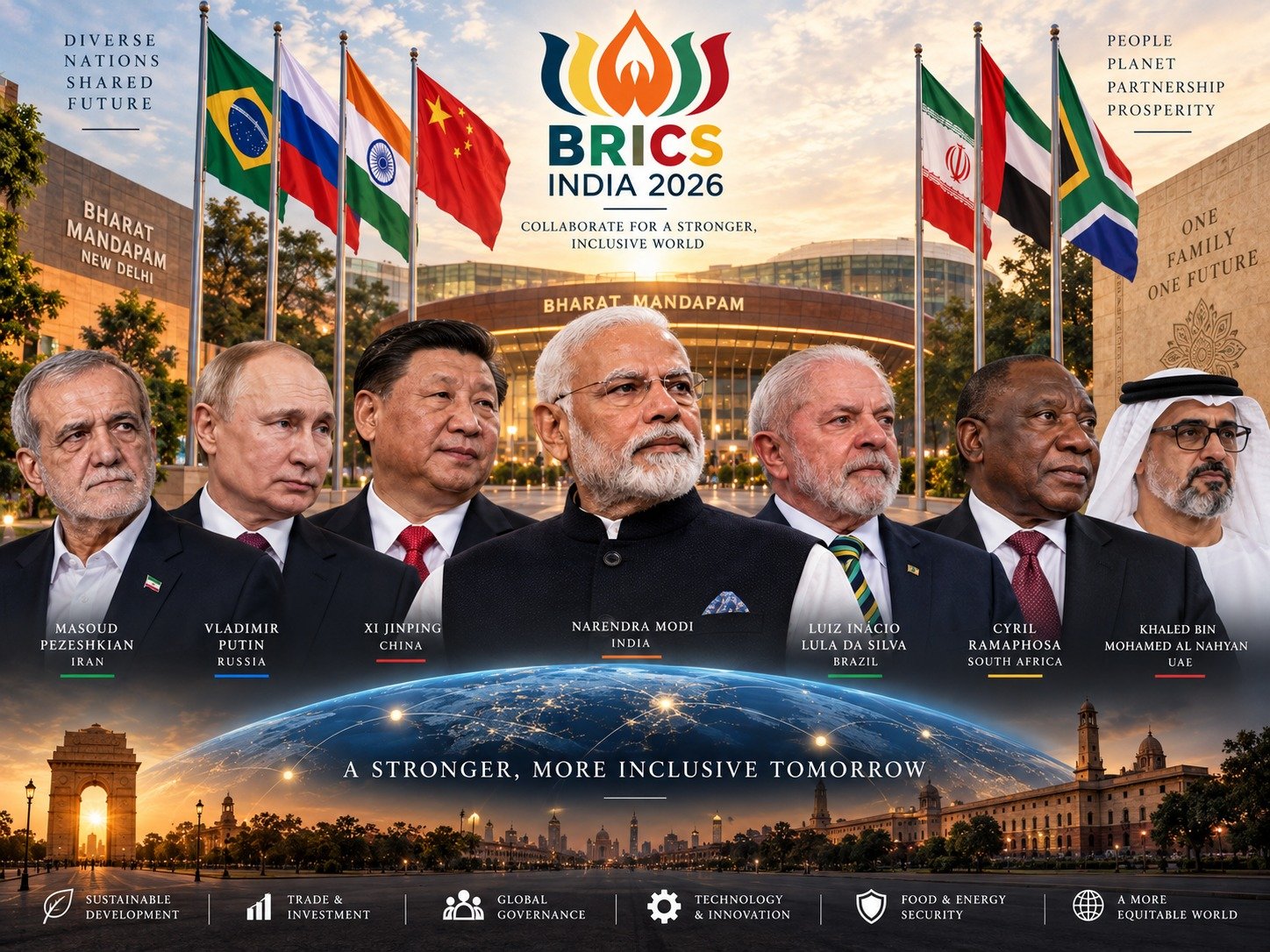
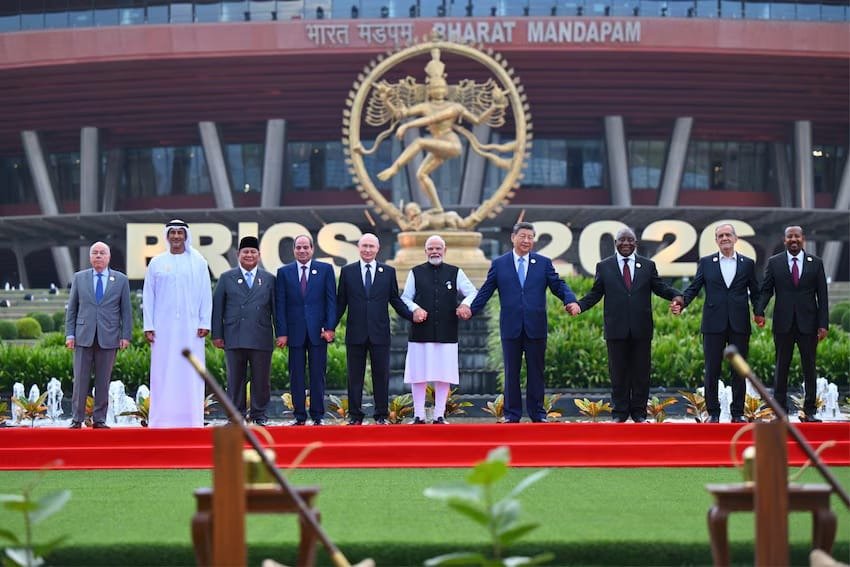
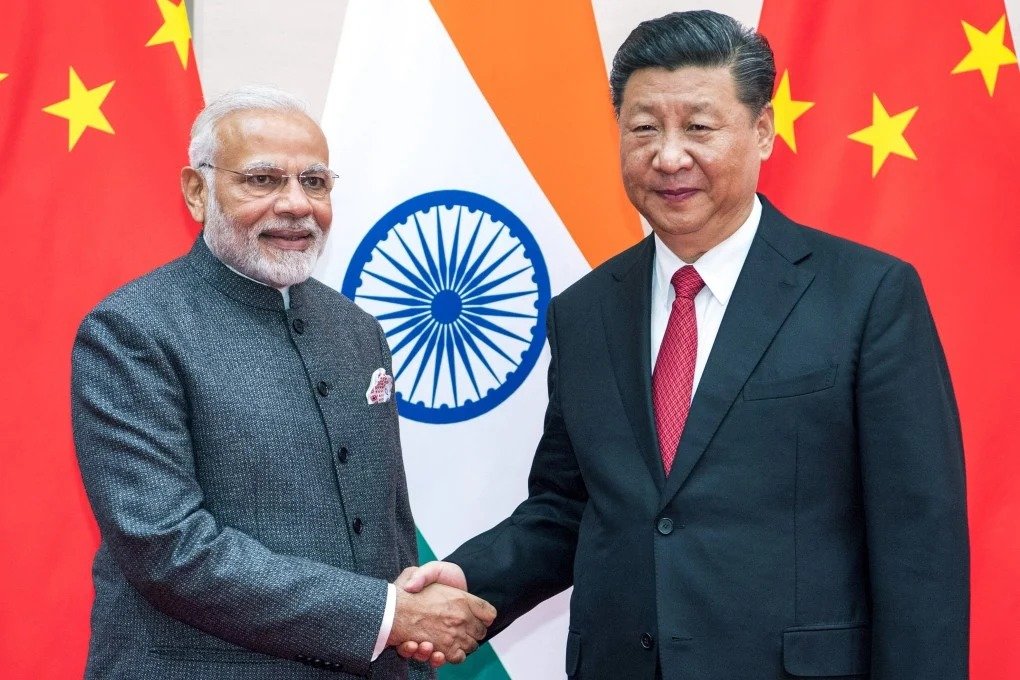
New Delhi : China and Russia aligned against the US, fresh concerns for Pakistan, and the ultimate test of Modi’s diplomacy the scene unfolding in Delhi over the next two days is far more than just an international summit. Chinese President Xi Jinping, Russian President Vladimir Putin, and Indian Prime Minister Narendra Modi will all be present on the same stage.
If this event is viewed merely as a BRICS meeting, its true political significance might be missed. This is because the modern world is once again gravitating towards a landscape of two or three power centers. On one side stands the US; on the other, China and Russia; while India occupies a unique position, carving out its own space with both sides without becoming part of any single bloc. It is precisely for this reason that this BRICS summit in Delhi has become pivotal for global politics.
Hosted by India on September 12 and 13, the BRICS meeting sees the participation of partner nations alongside the 11 member countries. BRICS now represents nearly half of the world’s population and a significant share of the global economy. Xi Jinping is visiting India after a gap of seven years; his visit is a subject of intense discussion. He had previously met Prime Minister Narendra Modi in Mahabalipuram in 2019. Subsequently, the 2020 Galwan clash severely damaged India-China relations. Military tensions along the border escalated, diplomatic ties cooled, and mutual trust between the two nations eroded.
Now, seven years later, Xi is visiting India. Crucially, a bilateral meeting between Modi and Xi is scheduled during this visit. China’s Foreign Ministry has also spoken of strengthening relations between the two countries based on a strategic and long-term perspective. This visit does not imply that all differences between India and China have been resolved; however, in politics, the meeting itself often conveys a message. The fact that Modi and Xi are sitting at the same table in Delhi signifies that both nations are now prepared to make room for dialogue alongside conflict. A look at India-China relations…
When did the Chinese Premier first visit India ?
The history of India-China relations dates back not to the present day, but to the early years of independent India. There was close diplomatic engagement between the then Chinese Premier Zhou Enlai and Indian Prime Minister Jawaharlal Nehru during the 1950s. In 1954, both nations championed the principles of Panchsheel, fostering a new hope for coexistence in their relationship. Zhou Enlai played a pivotal role in the 1954 agreement and the formulation of Panchsheel. During that era, an atmosphere of “Hindi-Chini Bhai-Bhai” (Indians and Chinese are brothers) prevailed between the two countries. However, within just a few years, differences regarding the border issue, Tibet, and Aksai Chin escalated, eventually leading to the 1962 war.
Therefore, in light of today’s meeting between Modi and Xi, it is essential to recall the history of the 1950s. Friendship with China and strategic caution regarding China both aspects have coexisted in India’s foreign policy. It is also a fact that most Indians do not trust China. Furthermore, the visit to India by Russian President Putin India’s oldest ally is equally significant. Global attention is currently focused on India because, alongside Xi, Russian President Vladimir Putin is also in Delhi. Putin has arrived, and bilateral discussions with Modi are likely to center on issues such as trade, investment, energy, defense, technology, and the situation in Ukraine.
Russia is a long-standing strategic partner of India
The relationship between the two nations spans a long period, covering sectors ranging from defense and nuclear energy to the oil industry. Today, the US is exerting pressure on countries that purchase oil from Russia. In this context, Putin’s visit to Delhi and India’s continued open dialogue with Russia send a clear message to the US: India will determine its foreign policy based on its own national interests, rather than in accordance with Washington’s wishes.
The Biggest Question: What Will Be the Impact on Trump ?
This is where the most significant international political angle of this entire visit emerges. The scene unfolding in Delhi is certainly significant for US President Donald Trump. This is because, on one hand, negotiations regarding trade and tariffs are underway between China and the US, while on the other, the Chinese President will be visiting India and sharing a platform with Putin.
The US and China are currently discussing tariff reductions, and a meeting between Trump and Xi is likely to take place in Washington on September 24. Consequently, the Delhi meeting will convey a message to Trump: China is not engaging solely with the US; it is also strengthening its strategic network with India and Russia. However, India faces a delicate balancing act here. Appearing close to China and Russia without drifting away from the US this represents the ultimate test of the Modi government’s diplomacy.
What Could Be Modi’s Greatest Political Achievement?
If this meeting yields a major outcome, Narendra Modi stands to gain the most diplomatically. This is because India simultaneously maintains relations with the US, a strategic partnership with Russia, and despite the rivalry with China open channels of dialogue. India is part of the QUAD, BRICS, and the SCO, and plays a pivotal role in forums like the G20. This is what is known as “Strategic Autonomy.” In other words, instead of remaining under the protective umbrella of any single superpower, India seeks to forge relationships with every power based on its own national interests. The visits of Xi and Putin to Delhi further clarify this policy to the world. However, the relationship with China is not straightforward; India must avoid the mistake of assuming that differences with China can be resolved merely through diplomatic smiles. The border issue along the Line of Actual Control (LAC) has not yet been fully settled. While trade between India and China is growing, the trade imbalance remains a cause for concern for India. Issues such as investment, technology, visas, market access, and security continue to be sensitive. According to recent reports, both nations are considering mechanisms like the ‘Strategic Economic Dialogue’ to recalibrate their economic ties, yet a sense of mistrust persists on both sides. In essence, while dialogue between Modi and Xi will increase, India will not place blind trust in China.
What does this visit mean for Pakistan?
Now, let’s talk about Pakistan…
China is Pakistan’s most significant strategic partner. China plays a crucial role in Pakistan’s economy, the CPEC (China-Pakistan Economic Corridor), and its defense sector. In this context, if Xi Jinping moves towards improving relations with India, it sends a mixed message to Pakistan. On one hand, China’s support for Pakistan will continue. On the other, if tensions between China and India subside, Pakistan’s room to leverage China as a strategic counterweight against India could shrink. This could become a major concern for Pakistan. If trade between India and China increases, border tensions decrease, and diplomatic engagement grows, Pakistan’s equation of “countering India through China” in South Asia will become far more complex.
The situation regarding BRICS is also not straightforward for Pakistan. There is discussion within Pakistan that carving out a space for itself in forums like BRICS could prove difficult due to India’s position. However, this does not mean China will abandon Pakistan. Pakistan retains strategic importance for China particularly regarding CPEC, connectivity to western China, and access to the Arabian Sea. The message for Pakistan is clear: even if China improves ties with India, it will not sever relations with Pakistan; however, Pakistan’s strategy which relies heavily on India-China tensions could be weakened.
Is this a new China-Russia-India alliance?
No… it is crucial to understand this point.
It would be politically incorrect to assume that India has joined an “anti-America bloc” with China and Russia simply because Xi, Putin, and Modi are sharing the same platform in Delhi. India and China have a border dispute. While India shares strong ties with Russia, it also maintains deep strategic relations with the United States. China and Russia have drawn closer to challenge American global influence, whereas India prefers to view BRICS as a multilateral forum rather than an anti-West military alliance. Therefore, it is more appropriate to regard the Delhi meeting as an alignment of interests rather than a formal alliance.
What will change in global politics?
Five major signals could emerge for the world following this visit.
- First: India is no longer merely a South Asian power; it is becoming an independent player in the global balance of power.
- Second: China is expanding its diplomatic network beyond the US sphere.
- Third: India remains a crucial economic and strategic gateway for Russia.
- Fourth: India’s importance to the US will grow further; if the US seeks to counterbalance China, it cannot afford to ignore India.
- Fifth: The strategic equation in South Asia will become increasingly complex for Pakistan.
Where will India’s position stand?
The most significant outcome of this entire visit may not lie in any specific agreement, but rather in India’s enhanced bargaining power. In Delhi, Putin is on one side and Xi on the other, with India engaging both; meanwhile, the US, too, cannot overlook India. In this scenario, India is not limited to just three choices—it has a multitude of options. Energy and defense cooperation with Russia; trade and border stability with China; technology, investment, and Indo-Pacific cooperation with the US; and leadership within the Global South this constitutes India’s new diplomatic strength. Ultimately, it is a question of Modi’s politics.
For Prime Minister Narendra Modi, this summit represents a significant diplomatic opportunity but also carries a heavy responsibility; if he can de-escalate tensions with China, maintain ties with Russia, and simultaneously prevent the US from drifting away, it will be hailed as a major success for India’s foreign policy. However, should closeness with China unsettle the US, or if the partnership with Russia leads to increased economic pressure from the West, India will once again need to strike a delicate balance. Therefore, it would be a mistake to view the presence of Modi, Xi, and Putin in Delhi merely as a meeting of three leaders.
This offers a glimpse into a world where the US is no longer the sole center of power; China is rising as a global force, Russia is striving to retain its standing, and India keeping doors open on all sides is moving towards establishing itself as a third, independent power center. Perhaps this is the most significant political message of the Delhi BRICS summit: “India does not belong to any single camp… India is on the path to becoming a camp of its own.”
Report – Abhijit Tushar Bhatt (Political Editor)