
 newspop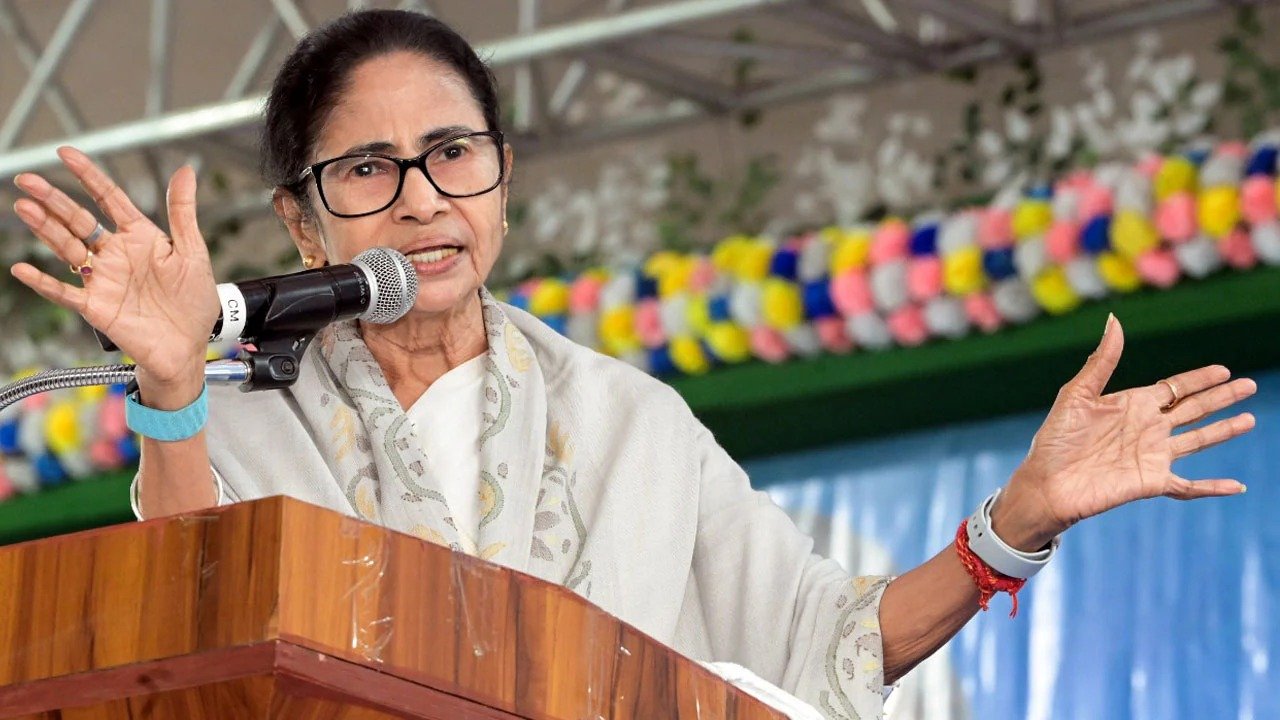
New Delhi : From calling herself a “street fighter” after the Bengal election defeat to fighting a battle over her party’s very name and election symbol, Mamata Banerjee now faces a dramatically altered political landscape. On May 5, 2026, at Kalighat in Kolkata, Mamata Banerjee had appeared before the media after the Trinamool Congress’ electoral setback and said that victory or defeat in an election was not the most important thing for her, describing herself as a “street fighter” who had risen from the streets and would continue to remain there.
At the time, she also referred to having 80 MLAs on her side. Just months later, however, the Trinamool Congress is facing an intense internal dispute over leadership, organisational control, the party’s name and its long-standing Flowers and Grass election symbol. The Election Commission on September 17 temporarily froze the use of the “All India Trinamool Congress” name and its traditional symbol amid the dispute between rival factions, and on September 18 allotted separate interim identities for the upcoming by-elections: the Mamata Banerjee-led faction was given the name “Mamata All India Trinamool Congress” with the “Football Player” symbol, while the rival faction was allotted “Democratic Trinamool Congress” with the “Envelope” symbol.
The development comes nearly 28 years after Mamata founded the Trinamool Congress after breaking away from the Congress in 1998, making the current dispute particularly significant for a party whose traditional name and symbol have been central to its electoral identity.
The crisis is not limited to the symbol battle: in July, the Enforcement Directorate froze three TMC bank accounts containing ₹440.42 crore as part of a money-laundering investigation linked to alleged financial transactions involving Carewell Aviation.
The ED said around ₹160 crore had been transferred from party accounts to Carewell Aviation and a related entity, alleging that the funds were connected to the acquisition of an aircraft and helicopter; these are allegations under investigation and are subject to legal proceedings, while the TMC has challenged the action and described it as politically motivated.
Meanwhile, claims about the extent of support enjoyed by the rival factions among TMC legislators have also become part of the political dispute, with reports and competing assertions emerging over the number of MLAs backing each side; such factional strength claims should be treated as disputed rather than established fact.
The Election Commission’s September 18 arrangement is explicitly an interim mechanism allowing the rival groups to contest the October 6 by-elections under separate identities while the broader dispute remains unresolved. Mamata has said she will continue to claim the original party name and symbol and has criticised the Election Commission’s move, while the rival camp has defended its position.
As the by-elections approach, the battle is therefore unfolding on multiple fronts over the TMC’s organisational control, electoral identity, party finances and competing claims of political legitimacy with the final determination over the original party name and symbol still pending.



 Mudasir Maqbool