

 newspop
SPECIAL STORY: 8.5 Lakh Years Ago, Were Humans Cannibals ? Ancient Bones Unearthed in Spain Reveal Shocking Clues
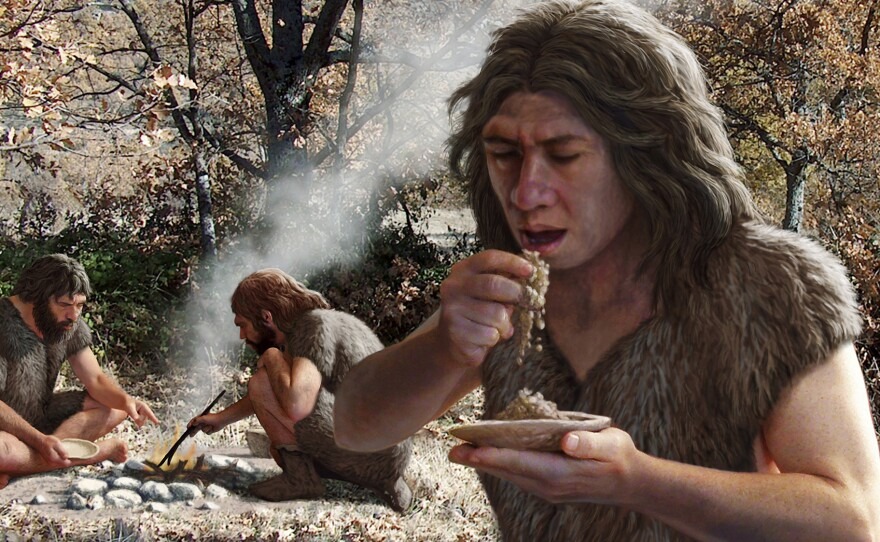
New Delhi: Imagine entering a cave nearly 8.5 lakh years ago and discovering the remains of humans who may not have simply died, but may have been butchered and eaten by their own kind. It sounds like a terrifying scene from a horror movie, yet archaeologists in Spain have uncovered evidence that has left the scientific world stunned. Ancient human bones found inside the Gran Dolina cave bear disturbing cut marks, suggesting that flesh was deliberately removed from the bodies using stone tools.
Even more chilling, the remains belong to Homo antecessor, an extinct human species believed to have lived in Europe hundreds of thousands of years ago. Were these ancient humans victims of violence, hunger or something far more horrifying? The discovery has reopened one of the darkest chapters in human evolution: the possibility that our ancient ancestors may have practiced cannibalism.
A remarkable archaeological discovery in northern Spain has brought one of the most unsettling questions about human evolution back into the spotlight did some of our ancient ancestors eat members of their own species ?
Researchers working at the Gran Dolina cave in Atapuerca, near Burgos, have uncovered around two dozen human bone and tooth fragments dating back roughly 850,000 years, and several of the remains bear cut and butchery marks that suggest the bodies may have been processed in a manner similar to animal carcasses.
The remains have been attributed to Homo antecessor, an extinct human species that lived in Europe hundreds of thousands of years ago. Scientists say the discovery provides important new evidence for studying the possibility of cannibalism among these early humans, although the exact reasons behind the practice remain uncertain.
Archaeologists have been excavating the Gran Dolina site for decades, and the cave has already produced important evidence about the lives of early human populations in Europe. The latest excavation yielded fragments including parts of skulls, vertebrae and bones from the arms and legs, along with teeth belonging to different individuals. When researchers examined the bones, they identified marks consistent with cutting and removing flesh using stone tools.
Similar traces had previously been documented on the remains of children discovered at the same site, but the identification of comparable marks on adult remains could provide a broader picture of who may have been subjected to such treatment. The discovery is particularly significant because earlier evidence from Gran Dolina had largely involved children and adolescents, leaving researchers uncertain whether the apparent cannibalistic behaviour was limited to younger members of the population or represented a wider practice.
The new adult remains have added another important piece to the puzzle. One of the most striking earlier discoveries from the cave came in 2025, when researchers reported the remains of a very young child, estimated to have been around two to four years old, with marks on the bones that were interpreted as evidence of deliberate processing.
Researchers suggested at the time that the child may have been killed and consumed, although the precise circumstances could not be established. With the discovery of adult remains showing similar traces, scientists now have more evidence to investigate whether the practice occurred across different age groups.
The Gran Dolina cave has also yielded a wide range of stone tools made from materials such as flint, quartz and sandstone, providing clues about the technological abilities of the people who occupied the area.
Animal remains belonging to species including hyenas, deer, beavers, horses and rhinoceroses have also been recovered, offering researchers valuable information about the environment and diet of the region hundreds of thousands of years ago. Interestingly, the latest findings also suggest that the cave may once have been occupied by a larger group than previously thought, with researchers estimating that around 13 to 15 individuals may have been present during the period represented by the remains. This could help scientists better understand the population size, social organisation and daily life of Homo antecessor.
However, researchers caution that finding butchery marks on human bones does not by itself answer the biggest question : Why were these individuals processed ?
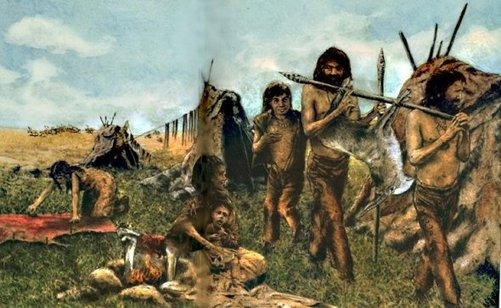
Cannibalism, if that interpretation is correct, could have been linked to food shortages, conflict between groups, ritual or cultural practices, or other social behaviours that are impossible to determine with certainty from the bones alone. Scientists must therefore examine the archaeological evidence alongside the broader environmental and behavioural context before drawing firm conclusions.
The discovery nevertheless provides a fascinating glimpse into a distant chapter of human evolution, when different human species lived in a vastly different world and relied on stone tools and hunting for survival. The Gran Dolina cave continues to be one of the most important archaeological sites for understanding early human life in Europe, and every new fragment has the potential to change what scientists know about our ancient ancestors.
Whether these mysterious bones ultimately prove widespread cannibalism or reveal a more complex cultural practice, the discovery has opened another extraordinary window into the lives—and deaths—of humans who lived nearly a million years ago.