

 newspop
SPECIAL STORY : Will Krishna’s Legendary Dwarka Rise From the Sea ? ASI Plans Massive Underwater Archaeology Mission
Under the Ocean, History Awaits : Search for Ancient Dwarka and Lost Civilisations Enters a New Phase
New Delhi: What lies beneath the deep waters surrounding India’s coastline could hold some of the country’s greatest archaeological mysteries. A major underwater archaeology effort is focusing on several historically significant maritime sites, including Dwarka and Bet Dwarka in Gujarat, with the broader objective of locating submerged settlements, ancient ports, shipwrecks and other archaeological remains.
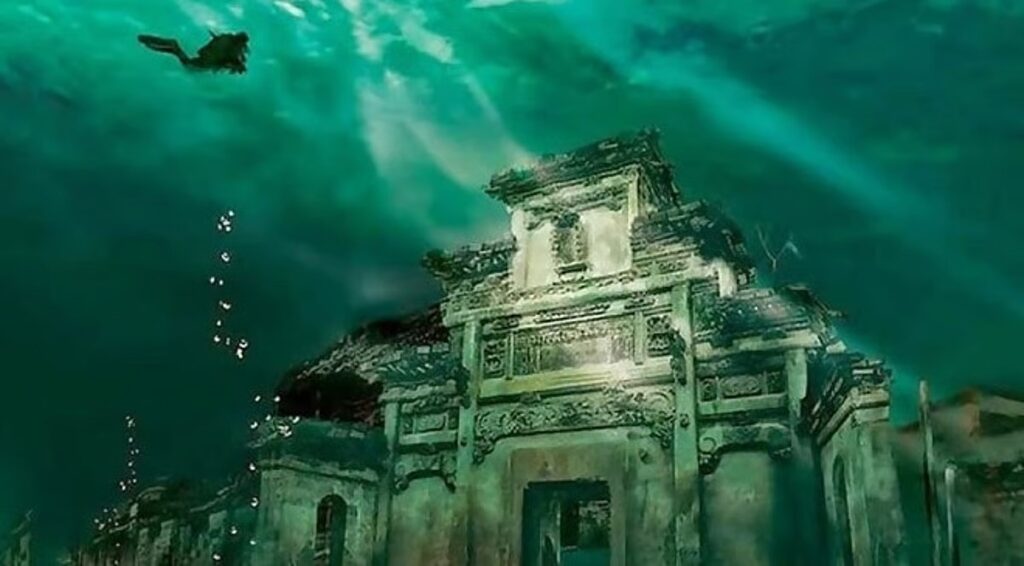
Among the biggest questions surrounding the exploration is whether the underwater remains associated with Dwarka could shed new light on the ancient city traditionally linked to Lord Krishna. According to Hindu tradition, Dwarka was the divine capital of Lord Krishna and is believed to have eventually disappeared beneath the sea. Over the years, underwater explorations off the Gujarat coast have reported stone structures, artefacts and other remains, but archaeology has not established that these remains are the legendary Dwarka described in religious traditions. The latest focus on underwater archaeology is therefore attracting enormous public interest, as researchers seek to separate historical evidence from legend through scientific investigation.
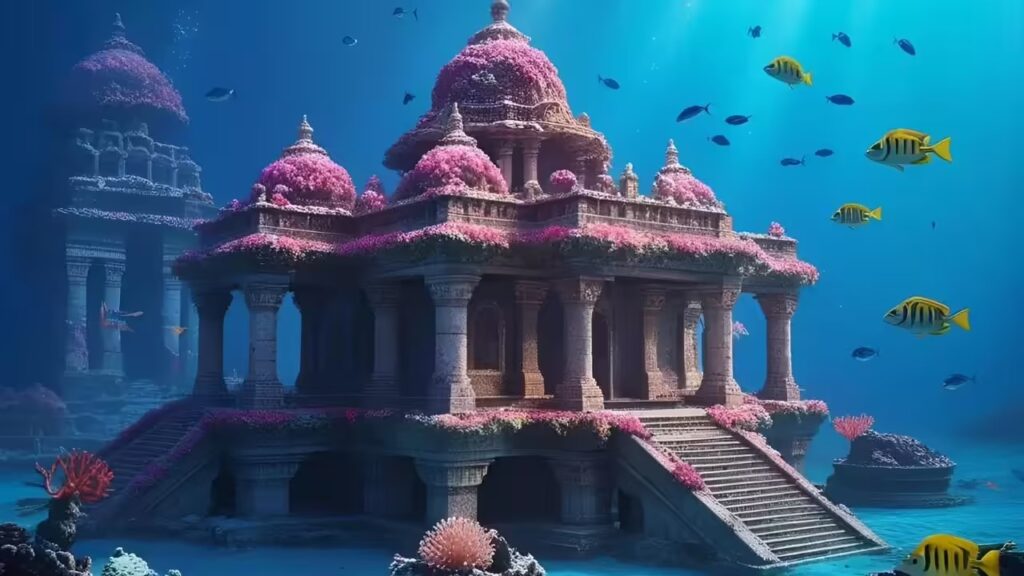
The planned research is expected to use modern technologies such as sonar mapping, underwater surveying, advanced imaging and archaeological documentation to investigate what may be hidden beneath the seabed. Researchers are interested in discovering evidence of ancient settlements, submerged structures, forgotten ports, shipwrecks, trade routes and artefacts that could help reconstruct India’s maritime history. The exploration is not limited to Gujarat.
Other coastal locations receiving attention include Mahabalipuram in Tamil Nadu, Karaikal in Puducherry, Vijayadurga and the coastal waters around Janjira, among other historically important sites. These locations are believed to have the potential to provide valuable clues about India’s ancient relationship with the sea and its maritime trade networks.
The underwater mission also highlights the growing importance of specialised underwater archaeology in India, with experts receiving training to safely explore, document and preserve archaeological remains located beneath the sea. The National Institute of Oceanography and other scientific and research institutions are also involved in efforts to study India’s submerged archaeological heritage.
Financial resources are being directed towards underwater archaeological research and coastal exploration, while the Tamil Nadu government has reportedly allocated additional funds for archaeological work on land and in marine areas. However, experts caution that finding ancient structures underwater does not automatically prove their connection to a particular historical or religious figure.
Establishing the identity, age and purpose of submerged remains requires detailed archaeological examination, scientific dating and corroboration from multiple forms of evidence. If future investigations uncover well-preserved cities, ports or other settlements, they could significantly expand our understanding of ancient Indian civilisation, maritime trade and coastal settlements.
For millions of people, however, the search carries an additional spiritual significance because of the enduring belief in Krishna’s legendary Dwarka. Whether science ultimately confirms a connection between the underwater remains and the Dwarka of tradition remains an open question but beneath India’s seas, researchers are continuing to search for answers that could add an extraordinary new chapter to the country’s ancient history.