
 newspop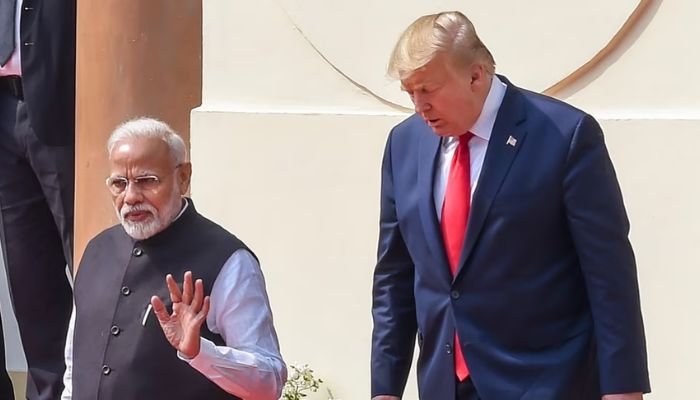
New Delhi : A major challenge has arisen for India regarding its purchase of crude oil from Russia. The US House of Representatives has voted 214-211 to advance a bill concerning sanctions against Russia and Iran. Once this bill becomes law, the US President could gain the authority to impose additional import tariffs of up to 100 percent on certain countries that purchase Russian oil and gas. Notably, an amendment introduced in the House includes India among the countries that could be subject to these tariffs.
The official name of this bill is the “Lindsey O. Graham Sanctioning Russia and Iran Act of 2026.” The US Senate had previously approved the bill with a vote of 86-11. Final proceedings are now underway in the House of Representatives. A key component of the bill relates to the authority to impose heavy tariffs on countries that purchase large quantities of crude oil or natural gas from Russia. An amendment in the House included provisions to list countries such as China, Turkey, Azerbaijan, Hungary, Slovakia, the UAE, Singapore, Kazakhstan, and Kyrgyzstan, alongside India.
A procedural vote to advance the bill took place in the House on Tuesday evening, where the motion passed with a vote of 214-211. Two Democratic lawmakers broke ranks with some of their party colleagues to support the measure. The House Rules Committee did not advance a separate amendment aimed at removing the provision for tariffs of up to 100 percent from the bill. Similarly, a proposal to explicitly name specific countries—including India—did not move forward in the committee. Consequently, the risk of potential tariffs on India remains under the current process.
Amidst potential pressure from the US, India has already clarified its stance regarding energy purchases. Ministry of External Affairs spokesperson Randhir Jaiswal stated that India’s energy procurement policy is based on national interest and the needs of its population of over 1.4 billion people. India has also clarified that it sources energy from diverse origins to ensure energy security. Previously, India had stated that decisions regarding the purchase of Russian oil are made with the country’s national priorities in mind.
If this bill is ultimately passed by the House and enacted into law, the US President could gain the authority to impose tariffs of up to 100 percent on countries purchasing Russian energy. However, the passage of the bill and the actual imposition of 100 percent tariffs on India are two distinct matters. Once the law is enacted, how it is implemented and which provisions the President invokes against specific countries will be crucial. Some lawmakers in the US have also expressed objections to the sweeping tariff powers being granted to the President. Therefore, the upcoming vote in the House and the subsequent legislative process could prove significant for India’s oil imports and its trade relations with the US.
Report – Abhijit Tushar Bhatt (Political Editor)