 newspop
The World’s Largest Tree by Volume Has a Story More Incredible Than Fiction
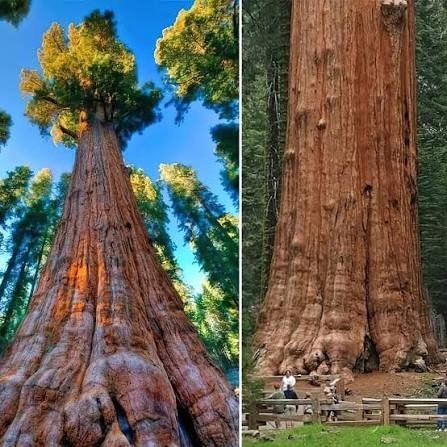
Imagine a tree so enormous that its trunk contains enough wood to fill thousands of rooms, its weight is comparable to that of several giant whales, and its roots have remained anchored to the Earth for thousands of years! This is not a scene from a fantasy movie it is the astonishing reality of General Sherman, one of the most extraordinary natural wonders on our planet.
Hidden among the breathtaking forests of Sequoia National Park in California, United States, stands General Sherman, a giant sequoia widely recognised as the largest known living tree in the world when measured by trunk volume. This magnificent natural giant is estimated to be approximately 2,200 to 2,700 years old, meaning it began growing in an era when ancient civilisations were flourishing, powerful kingdoms were rising, and much of the world looked completely different from today. While generations of humans have come and gone, this extraordinary tree has continued to stand tall, silently witnessing the passage of centuries.
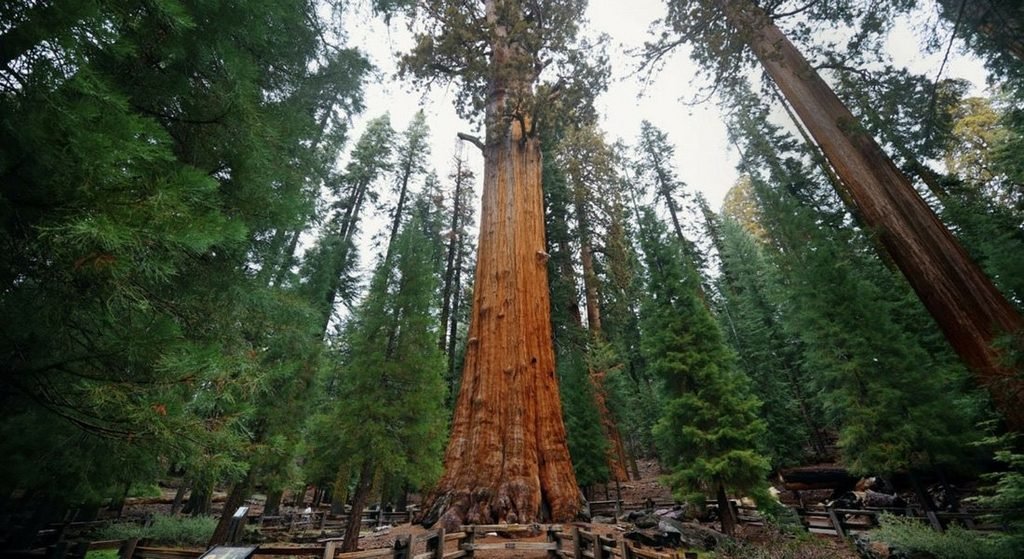
What makes General Sherman truly unbelievable is not simply its age, but its extraordinary size. The tree reaches approximately 275 feet (84 metres) into the sky, making it taller than many buildings. However, it does not hold the record for the tallest tree on Earth.
Its real claim to fame lies in the enormous volume of its trunk, which is estimated at around 52,500 cubic feet (approximately 1,487 cubic metres). Its trunk measures roughly 36 feet (11 metres) in diameter near the base, creating a massive column of living wood that is difficult to comprehend until seen in person. Its sheer scale makes even large human structures appear small by comparison.
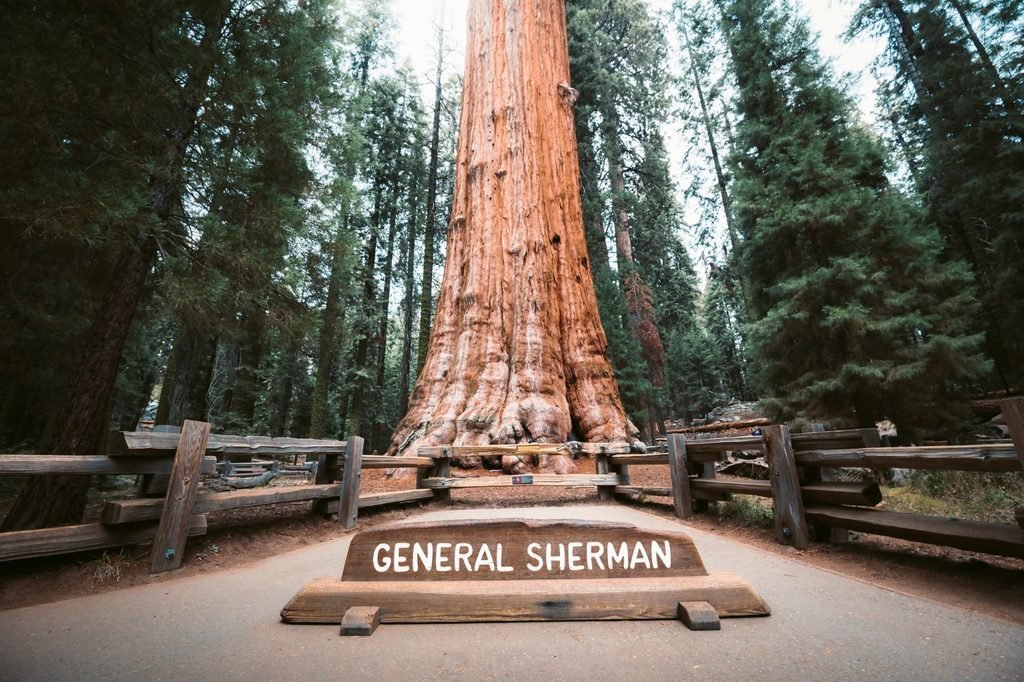
The estimated mass of General Sherman is around 1.27 million kilograms, or approximately 1,270 metric tonnes, although the precise figure depends on how the tree’s mass is calculated. To put that into perspective, its estimated weight is comparable to that of several enormous animals combined. Looking at photographs of visitors standing beside its colossal trunk, it becomes clear just how extraordinary this living organism is. The tree is not merely a giant among plants; it is one of the most impressive examples of the scale that life on Earth can achieve.
Even more fascinating is the fact that General Sherman is still alive and continues to grow. Despite having survived for thousands of years, it remains a living organism rather than a relic of the past. Its continued growth demonstrates the remarkable longevity of giant sequoias, which can thrive for millennia under suitable environmental conditions.
Every year, the tree adds new wood to its trunk and branches, although its growth rate changes with age, climate and environmental conditions. Its massive trunk stores enormous quantities of carbon, making ancient trees valuable components of forest ecosystems and natural carbon storage systems.
But the story of General Sherman is not without dramatic moments. In 2006, one of its enormous branches broke off and fell to the ground. The fallen limb was reportedly around 100 feet (30 metres) long and approximately seven feet (2.1 metres) thick at its widest point. The incident attracted attention because the branch itself was larger than many ordinary trees. Surprisingly, the branch’s fall did not mean that the entire tree was dying; giant sequoias can lose substantial branches while continuing to survive. The event also highlighted an important fact about nature: even the strongest and oldest living giants experience change as they grow, age and respond to their surroundings.
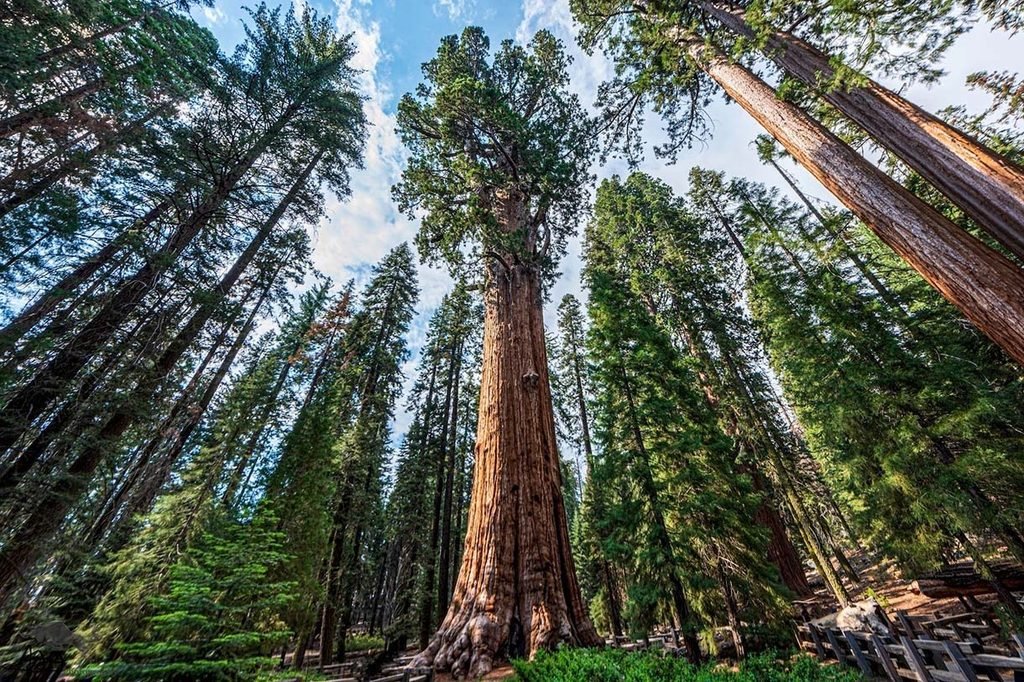
So, how has General Sherman survived for so long? One important reason is its remarkable natural protection. Giant sequoias have thick, fibrous bark that can help shield their inner tissues from the heat of many forest fires. Their bark can grow several inches thick, and mature trees often develop a strong resistance to low- and moderate-intensity fires.
Fire is also a natural part of many giant sequoia forest ecosystems, helping create conditions that allow new sequoia seedlings to establish themselves. However, these trees are not invincible: exceptionally intense fires, prolonged drought and climate-related changes can threaten even the largest specimens.
Another advantage lies in the chemical composition of the tree’s wood. Natural compounds, including tannins, help make the wood more resistant to decay and certain insects. Combined with its thick bark and enormous size, these characteristics contribute to the remarkable durability of giant sequoias. Yet their survival also depends on a healthy forest environment, sufficient moisture and suitable growing conditions. Scientists and conservationists continue to study these ancient forests because protecting them means preserving ecosystems that have developed over thousands of years.
Interestingly, General Sherman is not the oldest tree in the world, nor is it the tallest. Different trees hold different records depending on how they are measured. In Chile, an ancient Patagonian cypress known as the Great Grandfather, or Gran Abuelo, has been estimated by researchers to be more than 5,000 years old, although its precise age remains a subject of scientific discussion.
Meanwhile, Hyperion, a coast redwood growing in California, holds the record for the tallest known living tree, reaching more than 380 feet (116 metres). These extraordinary trees demonstrate that nature has produced giants with very different forms of greatness: some are exceptionally old, some rise to incredible heights, and others possess enormous trunks.
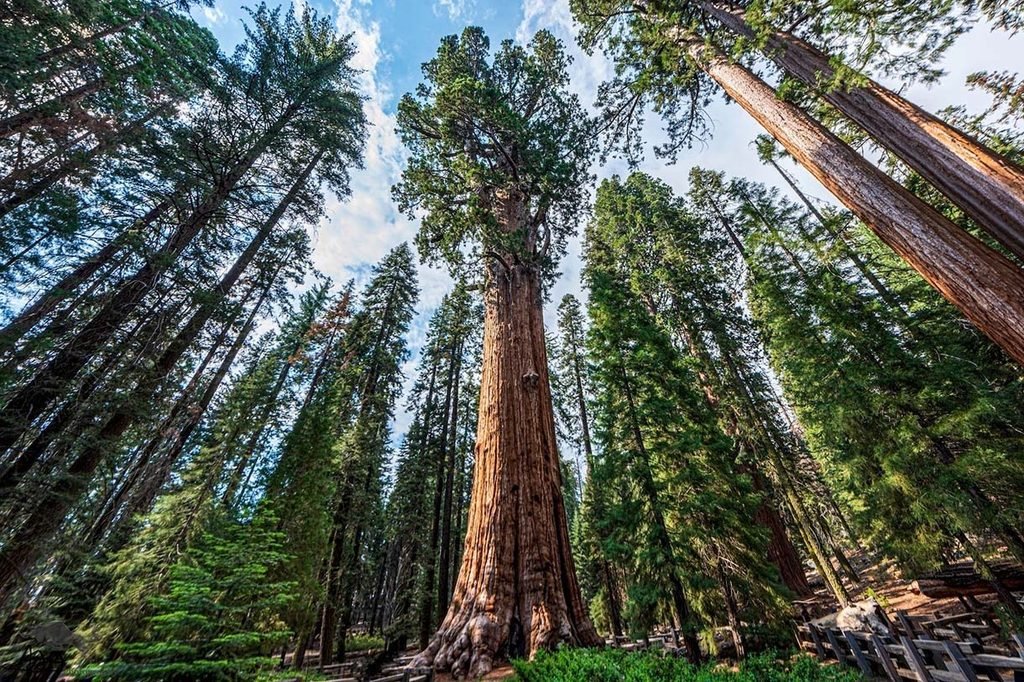
General Sherman also reminds us that the natural world has a history far older than the lives of individual people. While cities expand, technologies evolve and generations change, ancient trees continue to grow according to the rhythms of nature. Their rings preserve clues about past growing conditions, and their surrounding ecosystems support countless forms of life. They offer scientists valuable opportunities to understand forest ecology, environmental change and the long-term resilience of living organisms.
Today, General Sherman stands as one of the most celebrated attractions in Sequoia National Park, drawing visitors from around the world who want to witness its immense scale.
But beyond its popularity as a tourist destination, this ancient giant represents something far more significant: the extraordinary ability of life to endure, adapt and continue growing over immense stretches of time. Its story is a reminder that forests are not simply collections of trees they are living systems that connect the past, present and future.
The most astonishing part ? General Sherman does not need to be the tallest or the oldest tree on Earth to be extraordinary. Its colossal trunk, thousands of years of survival and continued growth make it a natural wonder unlike almost anything else on the planet. Standing before this ancient giant, one realises just how small a human lifetime is compared with the remarkable history of nature.