 newspop

Thousands of Cracks on the Moon ! Why Scientists Are Closely Watching Its Changing Surface
A startling discovery in space has brought Earth’s closest celestial neighbour into the scientific spotlight! The Moon is gradually shrinking as its interior cools, and researchers have now identified more than 10,000 young geological faults across its surface. Although this does not mean the Moon is about to disappear, the discovery is helping scientists understand its changing structure, the possibility of moonquakes and the challenges future lunar missions may face.
A new study published on October 14, 2026, in The Planetary Science Journal provides one of the most detailed estimates yet of the Moon’s long-term contraction. The research, titled “Thrust Faulting and the Late-Stage Contraction of the Moon,” was led by Thomas R. Watters, scientist emeritus at the Smithsonian Institution’s National Air and Space Museum, alongside researchers Maria E. Banks, Cole A. Nypaver and Mark S. Robinson.
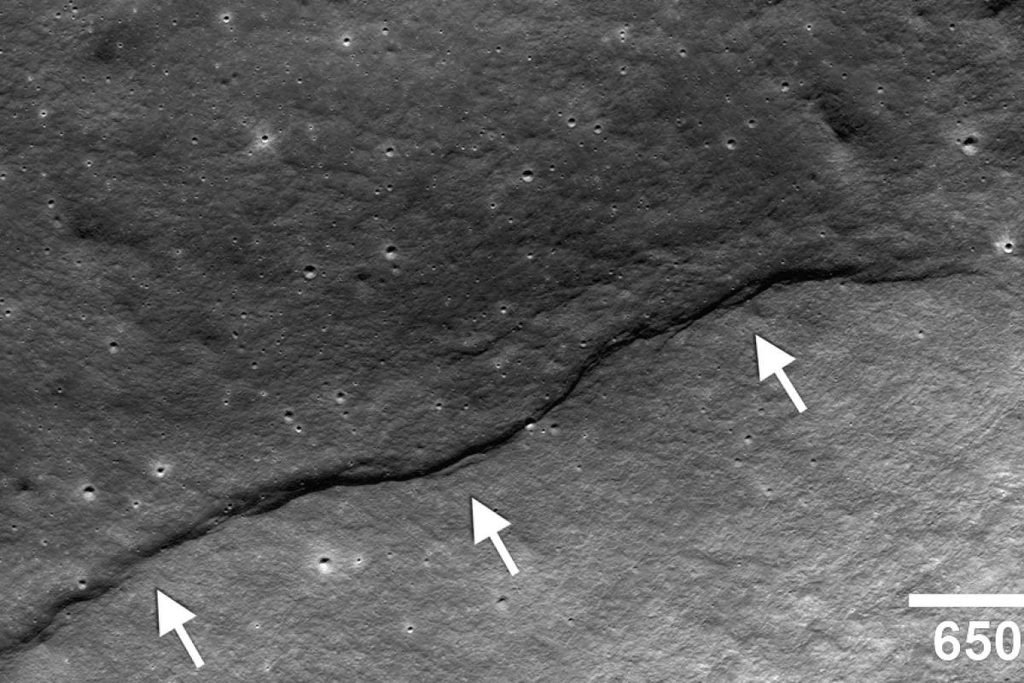
According to the study, the Moon’s radius has decreased by approximately 45 metres (148 feet) over the past 400–800 million years. This is a gradual geological process occurring over an enormous period, not a sudden change in the Moon’s visible size.
Researchers estimate that the Moon could continue contracting at a rate of around 6–11 centimetres per million years. The change is extremely slow on a human timescale, but it provides important clues about the Moon’s internal temperature, geological evolution and the forces shaping its surface.
The main explanation is the gradual cooling of the Moon’s interior.
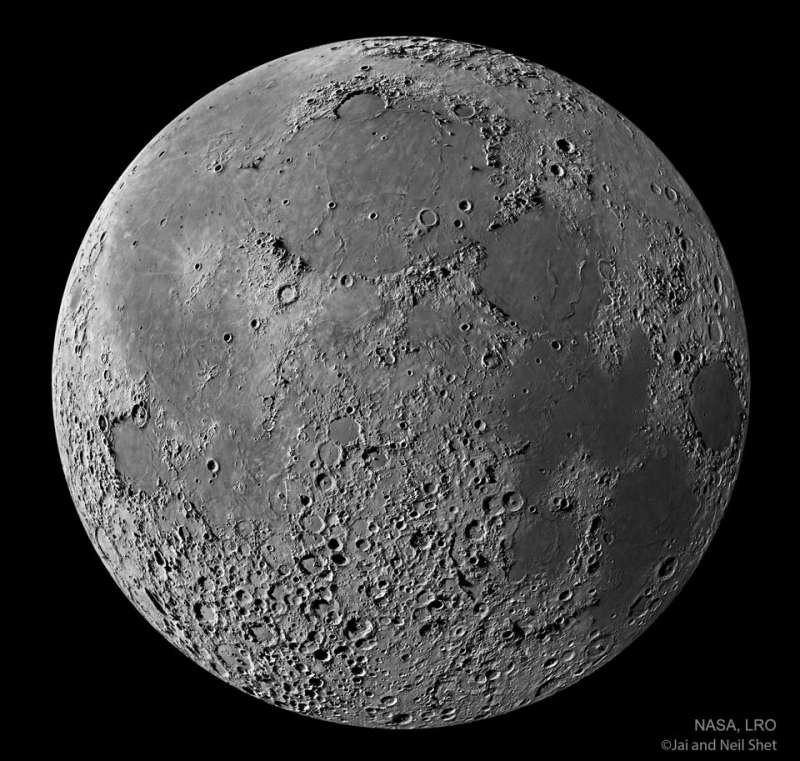
Billions of years ago, the Moon was considerably hotter inside. As it loses internal heat over geological time, its interior slowly contracts. This contraction places the outer crust under compression, causing parts of the surface to buckle, fracture and shift along geological faults.
These movements can create small cliffs and ridges known as lobate scarps and thrust-fault structures. Scientists study these features to understand how the Moon’s crust responds to the gradual loss of internal heat.
Importantly, the Moon is not shrinking because material is suddenly disappearing into space. Instead, its overall radius is decreasing very slowly as its interior cools and its crust adjusts.
One of the most striking findings is the identification of more than 10,000 young faults distributed across the lunar surface.
To reach their conclusions, the researchers examined millions of images collected over approximately 17 years by the Lunar Reconnaissance Orbiter Camera (LROC). The observations allowed them to map geological structures across the Moon’s highlands and vast dark plains, known as the lunar maria.
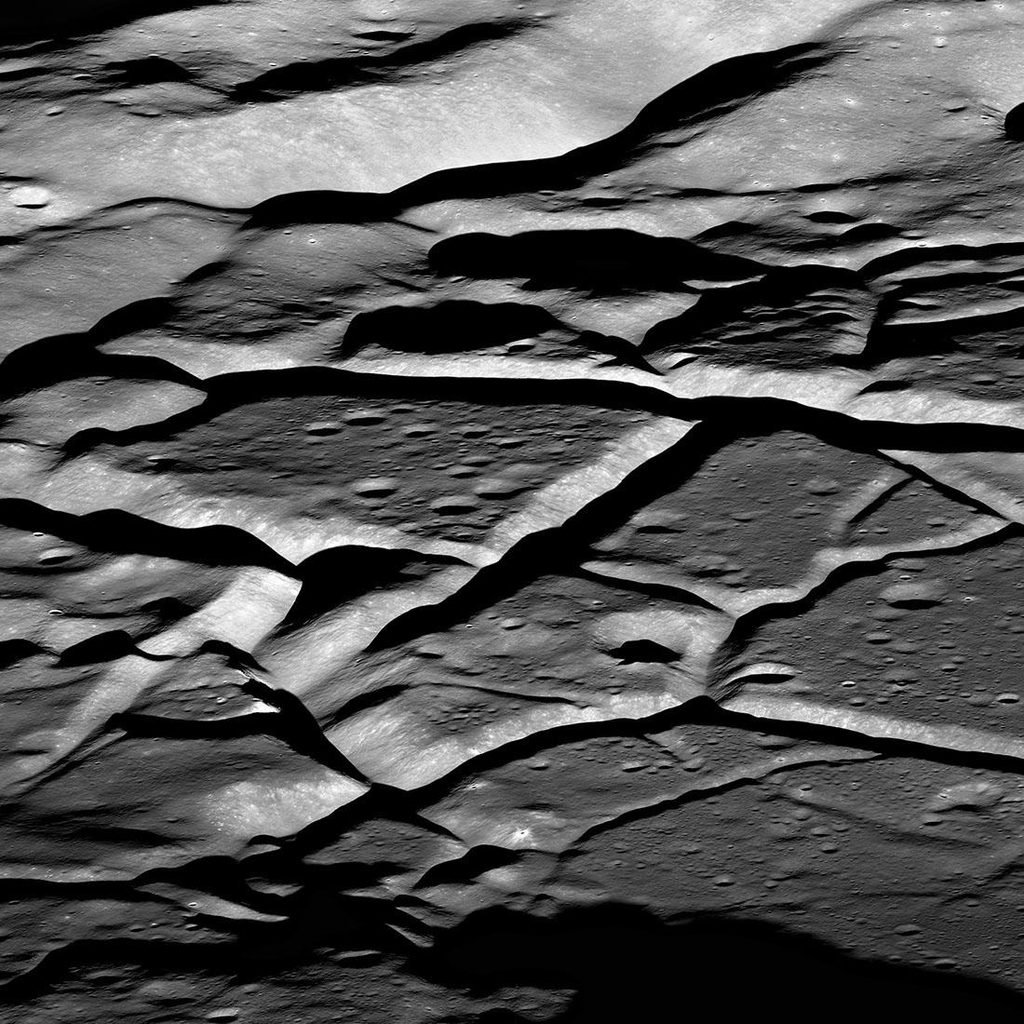
The large number of faults indicates that contraction-related geological activity has affected extensive areas of the Moon. Scientists also expect existing faults to continue growing and new ones to form as the interior continues to cool.
The Moon’s shrinking surface also raises questions about moonquakes, which are seismic events caused by activity within or beneath the lunar crust.
On Earth, much seismic activity occurs near the boundaries of moving tectonic plates. The Moon, however, behaves largely as a single-plate body. Its contraction-related faults are spread across different regions rather than being confined to boundaries between several moving plates.
As a result, fault movement and moonquakes may occur in locations across the lunar surface. This is an important consideration for scientists studying the Moon’s seismic behaviour and identifying suitable locations for future landings.
The findings could be important for future lunar exploration, including NASA’s planned missions under the Artemis programme. Astronauts, scientific instruments, habitats and other surface infrastructure must operate in an environment where geological activity is possible. Understanding the distribution of faults and the potential for moonquakes can help scientists assess landing sites, evaluate surface hazards and develop safer mission plans.
The newly mapped faults do not mean that every lunar landing site is dangerous. Rather, they provide additional geological information that mission planners can use when evaluating the stability of different regions.

Despite the alarming-sounding discovery, scientists are not predicting that the Moon will disappear from the sky. The estimated contraction rate is extraordinarily slow. The study describes a continuing geological process, not an imminent threat to the Moon’s existence. Its findings help explain how the Moon changes over time and how its interior continues to evolve long after its formation.
The research also highlights how much scientists can learn from orbital observations. By studying surface features in detail, researchers can reconstruct geological changes that would otherwise be difficult to observe directly.
The Moon may look unchanged to us on an ordinary night, but beneath that familiar appearance lies a world that continues to evolve.
Its cooling interior, contracting crust and widespread faults offer valuable insights into the geological history of our nearest natural neighbour.
As lunar exploration advances, understanding these slow but significant changes will become increasingly important.
The discovery of thousands of faults is not evidence that the Moon is about to vanish; it is a reminder that even the most familiar objects in our night sky can hold extraordinary scientific mysteries.