

 newspop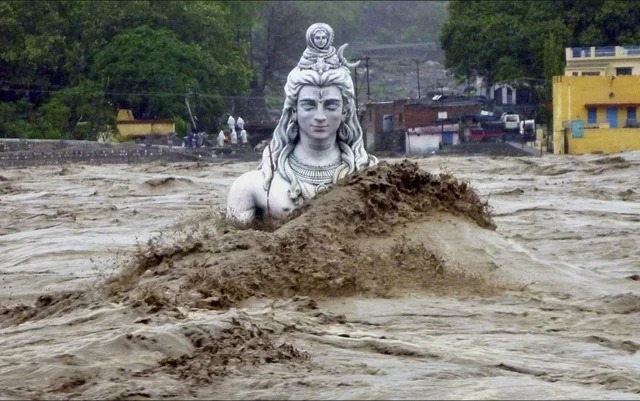
Shiva’s Kedarnath Then, Buddha’s Nepal Now : Is the Himalayas Sending a Warning ?
Nepal: The Himalayas are once again witnessing a devastating reminder of nature’s immense power. As flash floods and landslides wreak havoc across Nepal, rivers have transformed into torrents of destruction, sweeping away homes, bridges, roads and countless lives.
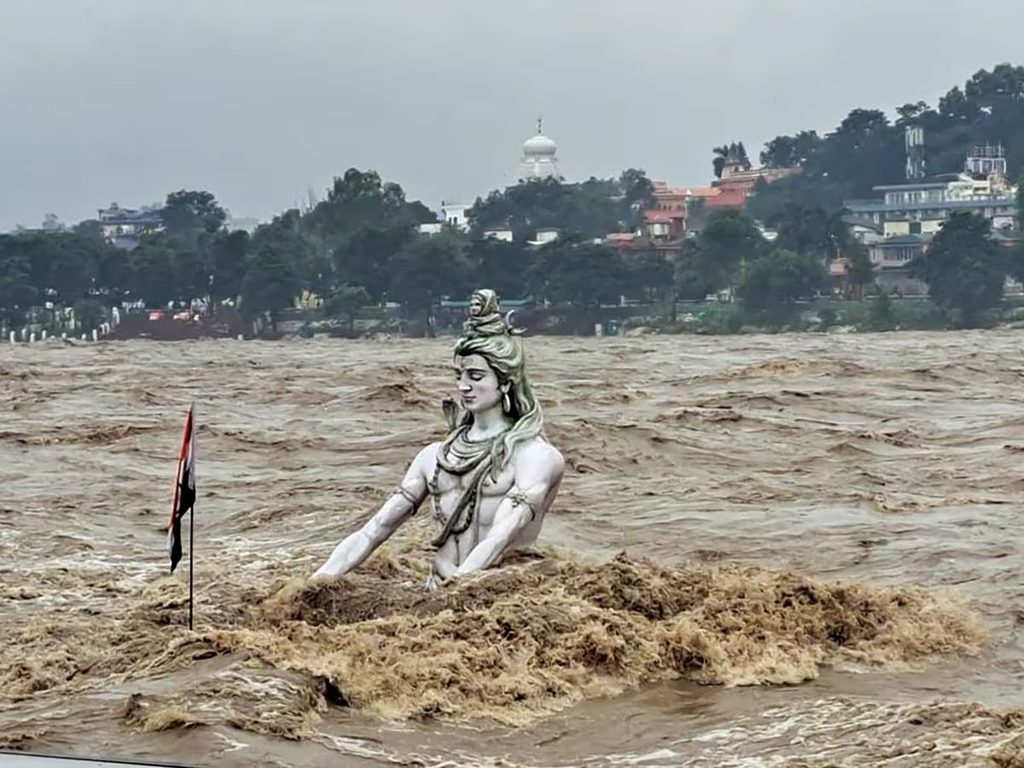
Among the most haunting visuals emerging from the disaster is that of a peaceful Buddha statue partially submerged by raging floodwaters in Nepal’s Rasuwa district, along the Bhote Koshi river. The image has left many drawing comparisons with the devastating scenes witnessed in Kedarnath, Uttarakhand, in 2013, when the Mandakini river valley was ravaged by catastrophic floods and landslides.
The two disasters are separated by more than a decade and occurred in different locations, but they share a disturbing geographical connection the fragile Himalayan ecosystem.
From Kedarnath’s Tragedy to Nepal’s Flood Fury
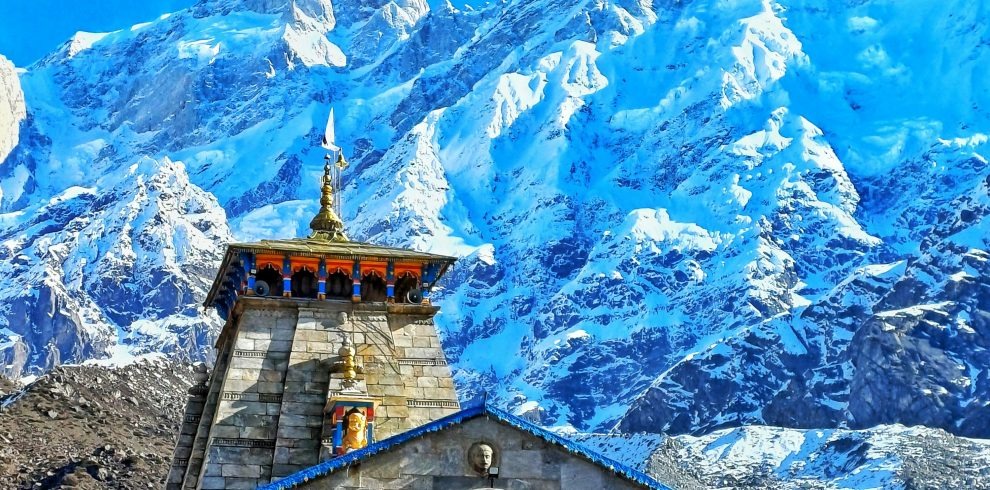
In June 2013, Kedarnath witnessed one of the worst natural disasters in India’s recent history. Torrential rainfall, flooding and the failure of a glacial lake near the Chorabari Glacier triggered a devastating chain of events in the Mandakini valley.
Floodwaters and debris swept through settlements, roads and buildings, leaving widespread destruction and thousands of people dead or missing.
More than a decade later, Nepal is facing another catastrophic situation. In the latest disaster, powerful torrents have surged through Himalayan valleys, carrying enormous quantities of water, mud, rocks and debris downstream.
The sight of a Buddha statue standing partly submerged amid the destruction has become a deeply emotional symbol of Nepal’s suffering.
Where Did So Much Water Come From ?
One of the biggest questions surrounding sudden Himalayan floods is how such enormous volumes of water can rush downstream even when there is no prolonged spell of extremely heavy rainfall at the affected location.
One possible natural phenomenon is a Glacial Lake Outburst Flood (GLOF). Glacial lakes can form as glaciers retreat and meltwater accumulates behind natural barriers made of ice, rock and sediment. These natural dams can sometimes be unstable. A landslide, avalanche, earthquake or sudden increase in water pressure can cause such a barrier to fail, releasing a huge volume of water downstream in a very short period.
The resulting flood can become even more destructive when it picks up rocks, mud, trees and other debris while rushing through steep Himalayan valleys.
A Fragile Himalayan Ecosystem
The Himalayas are among the world’s most geologically and environmentally sensitive mountain regions. Rapid changes in glaciers, rising temperatures, unstable slopes and changing precipitation patterns are increasing concerns about hazards in high-altitude areas.
Experts have repeatedly highlighted the importance of monitoring glacial lakes, glaciers and vulnerable mountain slopes, particularly in densely populated downstream valleys.
Climate change is also a growing concern. As temperatures rise, glaciers retreat and meltwater patterns change, potentially altering the stability and size of some glacial lakes. However, every individual flood cannot automatically be attributed to climate change, and the precise trigger of a particular disaster requires scientific investigation.
When Human Pressure Meets Nature’s Fury
The destruction also raises difficult questions about human activity in fragile mountain environments.
Rapid and unplanned construction, expansion of roads, hydropower projects, tourism pressure and construction close to rivers and unstable slopes can increase vulnerability when extreme natural events occur.
The Himalayas provide water, biodiversity and livelihoods to millions of people, but the same mountains can become extremely dangerous when natural systems are disturbed or when settlements are built in high-risk zones.
The lesson from disasters such as Kedarnath and the recent catastrophe in Nepal is therefore not simply that nature is unpredictable. It is also a warning about the need for better disaster preparedness, scientific monitoring, early-warning systems and responsible development.
Can Technology Help Prevent Future Disasters ?
Modern technology can play a crucial role in reducing the human cost of Himalayan disasters.
Satellite imagery, remote sensing, glacier monitoring, weather forecasting and river-level sensors can help authorities identify potentially dangerous changes in high-altitude lakes and river systems.
Early-warning mechanisms can give communities downstream precious minutes or, in some situations, longer to evacuate. But technology alone is not enough. Warnings must reach people quickly, evacuation routes must be prepared and local administration must have the resources and training needed to respond.
A Warning Written Across the Himalayas
The tragedy in Nepal has once again brought the vulnerability of Himalayan communities into sharp focus.
From Kedarnath’s Mandakini valley to Nepal’s Bhote Koshi and other Himalayan river systems, devastating floods have shown how quickly a peaceful mountain landscape can turn into a deadly torrent.
The partially submerged Buddha statue in Rasuwa is more than a striking disaster image. For many, it has become a powerful symbol of a region struggling against nature’s fury.
The Himalayas may be sending a warning through every collapsing slope, overflowing river and retreating glacier.
The question is not whether humans can stop nature.
The real question is whether we will learn to respect the mountains, understand their changing risks and act before the next disaster strikes.